
Spruce gall aphid
Mindarus obliquus
Description
How to identify
The spruce gall aphid (Mindarus obliquus) is a small insect belonging to the Mindaridae family. Adults are roughly 1.5–2 mm in size and have a light green to greyish-green color that provides camouflage against fresh spruce needles.
This species has a complex life cycle. It overwinters in the egg stage, with the eggs securely attached to bark crevices or near the base of buds, typically protected by a waxy substance.
Upon hatching in the spring, nymphs immediately begin to feed on the sap of emerging shoots. Their small size makes them difficult to spot without close inspection of the branch tips.
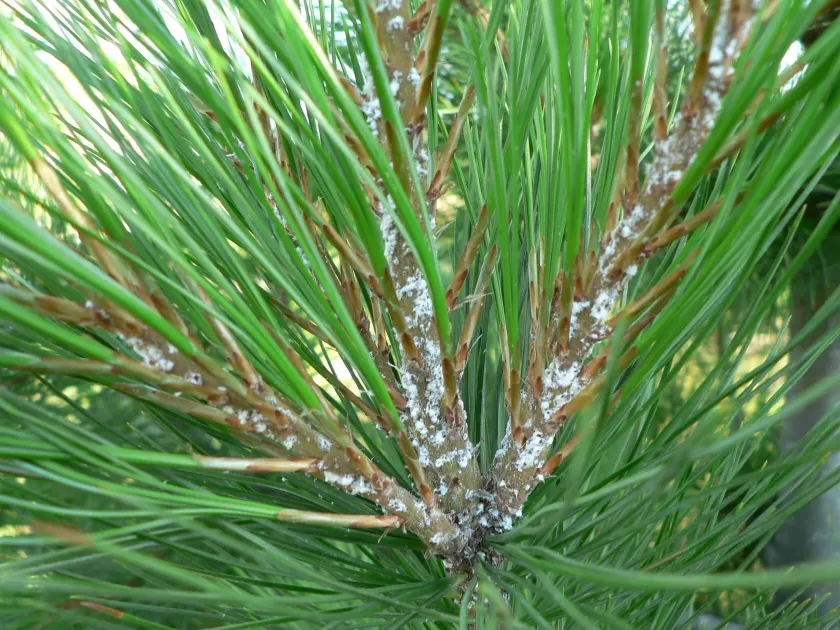
Identifying this pest early is critical. Gardeners and foresters should look for the characteristic waxy secretions that the aphids produce during their feeding activity.
Given their rapid reproductive rate, these aphids can quickly form dense colonies, especially during favorable spring conditions.
What it damages
The primary hosts for Mindarus obliquus are various species of spruce (Picea). They specifically target new, succulent growth, which is highly nutritious for the insects.
Feeding involves sucking sap and injecting toxic substances into the plant tissue. This process leads to the distortion and curling of the needles and shoots, which is a hallmark of this pest.
As damage progresses, the affected needles discolor, turning yellow or brown, and eventually fall off prematurely. This significantly impairs the aesthetic appearance of the spruce tree.
Severe infestations weaken the host plant, making it prone to opportunistic secondary pathogens, including various wood-decaying fungi and bark beetles.
Young trees are at the highest risk, as the destruction of primary growth can lead to permanent stunted development and loss of proper tree shape.
When it appears
The seasonal activity begins in early spring when the aphids emerge from overwintering eggs. This timing is perfectly synchronized with the bud break of the spruce trees.
Peak populations usually occur in late spring and early summer. During this time, winged females may develop, facilitating the spread of the infestation to surrounding trees.
Multiple overlapping generations can occur throughout the summer if the weather remains warm and dry, which accelerates the development of the aphid population.
In late autumn, the cycle concludes as the insects lay eggs for the winter season. These eggs are quite resilient and can survive cold winter temperatures.
Proactive monitoring during the early spring bud-break phase is the most effective way to catch the emergence of the first generation.
Signs of infestation
The most visible sign of an infestation is the distinct twisting and curling of the new needles at the tips of the branches.
- Curled, deformed spruce needle growth.
- Presence of sticky honeydew on the needles.
- Sooty mold growing on the honeydew deposits.
- Yellowing and premature needle drop.
- Increased ant activity on the tree branches.
Control measures
Systemic insecticides are the most effective way to manage Mindarus obliquus, as they are absorbed by the plant and reach the aphids hidden within the curling needles.
Treatments should be applied at the first sign of bud break. Delaying the application until the needles are fully curled will significantly reduce the effectiveness of the spray.
Good horticultural practices, such as adequate watering and preventing nitrogen excess, help the tree maintain its natural resistance to aphid attacks.
Biological control, including the protection of beneficial insects like lady beetles, syrphid fly larvae, and lacewings, can help maintain lower aphid populations.
For ornamental trees, manual removal of early-infested shoots can be practiced if the infestation is localized, but chemical intervention is often necessary for larger outbreaks.
Taxonomy
- Latin name
- Mindarus obliquus
- Order
- Hemiptera (bugs, aphids, leafhoppers)
- Family
- Aphididae
- EPPO code
- MINDOB
Discussion
No discussions yet — be the first.