
Spruce twig aphid
Mindarus abietinus
Description
How to identify
The spruce twig aphid (Mindarus abietinus) is a significant pest belonging to the family Mindaridae. It is a small insect that specializes in feeding on the young shoots of spruce and fir trees during the spring season.
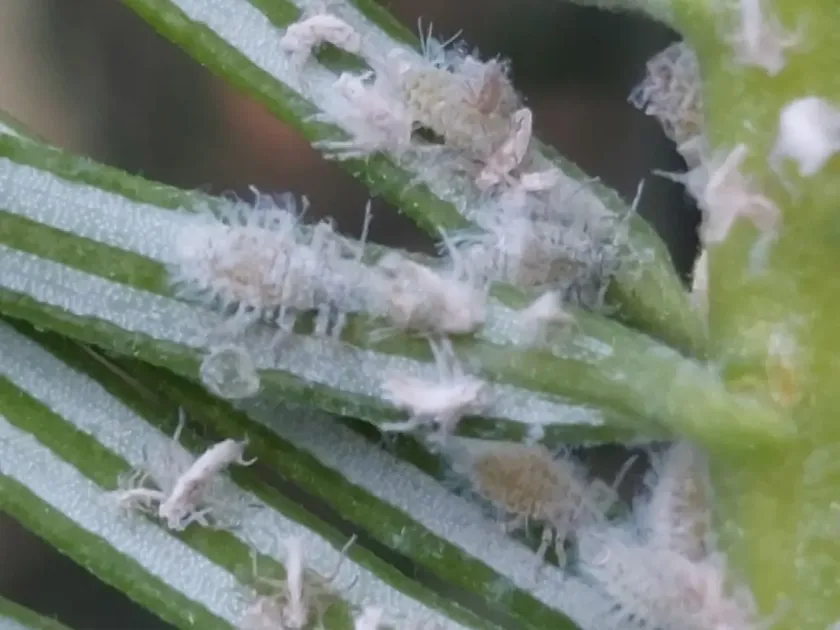
Adult aphids are pale green or yellowish and are covered in a fine, white, waxy secretion. This powder-like substance often makes the colonies appear as if the needles are covered in a thin layer of mold or dust.
The life cycle begins with overwintering eggs laid on the bark near the buds. As soon as the buds begin to swell in early spring, the nymphs hatch and immediately start feeding on the tender emerging tissues.
Throughout the spring and early summer, several generations are produced. The population grows rapidly during the period of new shoot expansion, allowing the aphid to colonize large parts of the host tree.
By late summer, the insect produces sexual forms that lay the overwintering eggs. These eggs are well-protected from cold temperatures, ensuring that the infestation can reoccur the following spring.
What it damages
The primary hosts for this pest include various species of Picea (spruce) and Abies (fir). It poses a particular threat to nurseries, young plantations, and ornamental landscape conifers.
The feeding activity involves piercing the needles and young stems to suck sap. This leads to reduced tree vigor, stunted shoot growth, and a significant decrease in the aesthetic value of the tree.
Signs of infestation
The most obvious sign of an infestation is the curling and distortion of new needles. The shoots often become twisted or stunted, which is a classic symptom of feeding by this specific aphid species.
Colonies of aphids produce large amounts of honeydew. This sticky substance often attracts sooty mold, which creates black spots on the needles, further weakening the tree by limiting its photosynthetic ability.
Control measures
Control measures should be timed with the phenology of the tree, specifically targeting the period of egg hatch in early spring. Systemic insecticides are generally the most effective way to manage these insects.
- Apply systemic insecticides during the bud break stage.
- Ensure thorough coverage of terminal shoots where colonies congregate.
- Monitor for early symptoms in spring to prevent population buildup.
- Maintain tree health to improve natural resistance against secondary infections.
Taxonomy
- Latin name
- Mindarus abietinus
- Order
- Hemiptera (bugs, aphids, leafhoppers)
- Family
- Aphididae
- EPPO code
- MINDAB
Discussion
No discussions yet — be the first.