
Northern Mockingbird
Mimus polyglottos
Description
How to identify
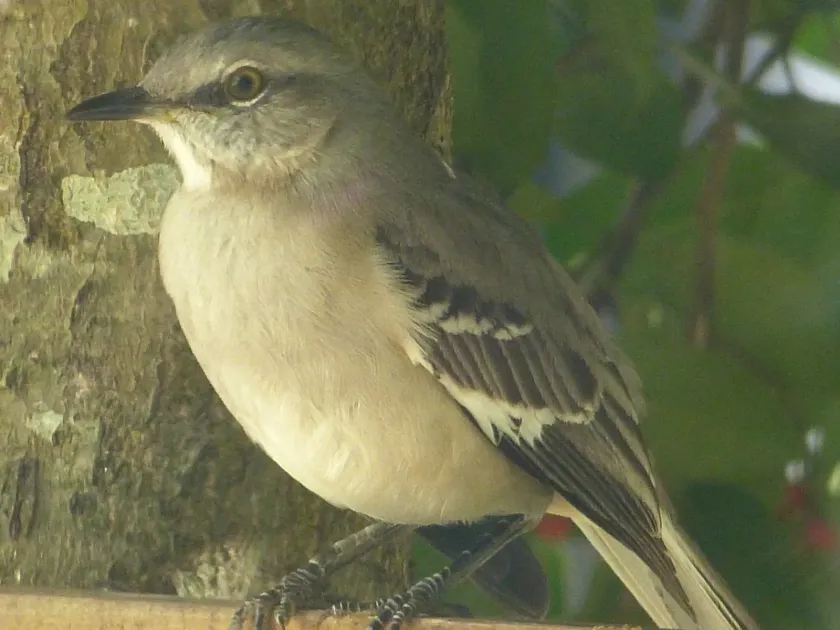
The Northern Mockingbird (Mimus polyglottos) is a medium-sized songbird belonging to the Mimidae family. It is recognized by its grayish-brown plumage and distinct white wing patches that become highly visible during flight.
These birds possess a slender build and a long tail, which provides them with excellent maneuverability when flying through dense foliage. Their bills are of moderate length, slightly decurved, and perfectly adapted for a diverse diet.
Mockingbirds are notoriously territorial and aggressive, especially during the breeding season. They frequently defend their nesting and foraging areas by chasing away other birds and even larger animals.
A key identifying feature is their complex song, which often involves mimicking the calls of other bird species, a behavior that frequently reveals their presence in a garden or orchard.
They are highly adaptive to human-altered landscapes, making them frequent visitors to residential gardens, orchards, and small-scale farms where they find both shelter and food.
What it damages
The primary agricultural damage caused by the Northern Mockingbird involves feeding on cultivated fruits and berries. Crops like blackberries, raspberries, strawberries, and grapes are particularly vulnerable.
The birds damage the fruit by pecking into the skin, which not only consumes the flesh but also ruins the market value and physical integrity of the harvest.
Stone fruits such as cherries and peaches are also at risk. Mockingbirds often peck holes in the skin, which facilitates the growth of fungi and bacteria, leading to premature rotting and fruit drop.
The economic impact can be significant in small orchards where a local population of mockingbirds can rapidly consume or damage a large percentage of the ripening fruit.
Beyond direct consumption, damaged fruits attract insects, including wasps and flies, which can further spread disease and cause secondary damage to the remainder of the crop.
When it appears
Mockingbird activity peaks during the spring and summer, aligning with their nesting season when the demand for calories to feed chicks is at its highest.
The period of fruit ripening coincides with the time when birds are most active in foraging. From early summer to early autumn, these birds frequently visit orchards to feed on sugary fruits.
While some populations may remain in warmer regions year-round, the negative impact on agriculture is most concentrated during the harvest season when the food source is abundant and accessible.
Their diet shifts seasonally, transitioning from primarily insect-based in the early spring to a higher proportion of fruit as summer progress, creating a distinct risk window for growers.
Effective pest management should begin before the fruit ripens, with preventative measures installed in early summer to deter the birds from establishing a habit of foraging in the orchard.
Signs of infestation
Typical signs of Northern Mockingbird damage include small, precise punctures in berries or scooped-out sections in larger fruits like grapes and cherries.
Observing a high number of partially eaten fruits left on the branches or scattered on the ground under trees is a clear indicator of avian pest activity.
Vocalizations are a significant sign, as the bird’s repetitive, diverse, and loud songs make them easy to locate within a garden, even if they remain hidden in the canopy.
Aggressive defensive behavior against other birds is a sign of a nearby nesting site, which often indicates that the mockingbird will continue to forage in that immediate vicinity.
The presence of nests in dense hedges or ornamental shrubs near vegetable gardens or fruit patches suggests a persistent threat to the local harvest throughout the season.
Control measures
The most effective physical control method is the use of exclusion netting, which covers bushes or tree canopies to completely block bird access to the ripening fruit.
Visual deterrents, including reflective tape, holographic strips, or predator decoys, can be used as secondary measures, provided they are repositioned frequently to prevent birds from becoming habituated.
Acoustic deterrent systems that emit predator calls or distress signals are effective for larger commercial orchards where manual exclusion is not feasible.
Good orchard sanitation, including the prompt removal of overripe fruit, is essential as it reduces the primary incentive for mockingbirds to enter the orchard.
Managing the habitat by trimming dense nesting sites near sensitive fruit crops can help reduce the local population density and minimize the frequency of foraging visits.
Taxonomy
- Latin name
- Mimus polyglottos
- Family
- Mimidae
- EPPO code
- MIMUPO
Discussion
No discussions yet — be the first.