
Gray catbird
Dumetella
Description
How to identify
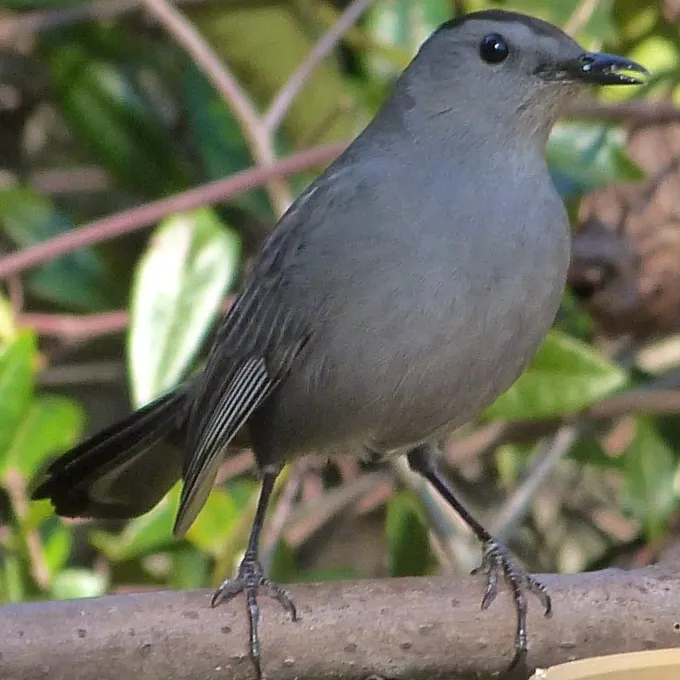
The Gray catbird (Dumetella carolinensis) is a member of the Mimidae family, belonging to the order Passeriformes. It is a medium-sized bird with a uniform slate-grey body, a black cap, and a distinct reddish-brown under-tail patch.
The name originates from its unique song, which includes a call that sounds strikingly like a cat's meow. In agriculture, this species is considered a pest due to its tendency to consume large quantities of small fruit crops as they ripen.
These birds are reclusive, preferring dense thickets, hedgerows, and forest edges, which makes monitoring their population size in orchards and gardens quite challenging.
They are highly adaptable to human-altered environments, frequently nesting near residential areas where they find an abundant food source provided by domestic fruit plantings.
Detection is often possible through their complex vocalizations and their defensive behavior toward those approaching their nesting grounds near productive garden areas.
What it damages
The primary economic damage is inflicted upon berry crops such as raspberries, blackberries, strawberries, blueberries, and grapes. The birds actively peck at ripening fruit, causing significant mechanical injury.
Beyond direct consumption, the pest leaves deep punctures and jagged edges on the fruit, which invites secondary issues like fungal infections, rot, and spoilage, rendering the harvest unmarketable.
During seasons with low natural food availability, the intensity of their attacks on fruit gardens increases significantly, sometimes leading to crop losses of 30-50% in specific areas.
The bird does not restrict itself to soft berries; when soft-skinned stone fruits like cherries are ripe, they often pierce the fruit skin to feed on the sweet juices within.
Overall economic losses include not only the direct reduction in yield but also the time and financial resources invested in implementing bird control measures during the critical harvest period.
When it appears
The period of concern for agricultural producers spans from late spring through the summer, directly aligning with the blooming and fruiting stages of most berry crops.
Initial signs of bird activity are observed during the ripening of early strawberry varieties, when natural food sources are not yet fully available in the surrounding wilderness.
The peak of damage occurs in July and August, coinciding with the period when birds are raising their second brood and have an increased need for sugar-rich food and hydration.
Seasonal migration patterns in late summer can result in higher concentrations of birds in the vicinity of gardens, necessitating heightened vigilance and protection strategies before the final harvest.
Activity subsides as autumn progresses, when birds shift their diet toward wild seeds and insects, essentially ending the threat to domestic fruit crops for the season.
Signs of infestation
Evidence of catbird activity includes partially eaten fruit left hanging on branches or dropped on the soil surface beneath the shrubs.
A frequent indicator is the presence of bird droppings on the foliage and fruit, which often contain undigested seeds of both wild plants and cultivated fruits.
Finding damaged berries that lack the typical markings of insect pests is a clear sign that birds have been feeding on the produce.
The characteristic "meowing" call heard in the morning or evening hours near garden beds is a reliable indicator that the population is actively foraging in the area.
While less common, observers should also note potential damage to early spring buds, although this is minor compared to the devastating impact on ripening summer harvests.
Control measures
The most effective strategy for protection is the installation of physical bird netting, which acts as a complete barrier between the birds and the ripening fruit crop.
Visual deterrents, such as reflective tape, motion-activated gadgets, or artificial hawk decoys, can provide short-term relief, though the birds tend to habituate to them quickly.
The use of ultrasonic repellers that emit predator calls or distress signals can offer moderate results, especially in smaller, contained garden spaces.
Agricultural management techniques include maintaining clean boundaries and thinning dense hedgerows surrounding the property to reduce nesting and hiding sites.
A multi-faceted approach, combining physical exclusion netting with the occasional rotation of visual and acoustic deterrents, is the best way to minimize crop loss while maintaining ecological balance.
Taxonomy
- Latin name
- Dumetella
- Family
- Mimidae
- EPPO code
- DUMESP
Discussion
No discussions yet — be the first.