
Gray Catbird
Dumetella carolinensis
Description
How to identify
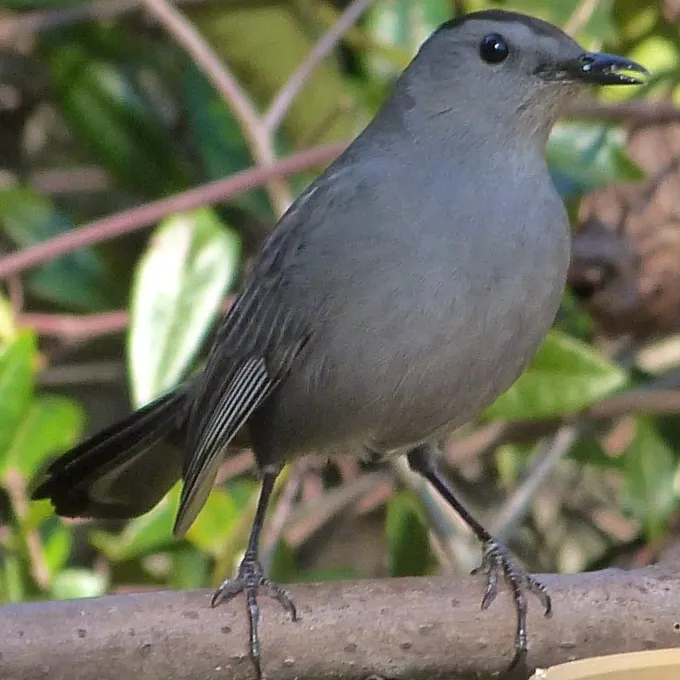
The Gray Catbird (Dumetella carolinensis) is a member of the Mimidae family, order Passeriformes. It is a medium-sized songbird characterized by its uniform slate-gray plumage, a black cap, and a deep reddish-brown patch under its tail.
The bird derives its common name from the distinct cat-like mewing call it produces, especially when agitated. This vocalization is a primary indicator of its presence in dense shrubbery or berry patches.
Typically measuring 20 to 23 centimeters, the Catbird possesses a slender, slightly curved bill that is highly specialized for foraging on soft fruits and berries, making it a significant pest for growers.
These birds are known for their secretive nature, often preferring to forage within the safety of thick foliage, which makes traditional visual monitoring for pests quite challenging for farmers.
While native to North America, their population density in rural and semi-rural areas often leads to intense competition for resources, specifically targeting high-value horticultural berry crops.
What it damages
The Gray Catbird causes significant economic loss by feeding on a variety of berries, including blueberries, blackberries, raspberries, strawberries, and grapes, particularly during the ripening season.
The damage is not limited to total consumption; birds often peck at fruit surfaces, compromising the skin and creating entry points for secondary infections like gray mold (Botrytis cinerea).
Fruit quality is severely degraded by these physical punctures, rendering the produce unfit for fresh market sales and reducing shelf life during transport and cold storage.
In cherry and grape orchards, the catbird's foraging behavior can lead to large portions of the yield being spoiled if the population density is high and alternative food sources are scarce.
Furthermore, their movement between wild thickets and cultivated fields can lead to the spread of unwanted weed seeds throughout the orchard, increasing long-term maintenance costs.
When it appears
The peak activity of the Gray Catbird corresponds with the spring and summer breeding season, during which the demand for high-energy food sources is at its highest for chick development.
June and July are critical months for crop protection as most cultivated berries reach full maturity, attracting the birds in large numbers to the fields.
The nesting period in late spring is a crucial time for monitoring; identifying nest locations in nearby hedgerows allows farmers to anticipate the threat before the fruit begins to soften.
In the autumn, while their diet shifts toward natural forage, late-ripening varieties of fruit may still be vulnerable if the birds have not yet migrated, prolonging the protection window.
Environmental factors such as rainfall and food availability in the surrounding landscape significantly dictate the level of pressure exerted on cultivated crops each year.
Signs of infestation
The most common sign of infestation is fruit damage characterized by small punctures or fruits that have been partially hollowed out while still attached to the plant stems.
The distinct, mewing call of the bird, especially during early morning and late evening, acts as a primary auditory signal that a group or pair has established a territory within your planting.
Finding discarded fruit skins and bird droppings on the ground beneath the bushes provides concrete evidence of active foraging sites that require immediate attention.
When approached, catbirds exhibit evasive behavior, flitting quickly through the foliage and emitting a chatter or alarm call, which confirms their presence in the dense shrub layer.
Observation of birds actively diving into the canopy of berry bushes followed by a period of quiet suggests that they are foraging on the fruit hidden from direct view.
Control measures
Exclusion netting is the most effective and reliable method for protecting berry crops. Properly installed netting prevents bird access to the berries while allowing for normal plant growth.
Bioacoustic deterrents, which broadcast predator calls, can be successful if the sound sequences are varied regularly to prevent habituation, which is common in intelligent bird species.
Visual scare tactics, including reflective tape and predator decoys, provide temporary relief. For maximum efficacy, these should be repositioned frequently to prevent the birds from becoming desensitized.
Cultural management involves clearing brush, dense thickets, and non-crop woody vegetation from the orchard perimeter, which effectively removes the hiding spots favored by catbirds.
An Integrated Pest Management (IPM) approach, combining physical barriers like nets with periodic sound-based deterrents, is recommended to keep damage levels within acceptable economic thresholds.
Taxonomy
- Latin name
- Dumetella carolinensis
- Family
- Mimidae
- EPPO code
- DUMECA
Discussion
No discussions yet — be the first.