
Microparsus aphid
Microparsus
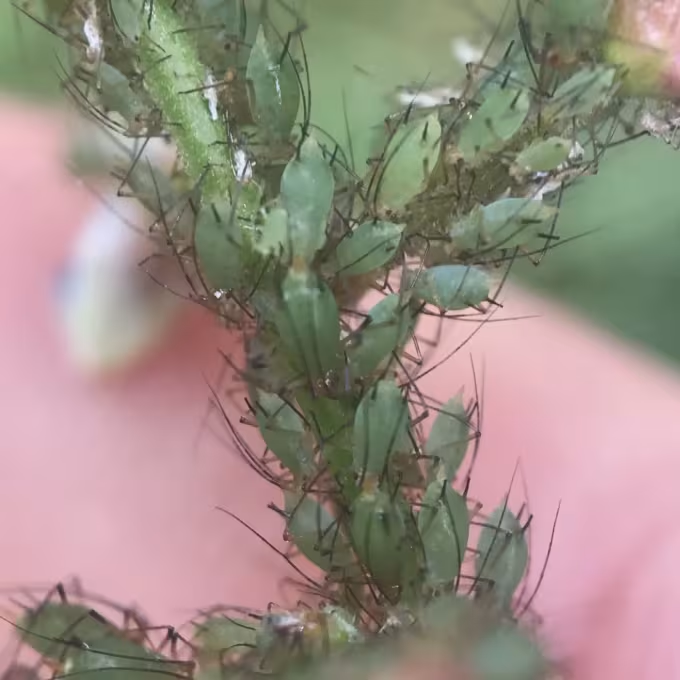
Description
How to identify
The genus Microparsus belongs to the family Aphididae, which is part of the order Hemiptera. These are small insects whose morphological characteristics are adapted to a cryptic lifestyle on specific host plants.
Adult individuals usually have an elongated body ranging from 1.5 to 2.5 mm in length. The coloration of these species can vary from yellowish-green to brown, providing them with natural camouflage on the leaves and stems of the crops they infest.
A key diagnostic feature is the structure of the siphunculi (cornicles) on the abdomen, which have a specific shape in Microparsus species. This allows entomologists to differentiate them under a microscope during phytosanitary field monitoring.
The life cycle includes both wingless and winged forms. Winged individuals appear during periods of dispersal, ensuring the migration of the population to new, uninfected plants, which significantly complicates control efforts in agricultural conditions.
Reproduction occurs via parthenogenesis for most of the growing season, which contributes to very rapid population growth under favorable climatic conditions, especially during periods of moderate humidity and warm temperatures.
What it damages
The Microparsus aphid specializes in attacking plants within the Fabaceae family, commonly occurring on both wild and cultivated species. The choice of host plant is determined by the specific host-preference of the pest species.
Damage is caused by piercing the leaf epidermis or young shoots with their mouthparts (proboscis), followed by the extraction of plant sap. This leads to the rapid depletion of nutrients required for normal plant growth and development.
At feeding sites, physiological processes such as photosynthesis and transpiration are disrupted. As a result of this metabolic imbalance, the plant slows down its growth, reduces flowering intensity, and loses yield potential.
In addition to direct mechanical damage, the aphid acts as a vector for viral diseases. Through their saliva during feeding, these pests can transmit pathogenic viruses from infected plants to healthy ones, often causing more damage than the sap extraction itself.
During their life cycle, aphids excrete honeydew — a sticky, sugary substance. Sooty mold fungi grow rapidly on this substrate, covering the leaf surface with a black film that blocks sunlight and severely impairs the general health of the crop.
When it appears
The appearance of Microparsus in agrocenoses is closely linked to the temperature regime of the spring season. As soon as average daily temperatures exceed certain thresholds, nymphs emerge from eggs that overwintered on plant debris or weeds.
The highest population density of the pest is usually observed in mid-summer, when weather conditions become ideal for intensive reproduction. Prolonged dry periods can contribute to even faster population build-up on crops.
Winged forms are most frequently noted in the second half of the growing season when high-quality food resources on the initial host plants become depleted. At this point, massive dispersal of the pest to neighboring fields and areas occurs.
In autumn, the life cycle concludes with a transition to sexual reproduction. Females lay overwintering eggs in protected areas, such as the base of stems, under bark, or in soil cracks, where they can survive harsh winter conditions.
Predicting the arrival of the pest requires regular field monitoring. It is essential for agronomists to record the first signs of colonization on the underside of young leaves to ensure timely initiation of protection measures.
Signs of infestation
The first visual signal of aphid presence is the curling or deformation of young leaves found at the top of the stem. Affected areas often appear pale due to the loss of chlorophyll caused by sap removal.
The presence of sticky honeydew on the surface of leaves and stems is a reliable indicator of active colony settlement. This substance attracts ants, which often protect the aphids, serving as an indirect indicator of pest infestation in the area.
In cases of heavy infestation, wilting of shoot tips occurs. This manifests visually as the "dropping" or "drying" of young tissues even with adequate watering, as the plant's vascular system has been compromised by prolonged feeding.
Upon inspection of the underside of leaf blades, one can find compact insect colonies. Their presence is accompanied by white cast skins (exuviae), which aphids shed during their growth and molting process.
The presence of a sooty coating, which looks like black dust or a film on leaves, indicates that an aphid colony has been established on the plant for a significant time, requiring immediate attention from a crop protection specialist.
Control measures
The primary method of protection is agrotechnical control. Timely destruction of weeds, which can serve as intermediate hosts for the pest during the off-season, significantly reduces the infectious pressure on fields.
Crop rotation and maintaining spatial isolation between susceptible crops are critical. Proper nitrogen fertilization is also important: an excess of nitrogen makes plant tissues more succulent and attractive to aphids, so a balanced nutrient regime is necessary.
Biological control includes preserving and attracting natural enemies (entomophagous insects). These include ladybugs, lacewings, hoverflies, and parasitic wasps. Using selective insecticides that are safe for beneficial insects is a priority.
Chemical protection is used when the economic threshold of damage is exceeded. Systemic insecticides from various chemical groups are used, as they penetrate the plant and affect the pests during feeding.
- Preventive inspection of field borders and edges.
- Use of pyrethroid or organophosphate-based products when necessary.
- Strict adherence to pre-harvest intervals for all applied chemicals.
- Rotation of active ingredients to prevent the development of pesticide resistance in the pest population.
Taxonomy
- Latin name
- Microparsus
- Order
- Hemiptera (bugs, aphids, leafhoppers)
- Family
- Aphididae
- EPPO code
- MCRPSP
Discussion
No discussions yet — be the first.