
Micromyzus
Micromyzus
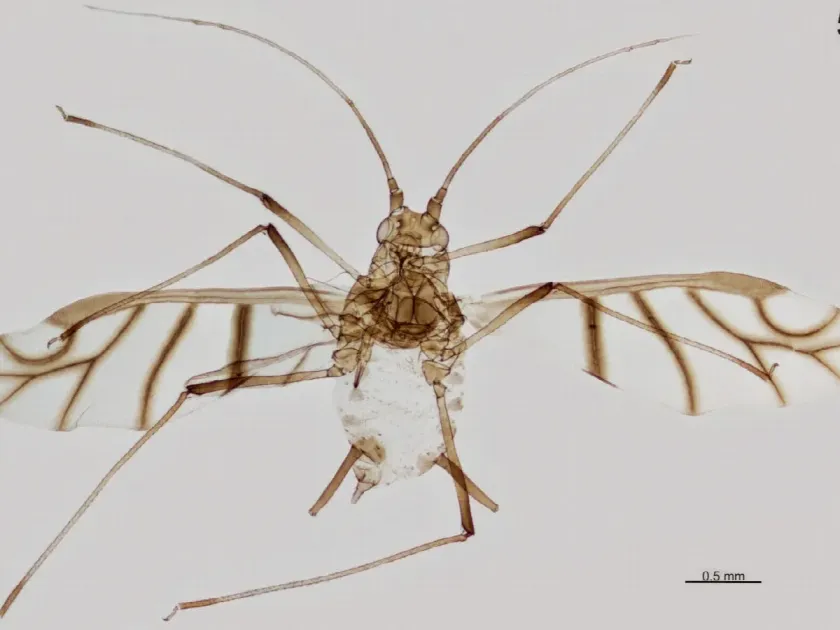
Description
How to identify
Micromyzus is a genus of aphids belonging to the family Aphididae, order Hemiptera. These small insects are known for their specific preference for ferns and related ornamental plants.
Adult aphids are typically small, oval-shaped insects that exhibit a range of colors, often blending into the foliage of their host plants, which makes early detection challenging.
They possess specialized mouthparts designed to pierce plant tissue and extract nutrient-rich sap, which is the primary source of their energy and development.
The life cycle involves multiple generations, with both apterous (wingless) and alate (winged) forms, facilitating the rapid colonization of healthy plants within an enclosure.
The anatomy of these aphids is well-adapted for survival in the stable microclimates of greenhouses and indoor plant collections where ferns are commonly cultivated.
What it damages
Micromyzus aphids primarily infest ferns, focusing their feeding activities on the underside of young fronds and the sensitive growing tips of the plant.
By removing plant sap, they significantly weaken the host, leading to stunted growth, yellowing of fronds, and overall physiological stress to the fern.
The insects are also vectors for various plant viruses, which can cause irreparable damage to the aesthetic quality and health of sensitive fern collections.
Prolonged infestation results in leaf deformation, as the feeding interferes with the normal development of plant tissues during the growth phase.
Severe infestations can lead to complete desiccation and death of the fronds, rendering the plant unsuitable for display or commercial sale.
When it appears
In greenhouses and interior landscapes, Micromyzus aphids remain active throughout the year, as they do not require a winter diapause under controlled climate conditions.
Population surges frequently coincide with the production of new growth on ferns, providing an abundance of high-quality food for the growing aphid colonies.
Temperature and humidity levels found in indoor environments are ideal for these pests, allowing them to complete their life cycle in a relatively short period.
There is no defined dormant season in indoor conditions, making year-round monitoring an essential component of professional plant management.
Migration between plants is most intense when crowding occurs, prompting the development of winged forms that can fly to neighboring host specimens.
Signs of infestation
The earliest signs of an infestation include the curling and twisting of young fern fronds, which may look withered despite adequate soil moisture.
A sticky substance known as honeydew is excreted by the aphids, often accumulating on the surfaces of leaves and serving as a substrate for sooty mold.
The presence of white, discarded cast skins (exuviae) on the undersides of leaves is a clear indicator of a thriving aphid population.
Dark, discolored patches of sooty mold growth significantly reduce the plant's ability to perform photosynthesis, leading to further decline.
- Curled and deformed new fronds.
- Sticky honeydew residue on foliage.
- Black sooty mold growth.
- White shed skins of aphids.
- General yellowing and wilting.
Control measures
Integrated Pest Management (IPM) is the most effective approach for controlling Micromyzus, combining sanitation, biological, and chemical methods.
Physical removal of heavily infested fronds can help reduce the initial pest pressure when an outbreak is first detected in a collection.
Systemic insecticides are highly recommended as they move through the plant's vascular system, reaching the aphids even when they are hidden in tightly coiled fronds.
Biological control agents, such as lacewing larvae or parasitic wasps, can be deployed to suppress populations without the need for intensive chemical applications.
Routine inspection of all new additions to the greenhouse and the use of sticky yellow traps are critical for preventing widespread contamination of the collection.
Taxonomy
- Latin name
- Micromyzus
- Order
- Hemiptera (bugs, aphids, leafhoppers)
- Family
- Aphididae
- EPPO code
- MICYSP
Discussion
No discussions yet — be the first.