
Nettle aphid
Microlophium carnosum
Description
How to identify
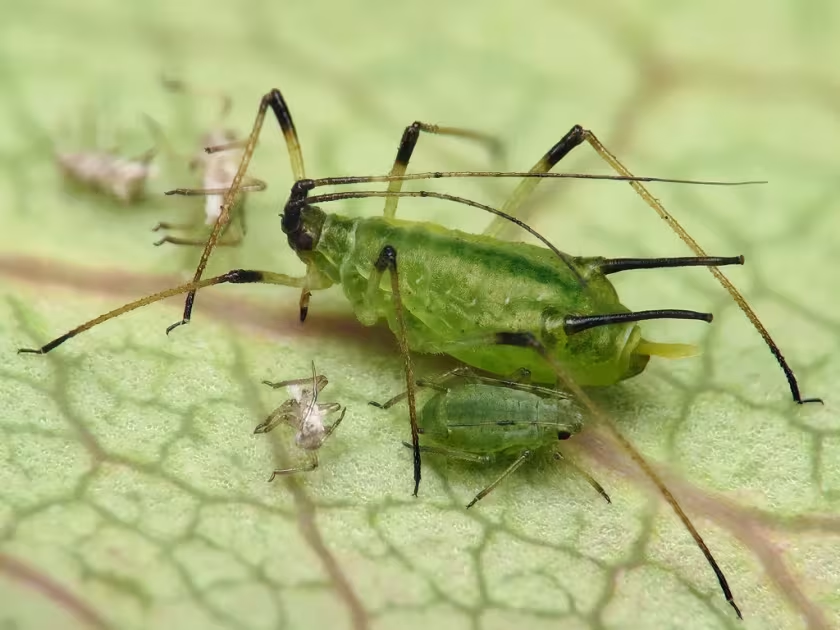
The nettle aphid (Microlophium carnosum) is a member of the Hemiptera order and the Aphididae family. These insects are typically 2.5–4 mm long and possess an elongated body with a pale green or yellowish-green coloration.
The species exists in both wingless and winged forms, with the latter facilitating migration to new host plants. A key diagnostic feature under magnification is the presence of long, slender siphunculi (cornicles) on the abdomen, which often have darker tips.
What it damages
The primary host plant for this species is the common nettle (Urtica dioica). The aphids congregate in dense colonies on the undersides of leaves and on the succulent tips of the stems, where they pierce the plant tissue to feed on sap.
While the nettle aphid is considered host-specific, high population densities can occasionally cause these insects to infest neighboring vegetation. Managing nettle patches is therefore essential to prevent the pest from spreading to nearby sensitive garden crops.
When it appears
The life cycle begins in early spring when larvae hatch from overwintered eggs. The initial generation matures rapidly on emerging nettle shoots, starting a cycle of exponential population growth fueled by asexual reproduction during the summer months.
Throughout the growing season, multiple overlapping generations occur. As the season approaches autumn, sexual reproduction produces eggs that are laid on the host plant to survive the winter, ensuring the population persists into the following year.
Signs of infestation
Common signs of infestation include curling, stunted leaves, and the visible distortion of young plant shoots. Heavy feeding significantly weakens the host plant, resulting in reduced growth rates and potential chlorosis of the foliage.
Aphids secrete honeydew, a sugary byproduct that attracts ants and promotes the growth of black sooty mold on leaf surfaces. The combination of leaf curling, sticky residue, and high ant activity is a clear indicator of a significant aphid colony.
Control measures
The most effective cultural practice for controlling this pest is the periodic mowing of nettle patches. By removing the primary food source before the peak of the growing season, populations are naturally suppressed without the need for chemicals.
If chemical intervention becomes necessary due to proximity to valuable crops, use targeted insecticides. Always apply products carefully to avoid harming beneficial insects, such as ladybugs and lacewings, which act as natural predators of the nettle aphid.
Taxonomy
- Latin name
- Microlophium carnosum
- Order
- Hemiptera (bugs, aphids, leafhoppers)
- Family
- Aphididae
- EPPO code
- MACSEV
Discussion
No discussions yet — be the first.