
Metriochroa
Metriochroa
Description
How to identify
Metriochroa is a genus of leaf-mining moths belonging to the Gracillariidae family. These insects are characterized by their extremely small size, making them difficult to detect during the early stages of infestation.
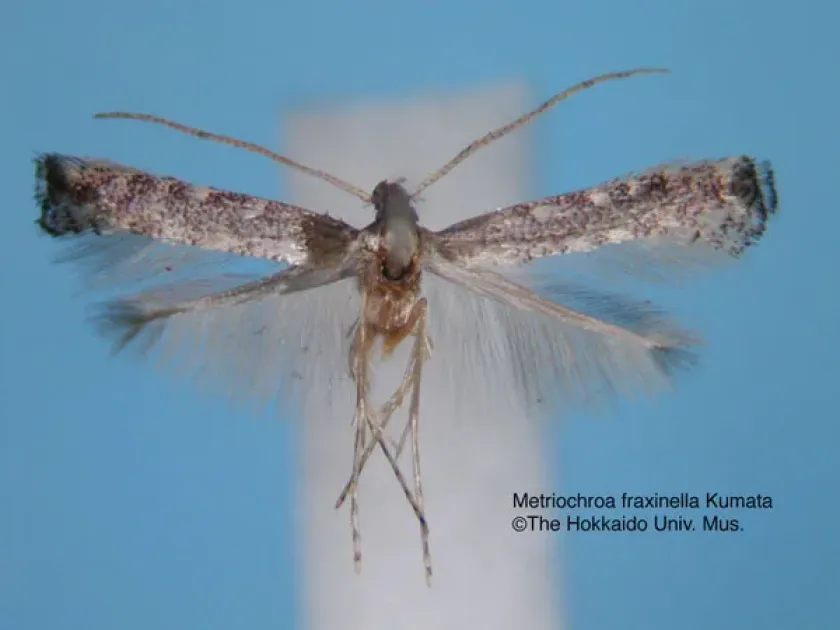
Adults possess a wing structure typical for the family, with a distinct fringe along the edges. When at rest, they fold their wings along their bodies, becoming nearly invisible against the bark or leaf surfaces.
Identifying the specific species typically requires laboratory examination of genitalia, as adults often look identical. Agronomists usually identify them by the unique damage patterns left on the host leaves.
The larvae have flattened bodies adapted for feeding inside the leaf tissue and possess a developed chewing mouthpart. They undergo several developmental stages, during which the intensity of feeding increases significantly.
For monitoring population levels in orchards, pheromone traps tailored with specific attractants for this genus are the most recommended tool for precise observation.
What it damages
The primary host for many species of Metriochroa is the olive tree (Olea europaea). This pest can cause significant damage to commercial olive groves if left uncontrolled.
Larvae lead a concealed lifestyle, creating galleries inside the leaf epidermis. This disruption interferes with photosynthesis and eventually causes premature leaf drop.
In addition to olives, some species may infest wild shrubs, which act as reservoirs for the pest near agricultural fields. A broad host range makes management more complex.
Intensive damage to the canopy weakens the trees, reduces their cold tolerance, and consequently leads to a sharp decline in both the quality and quantity of fruit production.
Multiple generations per year allow the pest to destroy a large portion of the tree's assimilatory surface within a single growing season, requiring prompt intervention.
When it appears
The life cycle of Metriochroa is closely synchronized with the phenology of the host plant. Activation typically aligns with the start of sap flow and the active growth of young foliage.
In regions with mild climates, the pest can undergo several generations per year, ensuring continuous pressure on the plantations throughout the vegetative period.
Pupation occurs either within the leaf mine or in the soil, depending on the specific species. The pupal stage is often the most vulnerable to biological control agents.
Overwintering usually occurs as an adult in sheltered areas like bark crevices or as a pre-pupa in fallen leaves, which is a critical factor for sanitation practices.
Population peaks are generally observed during hot, dry periods when the biological rhythms of the insect synchronize perfectly with the stress conditions of the host plant.
Signs of infestation
The first and most visible sign of infestation is the appearance of "mines"—serpentine, light-colored or brownish tracks on the leaf surface that expand over time.
- Thin, whitish lines visible through the leaf epidermis.
- Deformation and curling of leaf edges where larval feeding is most concentrated.
- Presence of dark frass (excrement) inside the tunnels, giving the mines a darker appearance.
- Yellowing and premature drying of the foliage under high infestation levels.
- Small exit holes on the leaf surface where the adult moths emerge.
Control measures
The protection strategy is based on an integrated pest management (IPM) approach, combining cultural practices with the selective application of insecticides during critical stages.
Sanitation is a vital measure; removing and destroying fallen leaves where the pest may overwinter significantly reduces the population density for the following season.
For chemical control, systemic insecticides are effective as they penetrate the leaf tissue and impact the larvae feeding internally. Contact sprays are generally less effective.
Biological control methods include the use of natural enemies, such as specialized parasitoid wasps, which naturally regulate the population of the leaf miner without environmental harm.
Regular field monitoring and the use of light or pheromone traps are essential to detect the start of moth flight, allowing for timely and efficient protective spraying.
Taxonomy
- Latin name
- Metriochroa
- Order
- Lepidoptera (butterflies)
- Family
- Gracillariidae
- EPPO code
- MTRCSP
Discussion
No discussions yet — be the first.