
Metoponium
Metoponium
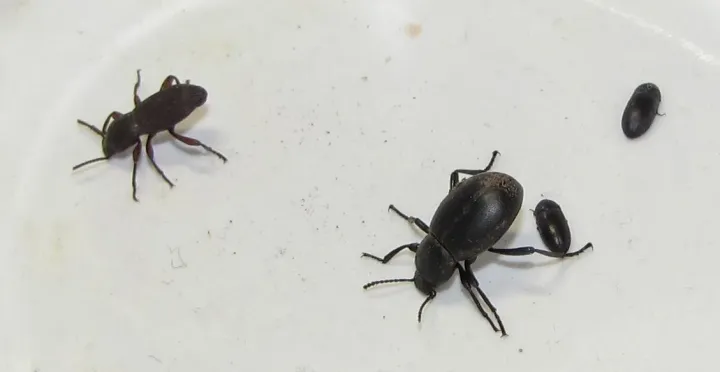
Description
How to identify
Metoponium is a genus of beetles belonging to the Tenebrionidae family (darkling beetles), order Coleoptera. These insects are primarily adapted to arid and semi-arid soil environments.
The adults are typically elongated, dark-colored beetles. They are known for their ability to thrive in dry conditions, often hiding under soil clumps or debris during the day.
The larvae, which are the main cause of agricultural damage, are cylindrical with hardened, chitinous cuticles. They are often referred to as false wireworms due to their resemblance to click beetle larvae.
Metoponium species spend almost their entire life cycle within the soil profile, making them difficult to detect and manage through standard surface treatments.
Their distribution is highly correlated with regions having dry sandy or loamy soils, where they can easily burrow and complete their development cycles.
What it damages
Metoponium pests are known to damage a variety of crops, including small grains like wheat and barley, as well as maize, sunflowers, and certain vegetable species.
The damage is primarily subterranean; larvae feed on germinating seeds, roots, and the hypocotyls of young plants, causing significant stand reduction.
Adult beetles may also cause damage by feeding on stems at or just below the soil line, leading to the lodging and eventual wilting of young seedlings.
Economic damage is most severe during prolonged dry periods, as the lack of alternative organic matter forces the larvae to consume the roots of the cultivated crops.
The loss of roots significantly impairs the plant's ability to uptake water and nutrients, resulting in stunted growth and, in severe cases, the death of the crop.
When it appears
The activity cycle of Metoponium is triggered by warming soil temperatures in the spring, which bring adults and larvae closer to the surface.
Egg-laying typically occurs in the late spring, followed by the development of larvae which remain active throughout the warmer summer months.
As soil temperatures rise and moisture levels drop, the population may descend to deeper soil horizons to survive the extreme heat of mid-summer.
Pupation usually takes place in the soil, with the new generation of adults emerging to prepare for winter dormancy in the soil profile.
Farmers should be most vigilant during the sowing and seedling establishment phases, as this is when crops are most vulnerable to soil-dwelling larvae.
Signs of infestation
The most visible sign of Metoponium infestation is the presence of thinning crop stands and patches of wilted or dead seedlings within the field.
Careful excavation of the soil around affected plants often reveals the larvae feeding on the root system or the base of the stem.
Plants affected by these pests often show signs of nutrient deficiency, such as yellowing, even when soil moisture seems adequate, due to the compromised root system.
In some cases, adult beetles can be found hiding in the soil immediately surrounding the stems of young, stressed plants during the early morning hours.
Sudden gaps in the crop rows that cannot be attributed to seed quality or planter issues are often indicative of subterranean pest activity like that of Metoponium.
Control measures
Management of Metoponium relies heavily on cultural practices, such as deep autumn plowing, which disrupts the soil environment and exposes larvae to predators.
Using high-quality insecticidal seed treatments is the most effective proactive measure to protect seeds and seedlings during the critical germination phase.
Proper crop rotation helps in reducing the build-up of pest populations, as changing crop types limits the continuous food supply for the larvae.
Monitoring fields via soil pit sampling before sowing is essential to determine the population density and decide if soil-applied insecticides are necessary.
Maintaining healthy crop vigor through balanced fertilization can help plants withstand minor root damage, though it does not eliminate the need for pest control in high-infestation areas.
Taxonomy
- Latin name
- Metoponium
- Order
- Coleoptera (beetles)
- Family
- Tenebrionidae
- EPPO code
- METMSP
Discussion
No discussions yet — be the first.