
Cereal aphid
Metopolophium graminearum
Description
How to identify
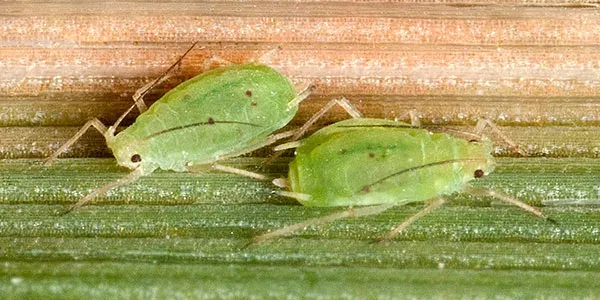
The cereal aphid, Metopolophium graminearum, belongs to the order Hemiptera and the family Aphididae. It is a small insect, typically measuring 1.5 to 3 mm in length, with a light green or yellowish-green body.
The aphid has an elongated, pear-shaped body with long antennae that often exceed the length of the body. A distinctive morphological feature is the presence of long siphunculi and pale legs with dark joints.
This species possesses piercing-sucking mouthparts adapted to extract phloem sap from host plants. The population often includes both apterous (wingless) and alate (winged) forms, allowing for efficient spread within and between fields.
Development involves parthenogenetic reproduction, which allows for rapid population growth during the growing season. A single female can initiate a new colony on a plant, leading to heavy infestations in a short time.
The insect typically overwinters as eggs on the crowns of perennial grasses or on cereal stubble. In spring, the hatching nymphs begin the cycle of colonizing young cereal plants.
What it damages
The main host crops include wheat, barley, rye, and oats. The aphid also thrives on various wild grass species, which serve as crucial reservoirs for the pest throughout the year.
Aphids concentrate on the underside of leaves, stems, and eventually the ears of grain crops. Their feeding causes significant physiological stress to the plant by removing nutrients and water.
High aphid density leads to stunted growth, reduced tillering, and lower grain weight. Severe infestations can result in yield losses ranging from 10% to 30%, depending on the timing and intensity of the attack.
These insects are efficient vectors of various plant viruses, most notably the Barley Yellow Dwarf Virus (BYDV). The viral transmission often causes more economic damage than the direct feeding of the aphids.
Weakened plants show increased susceptibility to secondary fungal diseases and drought stress. Infected ears often exhibit shriveled or underdeveloped grains, impacting both yield and grain quality.
Signs of infestation
Initial signs of infestation include leaf curling and the appearance of yellowing spots on the foliage. Closer inspection reveals clusters of aphids on the undersides of leaves.
The presence of honeydew, a sticky substance excreted by aphids, is a clear indicator of a colony. This substance often supports the growth of sooty mold, which interferes with photosynthesis.
During the heading stage, aphids migrate to the ears, where they feed on the developing grain kernels. This prevents proper grain filling, resulting in thin, lightweight seeds.
Viral infection symptoms, often triggered by aphid transmission, include leaves turning reddish or yellow. These symptoms are sometimes mistaken for nutrient deficiencies, making correct identification essential.
The movement of winged aphids in the crop canopy during the middle of the season suggests a peak in population density and high risk of further spread across the field.
Control measures
Cultural control practices include the removal of weeds that act as alternative hosts and the timely destruction of cereal stubble and volunteer plants to eliminate overwintering sites.
Biological control is vital, relying on natural enemies such as lady beetles, lacewings, hoverflies, and parasitoid wasps. Reducing the use of broad-spectrum insecticides helps preserve these beneficial predator populations.
Chemical intervention should be based on economic threshold levels. When spraying is necessary, systemic insecticides, such as neonicotinoids or pyrethroids, are typically applied to ensure effective control.
Planting resistant varieties and ensuring balanced fertilization can improve the crop's ability to withstand aphid pressure and reduce the likelihood of severe outbreaks.
Seed treatments with insecticidal compounds provide a protective shield for emerging seedlings, preventing early-season infestation and helping to maintain optimal crop density.
Taxonomy
- Latin name
- Metopolophium graminearum
- Order
- Hemiptera (bugs, aphids, leafhoppers)
- Family
- Aphididae
- EPPO code
- METOGA
Discussion
No discussions yet — be the first.