
Rose-grain aphid
Metopolophium dirhodum
Description
How to identify
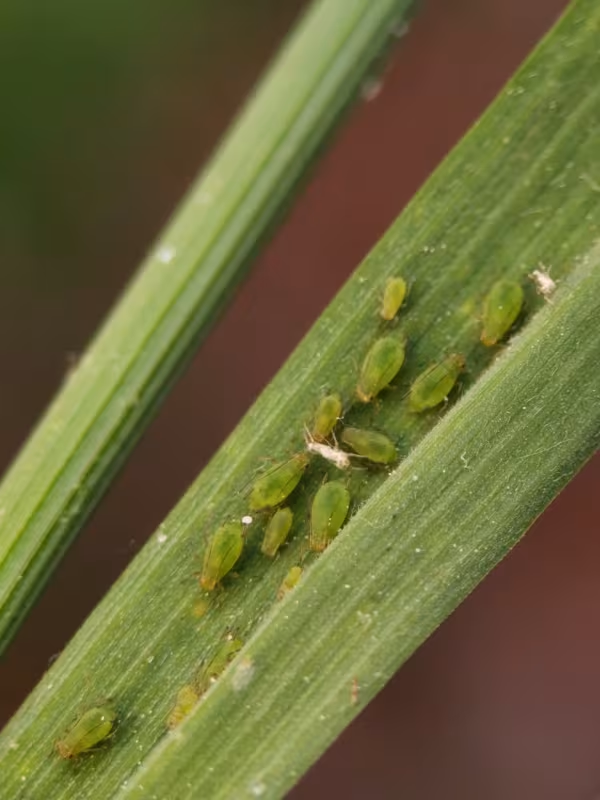
The rose-grain aphid (Metopolophium dirhodum) is a member of the Aphididae family. It is easily identified by its elongated, bright green body, often featuring a distinct darker green stripe running along the dorsal side.
The species exists in both winged and wingless forms. The winged adults are primarily responsible for migratory flights between primary hosts, such as roses, and secondary hosts, such as cereal crops like wheat, barley, and oats.
Key morphological features include long antennae that often reach the length of the body. The siphunculi are typically pale or match the body color, which helps distinguish it from other aphid species found in cereal fields.
Nymphs undergo several molts before reaching maturity. Their development is influenced by environmental conditions; warmer temperatures significantly accelerate the transition from one generation to the next, leading to rapid population expansion.
Identifying this aphid in the field requires close inspection of the undersides of leaves, where they congregate. Due to their coloration, they can sometimes blend in with the leaf tissue, necessitating the use of a magnifying glass for accurate counts.
What it damages
The rose-grain aphid feeds primarily on the phloem sap of cereal plants. This feeding activity deprives the plant of essential nutrients and water, which are necessary for the grain-filling process, leading to overall plant stress.
Symptoms of infestation often appear as yellowing (chlorosis) of the leaves. As the colony grows, the leaves may become distorted, curl, and eventually dry out, which severely impairs the plant's photosynthetic capacity.
Beyond physical damage, this aphid is a known vector for several plant viruses, including Barley Yellow Dwarf Virus (BYDV). Transmission occurs even when aphid populations are relatively low, making them a high-risk pest.
High infestation levels can lead to a significant reduction in grain weight and protein content. In severe cases, the cumulative damage can result in substantial yield losses, sometimes exceeding 30% if left untreated during critical growth stages.
Plants weakened by aphid feeding are also more susceptible to secondary infections and environmental stressors, such as drought or heat waves, which can further decrease the final quality of the harvested produce.
When it appears
The life cycle is heteroecious, meaning the aphid alternates between primary hosts (Rosa spp.) and secondary hosts (Gramineae). Eggs overwinter on rose bushes and hatch in early spring.
Following the emergence of the first generations, winged adults fly to cereal crops in late spring or early summer. This is when the colonization of wheat and barley fields typically begins, coinciding with the rapid growth phase of the cereals.
During the summer months, the population reaches its peak density if environmental conditions are favorable. Continuous parthenogenetic reproduction allows for the rapid development of multiple generations within a single month.
In autumn, as day length decreases, the aphids produce winged sexual forms that migrate back to their primary rose hosts. There, mating occurs, and females lay eggs that are cold-hardy and capable of surviving the winter.
Fluctuations in weather, such as heavy rain or extremely high temperatures, can temporarily suppress aphid numbers. However, their ability to recolonize from neighboring areas or nearby rose bushes ensures that the risk remains throughout the season.
Signs of infestation
The earliest signs of infestation are the presence of small colonies on the lower leaves of the cereal plants. These colonies are often accompanied by shed white skins (exuviae) left behind by developing nymphs.
The presence of honeydew is a primary indicator of aphid activity. This sticky substance coats the leaf surface and often leads to the growth of black sooty mold, which can cover the foliage and further inhibit photosynthesis.
Visual stress in the crop, such as patches of yellowing or stunted plants, often marks the presence of heavy aphid colonies. In the case of cereal crops, the aphids may move from the leaves to the ears as the season progresses.
Sticky traps can be used to monitor the arrival of winged migrants in the field. This provides early warning signs that a colonization event is occurring, allowing for more proactive management and scouting efforts.
Finally, the activity of predators like ladybirds, hoverfly larvae, and lacewings is a strong indicator of aphid presence. If natural enemy numbers are high, they may provide some level of suppression, but they rarely eliminate established infestations entirely.
Control measures
Effective management begins with cultural practices, such as controlling grassy weeds that can act as alternate hosts. Avoid planting cereal crops in close proximity to nurseries or wild hedges of roses or hawthorns.
Chemical control via systemic insecticides is the standard approach when the population exceeds the economic threshold. Applying treatment early, during the tillering stage, is often more effective at preventing both direct damage and viral transmission.
Biological control, by preserving natural enemies, is a key component of Integrated Pest Management (IPM). Using selective insecticides that do not harm beneficial insects helps maintain the natural balance in the field.
Regular scouting is essential to make informed decisions regarding the timing of insecticide applications. Treatment should be targeted based on the number of aphids per stem and the growth stage of the crop to maximize economic return.
It is crucial to rotate insecticide active ingredients with different modes of action to prevent the development of resistance. Monitoring the susceptibility of local aphid populations to common chemical groups is also a recommended long-term practice.
Taxonomy
- Latin name
- Metopolophium dirhodum
- Order
- Hemiptera (bugs, aphids, leafhoppers)
- Family
- Aphididae
- EPPO code
- METODR
Discussion
No discussions yet — be the first.