
Cereal aphid
Metopolophium cryptobium
Description
How to identify
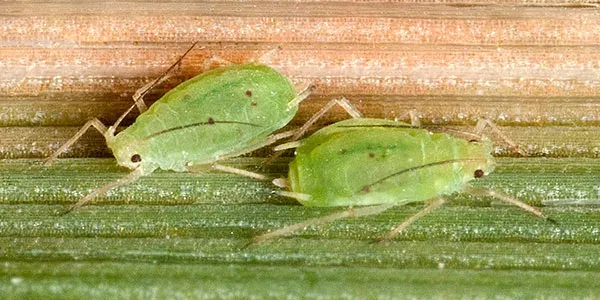
The cereal aphid, Metopolophium cryptobium, belongs to the family Aphididae. It is a small insect, usually light green or yellowish-green, which helps it blend in with the leaves of its host plants during the growing season.
This species is known for its secretive behavior, often dwelling inside curled leaves or within the leaf sheaths. This habit makes detection difficult for farmers who rely on quick visual checks of the crop canopy.
The life cycle involves parthenogenetic reproduction during the summer, enabling explosive population growth, and sexual reproduction in the autumn to produce overwintering eggs on plant debris or perennial grasses.
Experts identify this pest using a 10x magnifying lens, inspecting the underside of leaves and the crop's growth points. Both winged and wingless forms exist, which allows the species to spread efficiently across agricultural fields.
Weather conditions significantly impact their development. Moderate temperatures facilitate rapid successive generations, potentially leading to heavy infestations if not monitored closely during the critical growth stages.
What it damages
The primary hosts of Metopolophium cryptobium include wheat, barley, rye, and oats. Besides these crops, the aphid can also survive on wild grasses, which act as a reservoir for the pest between growing seasons.
Damage occurs when both nymphs and adults suck sap from plant tissues. This nutrient depletion weakens the plant, hinders normal growth, and disrupts the photosynthesis process, leading to overall plant stress.
A major concern is that this aphid is a vector for various viral diseases, such as barley yellow dwarf virus. These viral pathogens often cause more permanent damage to yield potential than the physical feeding of the aphids themselves.
Heavy infestations, especially during the grain-filling stage, lead to malformed ears and shriveled grains. This reduction in the thousand-grain weight directly translates to lower yields and lower-quality grain for the market.
Economic losses are severe when infestations occur during the flag leaf development and flowering stages, as these are the most critical phases for plant productivity.
Signs of infestation
Early symptoms include yellow or chlorotic spots on leaves. As the infestation progresses, leaves may curl, lose turgor, and die prematurely. This leaf damage is often more visible in hot, dry conditions.
Honeydew, a sticky substance excreted by the aphids, is a clear indicator of their presence. The subsequent growth of sooty mold on the honeydew creates a black coating on the leaves, further inhibiting light absorption.
Ants are frequently associated with aphid colonies because they feed on the honeydew. A high density of ants on wheat or barley heads or stems is a reliable warning sign that an aphid colony is nearby.
Inspection of the ear can reveal necrosis and deformed spikelets. Such physical changes in the reproductive parts of the plant indicate that the aphid population has migrated to the developing grain.
Monitoring involves counting aphids on multiple random plants across the field. If population thresholds are exceeded, immediate management actions are recommended to protect the yield.
Control measures
Integrated pest management includes cultural practices such as removing wild grass weeds around the fields and optimizing sowing dates. These practices help disrupt the aphid life cycle and reduce the initial population pressure.
Biological control focuses on preserving natural enemies like ladybirds, lacewings, and parasitic wasps. Reducing the use of broad-spectrum insecticides early in the season encourages these predators to establish themselves.
Chemical control is required when the economic threshold is reached. Systemic insecticides are preferred as they translocate within the plant and reach the aphids hiding in secretive areas like leaf sheaths.
- Application of systemic insecticides during the stem elongation stage.
- Regular scouting and field inspections during the critical growth phases.
- Rotation of different chemical classes to prevent resistance development.
Effective management requires a combination of vigilance and targeted action. By focusing treatments on hotspots and timing them according to pest density, farmers can minimize costs and environmental impact.
Taxonomy
- Latin name
- Metopolophium cryptobium
- Order
- Hemiptera (bugs, aphids, leafhoppers)
- Family
- Aphididae
- EPPO code
- METOCR
Discussion
No discussions yet — be the first.