
Cereal aphid
Metopolophium
Description
How to identify
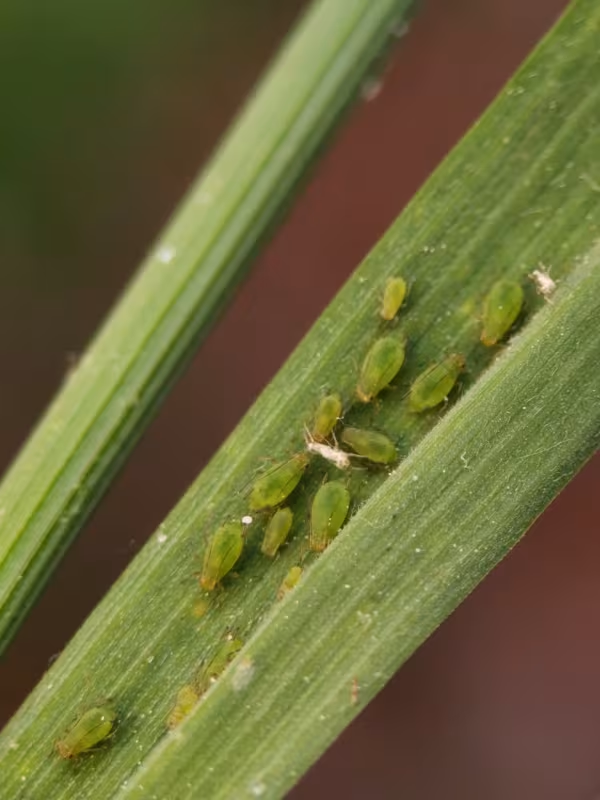
The cereal aphid of the genus Metopolophium belongs to the family Aphididae. These are small insects, typically measuring 2–4 mm in length, with body colors ranging from pale green to yellowish-green.
A key diagnostic feature of this genus is the presence of a dark longitudinal stripe along the dorsal side of the abdomen. The antennae are generally longer than the body, which helps in distinguishing them from other cereal aphid species.
Populations consist of both wingless and winged forms. Winged adults are highly mobile, allowing them to migrate between fields and host plants, which facilitates the spread of infestations across vast areas.
The lifecycle involves incomplete metamorphosis. They overwinter as eggs, typically attached to the base of stems or crop residues of wild grasses, ensuring survival even in harsh winter conditions.
During the growing season, aphids reproduce via parthenogenesis, producing live nymphs. This rapid reproductive cycle allows the population to grow exponentially within a very short period.
What it damages
Primary host crops include wheat, barley, oats, rye, and maize. In addition to cultivated cereals, various wild grasses serve as reservoir hosts for the aphids during the off-season.
Aphids cause damage by feeding on the phloem sap of leaves, stems, and spikes. This nutrient depletion leads to chlorosis, stunted growth, and a significant reduction in the plant's overall vigor.
Beyond direct feeding damage, these insects are critical vectors for plant viruses, most notably the barley yellow dwarf virus (BYDV). This viral transmission can cause severe yield losses.
When infestation occurs during the grain-filling stage, the aphids concentrate on the ears. This leads to shriveled kernels, lower thousand-kernel weight, and reduced grain quality.
The secretion of honeydew promotes the growth of sooty mold, which covers the foliage, blocks sunlight, and interferes with the vital process of photosynthesis in the crop canopy.
When it appears
Infestation typically begins in early spring as temperatures rise above 10°C. Aphid populations start to build up on young, emerging cereal shoots, exploiting the flush of nutrient-rich sap.
The peak population density usually occurs during the stem elongation and heading phases of grain development. Warm, humid weather is ideal for rapid reproduction, potentially leading to outbreaks.
During the height of summer, as cereal crops begin to mature and lose quality, winged aphids migrate to alternative hosts, such as late-season grasses or other suitable vegetation.
As temperatures drop in the autumn, sexual forms develop. These individuals mate, and females lay hardy, overwintering eggs, setting the stage for the next year's cycle.
Depending on the region, multiple generations can occur per season. Consequently, regular scouting is essential to determine the timing and necessity of intervention measures.
Signs of infestation
The first visual sign is leaf curling and yellowing. Upon closer inspection of the curled leaves, one can often find dense colonies of aphids hiding from environmental stress and predators.
A sticky, shiny residue known as honeydew is a clear indicator of aphid presence. This substance often attracts ants, which can be seen tending to the aphid colonies.
In infested ears, aphids appear as clusters of tiny insects on the spikelets. Their feeding causes chlorotic spots to form on the tissue, which may later turn brown or necrotic.
The appearance of black sooty mold on the lower or middle leaves indicates a chronic infestation, as the fungus thrives on the sugary honeydew excreted by the aphids.
Plants heavily infested with cereal aphids appear withered or scorched, with a noticeably reduced growth rate compared to neighboring, uninfected plants in the field.
Control measures
Cultural management strategies include removing volunteer cereals and controlling grassy weeds around the field margins, which reduces the early-season reservoir of the pest.
Optimizing sowing dates can help ensure that the crop passes its most vulnerable growth stages before aphid populations reach critical levels, allowing for more robust plant development.
Biological control plays a significant role in suppression. Predatory insects such as ladybeetles, lacewings, hoverfly larvae, and parasitoid wasps can keep aphid numbers below the threshold.
Chemical control should be implemented when the economic threshold is reached, typically calculated based on the number of aphids per stem during the heading stage.
- Utilize systemic insecticides with favorable toxicity profiles for beneficial insects.
- Ensure thorough canopy coverage when applying chemicals for maximum efficacy.
- Monitor for insecticide resistance and rotate active ingredients if multiple applications are needed.
Taxonomy
- Latin name
- Metopolophium
- Order
- Hemiptera (bugs, aphids, leafhoppers)
- Family
- Aphididae
- EPPO code
- METOSP
Discussion
No discussions yet — be the first.