
Cardin's Whitefly
Metaleurodicus cardini
Description
How to identify
Cardin's whitefly (Metaleurodicus cardini) belongs to the whitefly family (Aleyrodidae) within the order Hemiptera. This tiny insect often goes unnoticed until mass reproduction occurs.
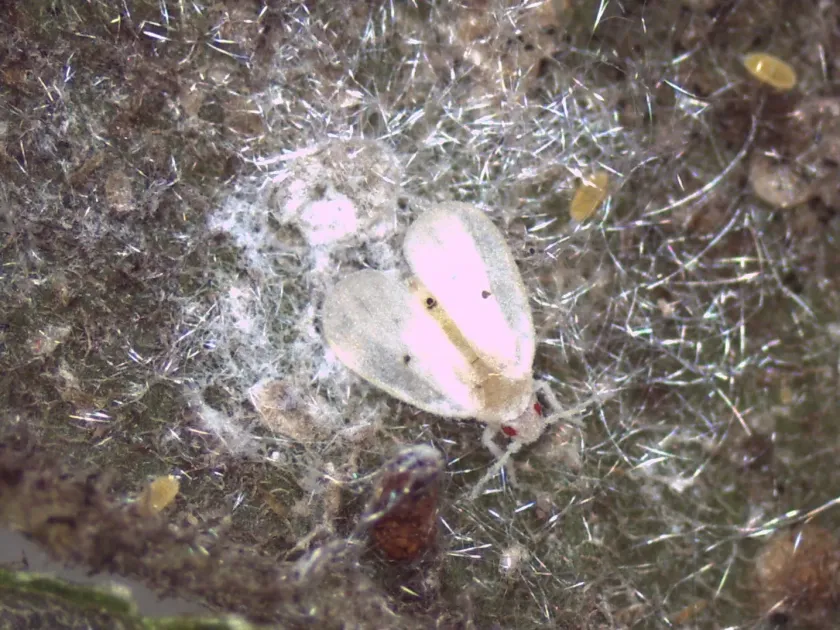
Adults exhibit a characteristic white waxy coating on their wings, making them look like tiny moths. The life cycle involves several stages: egg, three nymphal instars, puparium, and adult.
Identification is difficult due to the cryptic behavior of the nymphs, which attach to the undersides of leaves. Experts often rely on microscopic examination of the puparium for accurate identification.
The pest is characterized by high fecundity, allowing the population to colonize new areas rapidly under favorable temperature conditions. The optimal temperature for reproduction is between 22 and 28 degrees Celsius.
Special attention during scouting should be paid to the undersides of leaves, where these insects prefer to spend most of their life cycle while feeding on plant sap.
What it damages
Primary host plants damaged by this pest include various species from the Rosaceae and Rutaceae families, as well as many ornamental and vegetable crops.
Damage is caused by both adults and nymphs, which actively suck sap from plant tissues. This results in significant weakening of the plant's physiological state.
As a result of Cardin's whitefly feeding, sooty mold fungi develop on the foliage, feeding on the honeydew secreted by the pests. This process hinders photosynthesis.
Severe infestations lead to premature leaf drop, shoot deformation, and a significant decrease in the market quality of fruits and vegetables.
In addition to direct feeding damage, these insects can act as vectors for various plant viruses, posing a critical threat to young seedlings in nurseries and greenhouses.
Signs of infestation
The first visual sign of whitefly presence is the appearance of a characteristic white waxy residue and sticky honeydew secretions on the leaf surface.
When an infested plant is shaken, a mass emergence of adults occurs, creating a brief whitish cloud above the foliage.
The presence of black sooty mold spots on the leaves indicates an advanced stage of infestation, where the pest colonies have become sufficiently numerous.
Plants begin to show stunted growth, their tops may curl, and fruits lose their characteristic color and quality due to impaired nutrition.
Finding empty exuviae (cast skins of larvae) on the underside of a leaf is definitive proof of a Metaleurodicus cardini infestation.
Control measures
Managing Cardin's whitefly involves both agrotechnical and chemical control methods, depending on the scale of the infestation within the planting.
An effective preventive method includes using yellow sticky traps, which allow for monitoring adult population numbers and initiating treatments in a timely manner.
For chemical protection, systemic insecticides are recommended, as they penetrate plant tissues and provide a prolonged protective effect for new growth.
- Regular sanitary removal of plant debris from the field.
- Maintaining optimal humidity and proper ventilation in greenhouses.
- Utilizing natural enemies and entomophagous insects for biological suppression.
It is crucial to rotate chemical products from different classes to prevent the pest from developing resistance to active ingredients.
Taxonomy
- Latin name
- Metaleurodicus cardini
- Order
- Hemiptera (bugs, aphids, leafhoppers)
- Family
- Aleyrodidae
- EPPO code
- ALEDCA
Discussion
No discussions yet — be the first.