
Honeyeaters
Meliphaga
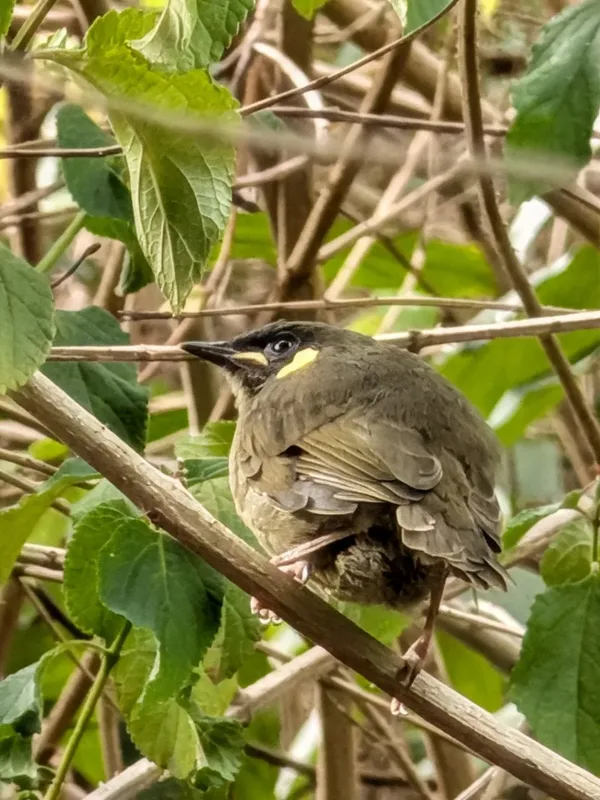
Description
How to identify
Honeyeaters (family Meliphagidae) are a diverse group of passerine birds that, under certain environmental conditions, can act as significant pests for agricultural crops. While morphologically adapted for nectar feeding with their slender, curved beaks, many species are opportunistic omnivores.
Systematically, these birds belong to the order Passeriformes. Although they are crucial pollinators in native ecosystems, their high density in cultivated areas can lead to severe damage in orchards and vineyards.
Species of the genus Meliphaga possess distinct plumage patterns, often featuring bright yellow wing patches or facial markings. These morphological traits are essential for accurate identification during field monitoring.
Honeyeaters exhibit high levels of social behavior and are often observed in large foraging flocks. Their presence in an orchard is typically marked by constant vocalization and rapid movement between the canopies of fruit-bearing trees.
Adult sizes vary depending on the specific species, generally ranging between 15 and 25 centimeters. Their agile flight and ability to exploit fragmented habitats make them particularly challenging to manage in intensive farming systems.
What it damages
The primary targets for honeyeaters are fruit and berry crops, particularly those with high sugar content and succulent pulp. Grapes, peaches, and citrus fruits are frequently targeted by these birds.
Damage occurs when birds peck into the fruit to consume the pulp, seeking moisture and carbohydrates. This leads to immediate crop loss and creates entry points for fungal pathogens and bacterial rots, resulting in secondary damage to the remaining yield.
Honeyeaters are particularly destructive during the ripening phase of early-season varieties. Fruits damaged by birds lose their commercial value and become unsuitable for mechanical harvesting, storage, or transport.
Beyond fruit destruction, these birds may also consume young flower buds or delicate blossoms early in the season, which reduces the potential fruit set and overall plant productivity for the entire year.
In intensive agricultural regions where monocultures provide a consistent and reliable food source, honeyeater populations can cause yield losses of up to 20-30% if deterrent strategies are neglected.
When it appears
Honeyeater pest activity is highly synchronized with the phenological stages of host plants. The most critical period for damage occurs during fruit maturation when sugar concentration peaks and fruit softens.
In regions inhabited by these species, peak pest activity occurs during warmer months characterized by high solar radiation and rapid crop development. This aligns with the peak metabolic needs of the birds during their foraging periods.
Seasonal migratory patterns often coincide with harvest schedules, turning orchards into concentrated feeding grounds. Their ability to rapidly discover food sources forces farmers to adopt proactive management strategies.
During prolonged dry spells, honeyeaters prioritize succulent fruits not only for energy but also as a critical source of hydration. This behavior significantly increases the intensity of damage during drought years.
Monitoring should be initiated approximately 2–3 weeks prior to the projected harvest date to ensure that exclusion or deterrent measures are fully operational before birds establish a feeding pattern.
Signs of infestation
The most common sign of honeyeater damage is the presence of irregular, jagged lesions on the fruit epidermis. These holes are typically deep and uneven, distinct from the smaller, cleaner punctures caused by many insect pests.
A high density of partially consumed or pecked fruit, often left hanging or dropped on the orchard floor, serves as a clear indicator of a significant bird presence in the vicinity.
Direct visual observation of flocks congregating in trees is the most immediate sign. Their characteristic calls are often audible well before the birds themselves are spotted, making acoustic monitoring a useful tool.
Fecal droppings on leaves, branches, or near irrigation points are secondary indicators that confirm the frequent utilization of specific trees as foraging sites.
If fruit begins to drop prematurely or exhibits signs of accelerated decay, a thorough inspection for beak marks is necessary to distinguish bird damage from physiological or pathological disorders.
Control measures
Physical exclusion remains the most reliable method for protecting high-value crops. The use of fine-mesh netting to cover entire tree canopies or vineyard rows effectively blocks bird access to the ripening fruit.
Visual deterrents, such as reflective holographic tapes or predatory bird decoys, can provide short-term relief. However, their efficacy decreases over time, necessitating frequent repositioning to prevent habituation.
Acoustic deterrent systems that broadcast distress calls or predator sounds can discourage birds from settling in the orchard, though they are most effective when used intermittently to avoid behavioral adaptation.
Cultural practices, such as the rapid removal of fallen fruit and the elimination of standing water sources within the orchard, can reduce the area's overall attractiveness to foraging flocks.
Integrated Pest Management (IPM) strategies for honeyeaters involve combining physical barriers with landscape management, such as planting non-attractive vegetation around the perimeter to create a buffer zone.
Taxonomy
- Latin name
- Meliphaga
- Family
- Meliphagidae
- EPPO code
- MLPHSP
Discussion
No discussions yet — be the first.