
Lichenostomus
Lichenostomus
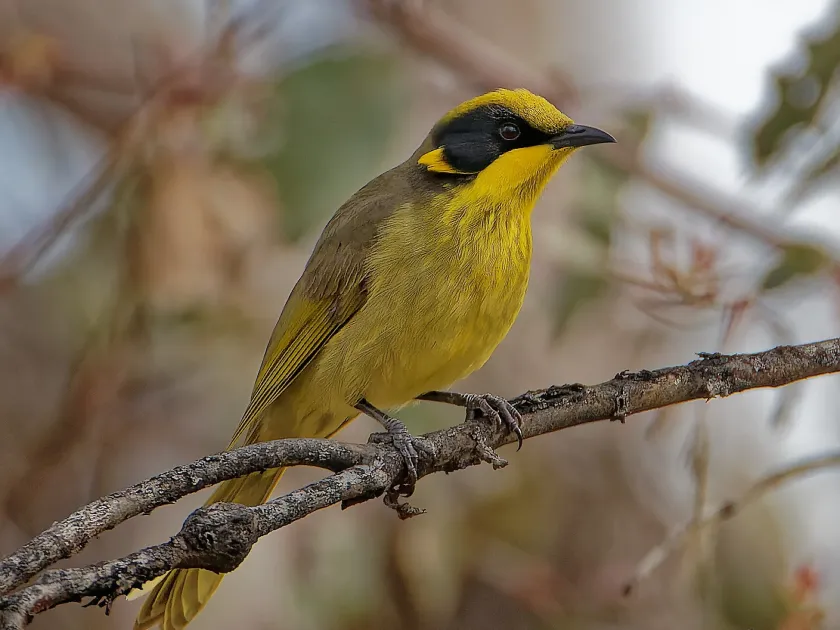
Description
How to identify
Lichenostomus is a genus of birds belonging to the Meliphagidae family (honeyeaters). While primarily recognized for their ecological roles, in certain agricultural landscapes, they can act as pests that damage high-value fruit and berry crops.
These birds possess a medium-sized build with a specialized beak designed for nectar-feeding and insect-hunting. Their plumage is often cryptic, allowing them to remain well-hidden within dense foliage while foraging.
Lichenostomus species are highly territorial and social, often congregating in groups that can quickly overwhelm a specific orchard area. Their behavioral patterns are opportunistic, driven by food availability throughout the seasons.
Identification in the field is based on their vocalizations and movement patterns within the canopy. They are particularly active during the dawn and dusk hours, which makes them difficult to observe during midday.
Understanding that these are vertebrate pests is crucial for agricultural planning, as traditional insect-focused control strategies are not applicable for managing their populations.
What it damages
The primary damage caused by Lichenostomus involves the consumption and destruction of ripe fruit. Crops such as grapes, peaches, cherries, and stone fruits are the most vulnerable to their feeding habits.
The birds peck holes in the skin of the fruit, feeding on the sweet pulp. This mechanical damage ruins the commercial value of the crop and creates entry points for secondary diseases, such as rot and fungal infections.
In addition to direct fruit loss, these birds can damage flower buds and young shoots when searching for nectar or small insects, which can lead to reduced yield potential for the next season.
Damage is often most severe in orchards located near natural habitats, where the birds transition from their natural diet to the more energy-rich resources offered by domesticated crops.
Economic impact is significant because a small flock can destroy a large percentage of an orchard's harvest within a matter of days if left unchecked during the peak ripening stage.
When it appears
The threat from Lichenostomus is highly seasonal, coinciding with the maturation phase of fruit and berry production. Late summer and early autumn represent the peak period of vulnerability.
During the spring bloom, their visits to the garden are usually centered around nectar collection, which may cause accidental damage to blossoms, though the impact is generally lower than during the fruiting phase.
Dry and hot weather patterns often exacerbate the problem, as the high water content of fruits makes them a necessary hydration source for the birds during periods of drought.
The biological cycle of these birds includes phases of local migration, which may bring them into contact with commercial orchards when traditional food sources are depleted.
Monitoring the maturation stages of different fruit varieties is essential to predict when the birds are likely to concentrate in the orchard and to implement preventative measures.
Signs of infestation
A primary sign of infestation is the presence of fruit with distinct, deep, and irregular pecking wounds. These holes are typically small in diameter but deep enough to expose the flesh of the fruit.
Finding large quantities of fallen or half-eaten fruit beneath the trees is a clear indicator of avian foraging activity, signifying that the birds are actively feeding within the upper canopy.
Loud and harsh vocalizations, often occurring in bursts, indicate the presence of a flock. Their movement patterns are restless, with birds frequently shifting positions between trees.
Mechanical damage to young branches and tips of shoots, sometimes accompanied by broken foliage, can reveal their presence, especially when they are foraging for insects in the denser parts of the plant.
The absence of smaller, more timid bird species in the orchard area can be an indirect sign of a dominant flock of honeyeaters occupying the space.
Control measures
Effective management requires a multi-layered approach, as birds are intelligent and can quickly habituate to static control methods, rendering them ineffective over time.
Exclusion is the most effective control method. Installing high-quality bird netting over vineyards and fruit tree rows provides a physical barrier that prevents access to the maturing crop.
Visual deterrents, such as reflective tapes, spinning mirrors, and predator decoys, are useful but must be moved and changed frequently to prevent the birds from losing their fear of these objects.
Auditory deterrents, including automated calls of predators, can be useful, especially when programmed to trigger at random intervals to avoid predictability.
- Install physical netting over fruit and berry rows.
- Rotate the placement of visual deterrents daily.
- Use motion-activated sound devices.
- Maintain orchard sanitation by removing fallen fruit immediately.
- Provide alternative water and food sources away from the crops.
Taxonomy
- Latin name
- Lichenostomus
- Family
- Meliphagidae
- EPPO code
- LCHSSP
Discussion
No discussions yet — be the first.