
Yellow-faced honeyeater
Lichenostomus chrysops
Description
How to identify
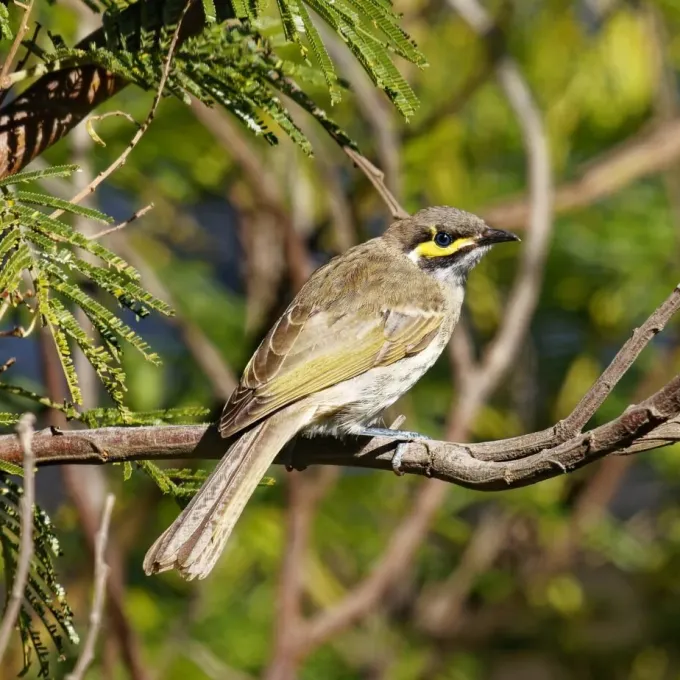
The yellow-faced honeyeater (Lichenostomus chrysops) is a small passerine bird belonging to the Meliphagidae family, native to eastern Australia. It is commonly found in woodlands, open forests, and frequently visits domestic gardens.
The species is distinguished by its olive-gray plumage and a prominent yellow stripe bordered by black running from the beak through the eye, which gives the bird its name. It measures approximately 16–18 cm in length.
These birds are known for their lively and sometimes aggressive territorial behavior, particularly when defending preferred foraging sites against other bird species.
While primarily nectarivorous, they are opportunistic feeders and will readily consume soft fruits and berries when available in agricultural or home garden settings.
Due to their sociable nature, they often forage in small flocks, which can lead to concentrated localized damage on specific fruit-bearing trees or vines.
What it damages
The yellow-faced honeyeater causes damage to orchard crops by puncturing the skin of ripening fruits, including stone fruits like peaches and cherries, as well as various berries.
These puncture wounds allow secondary pathogens, such as fungi and fruit flies, to invade the fruit, causing rot and rendering the produce unmarketable.
In vineyards, honeyeaters can cause significant economic losses by pecking at grapes, especially during dry seasons when the moisture content of the fruit is highly attractive to them.
Beyond fruit destruction, they may also damage floral buds and young succulent shoots in early spring, which can stress young plants and delay their overall development.
The cumulative effect of frequent pecking results in reduced harvest yields and increased costs associated with sorting and grading the remaining produce.
When it appears
The period of peak nuisance coincides with the fruit ripening season, typically during the warmer months when sugar levels in the produce are at their highest.
In Australia, their foraging intensity increases during summer, which often overlaps with the harvest periods of many commercial fruit varieties, necessitating protective intervention.
Prolonged dry spells force these birds to seek irrigation sources and moisture-rich crops, significantly increasing the frequency of their visits to managed gardens.
Activity levels are highest during the early morning and late afternoon hours, which are the optimal times for field staff to conduct bird surveillance and monitoring.
Early-season monitoring should begin as soon as the fruit sets, particularly if the surrounding natural forest habitats have a low abundance of flowering plants.
Signs of infestation
The most diagnostic sign of damage is the presence of small, sharp beak-punctures on the surface of otherwise healthy-looking fruit, often clustered in a specific area.
Frequent bird activity is confirmed by the accumulation of droppings on leaves and branches beneath the tree canopy, as well as remnants of partially eaten fruit on the ground.
Auditory evidence, including their loud, melodious yet sharp calls, provides a clear indication that a group of honeyeaters is currently active within the orchard block.
Premature fruit drop, where fruits show minor physical trauma, is a common occurrence that often precedes full-scale rotting caused by secondary bacterial infections.
A reduction in beneficial insect activity, such as bees, can occasionally be noted due to the aggressive exclusion behavior displayed by honeyeaters at flowering sites.
Control measures
Exclusion netting is the most effective and humane method for protecting high-value orchard crops from honeyeater damage throughout the ripening period.
Acoustic deterrents that broadcast distress calls of predators or the birds themselves can provide short-term relief, though they are most effective when rotated frequently.
Reflective devices, such as bird-scare tape or hanging mirrors, serve as a visual aid to discourage birds, but their success is limited by the rapid habituation of the species.
Maintaining orchard hygiene by removing fallen fruit and managing weeds helps to reduce the overall attraction of the site for opportunistic foragers.
- Installation of bird-proof netting
- Use of sonic bird repellers
- Regular removal of fallen, overripe fruit
- Placement of visual deterrents like flash tape
- Early and efficient harvesting of produce
Taxonomy
- Latin name
- Lichenostomus chrysops
- Family
- Meliphagidae
- EPPO code
- LCHSCH
Discussion
No discussions yet — be the first.