
Sugarcane aphid
Melanaphis sorghi
Description
How to identify
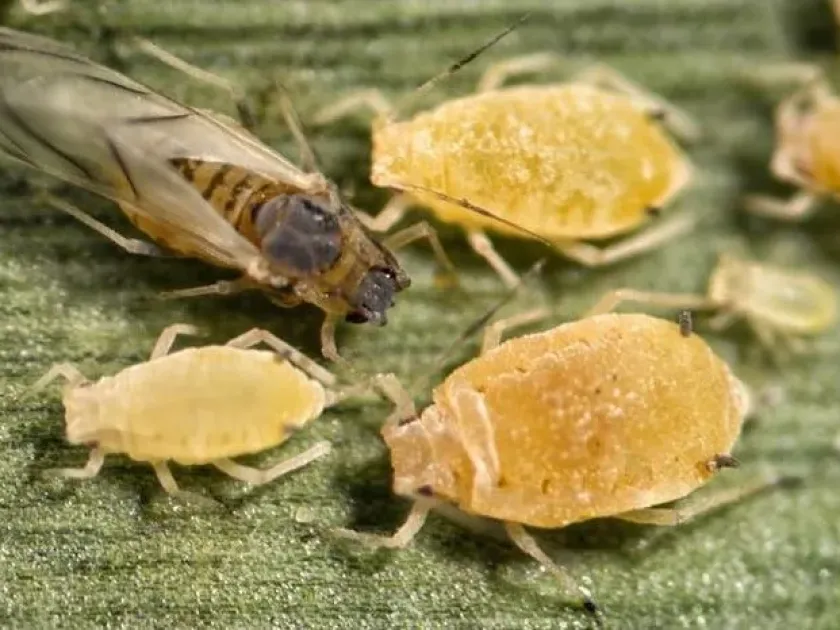
The sugarcane aphid (Melanaphis sorghi) is a small sap-sucking insect in the family Aphididae. Adults are typically about 1.5 to 2 mm long and have a distinct appearance.
Their body color ranges from pale yellow to light tan or greyish-brown. They are easily distinguished by their dark-colored legs, antennae, and small tubes called cornicles on their abdomen.
They reproduce through parthenogenesis, meaning females produce live nymphs without mating. This reproductive strategy allows them to colonize a field very quickly.
The insects are primarily found on the underside of leaves, where they form dense colonies, often starting on the lower leaves and moving upward as the population grows.
Winged forms appear when colonies become overcrowded or when environmental conditions change, allowing them to migrate and infest new areas of the field.
What it damages
This pest mainly affects sorghum, including grain sorghum, forage sorghum, and sudangrass. While its name implies sugarcane, it is a devastating pest of sorghum crops.
By removing plant sap, the aphids extract essential nutrients and water, which causes the plant to wilt and reduces the overall rate of photosynthesis.
Severe infestations cause leaves to turn yellow, dry out, and become brittle. This process significantly stunts the growth of the crop and reduces grain yield quality.
The aphids excrete a substance called honeydew, which covers the leaves and promotes the growth of sooty mold, blocking sunlight and hindering normal plant respiration.
The sugarcane aphid is also a known vector for various plant viruses, which can lead to further crop decline and yield losses across the affected field.
When it appears
The sugarcane aphid population usually begins to build up in early to mid-summer when temperatures are warm and environmental conditions are favorable.
They thrive in hot and dry weather, which accelerates their reproductive cycle and allows populations to explode in a matter of a few weeks.
Peak infestation levels are often recorded during the late vegetative and reproductive stages of the sorghum crop, especially around the heading and flowering periods.
As fall approaches and temperatures drop, population growth slows down, and the aphids may move to alternate hosts or wintering locations.
Natural predator activity usually increases later in the season, which can help suppress aphid numbers before they reach catastrophic levels in the field.
Signs of infestation
The presence of honeydew is often the first visible sign of an infestation, appearing as a sticky, shiny substance on the leaf surfaces.
Leaves will start showing discolored patches, ranging from yellow to reddish or brown, as the plant reacts to the feeding pressure of the colony.
Farmers will observe large, dense clusters of yellowish to tan aphids on the undersides of leaves, accompanied by the presence of ants feeding on the honeydew.
The appearance of black sooty mold on the foliage is a late-stage sign, indicating that the infestation has been present for a significant amount of time.
- Sticky honeydew on the leaves.
- Presence of ants or lady beetles.
- Yellowing or reddish discoloration of leaf tissue.
- Black sooty mold growth on leaves.
- Stunted plant growth and reduced panicle development.
Control measures
Choosing resistant or tolerant hybrids is the most effective way to manage sugarcane aphid populations and prevent yield loss.
Scouting fields regularly is crucial for early detection, allowing for timely intervention before the population reaches an economic threshold.
Chemical control involves the application of selective insecticides that target the aphid while preserving beneficial insect populations like ladybugs and lacewings.
Cultural practices, such as planting early to avoid the peak flight periods of aphids, can significantly reduce the vulnerability of the crop.
Effective weed management, especially targeting johnsongrass or other grasses that act as hosts, helps in reducing the initial aphid inoculum in the field.
Taxonomy
- Latin name
- Melanaphis sorghi
- Order
- Hemiptera (bugs, aphids, leafhoppers)
- Family
- Aphididae
- EPPO code
- MELHSO
Discussion
No discussions yet — be the first.