
Soybean leaf miner
Melanagromyza sojae
Description
How to identify
The soybean leaf miner (Melanagromyza sojae) is a dipteran insect belonging to the Agromyzidae family. It is a small, shiny black fly, usually measuring about 2 mm in length.
Adults are active during the day, frequently found resting on the upper surface of soybean leaves. Their larvae are creamy-white, cylindrical, and develop hidden within the plant tissues.
The life cycle involves an egg stage embedded in leaf tissue, followed by a larval stage where the fly creates tunnels, and finally a pupal stage usually located inside the stems or leaf petioles.
The pupa is protected by a brown, barrel-shaped casing. Depending on ambient temperature, the duration of the entire generation can be as short as three weeks.
Given the favorable climate conditions, multiple generations can emerge per growing season, leading to potential outbreaks if left unchecked during the critical growth phases.
What it damages
Soybean is the primary host for this pest, although it can attack other legumes. Larvae are the most damaging stage, causing significant physiological stress to the host plant.
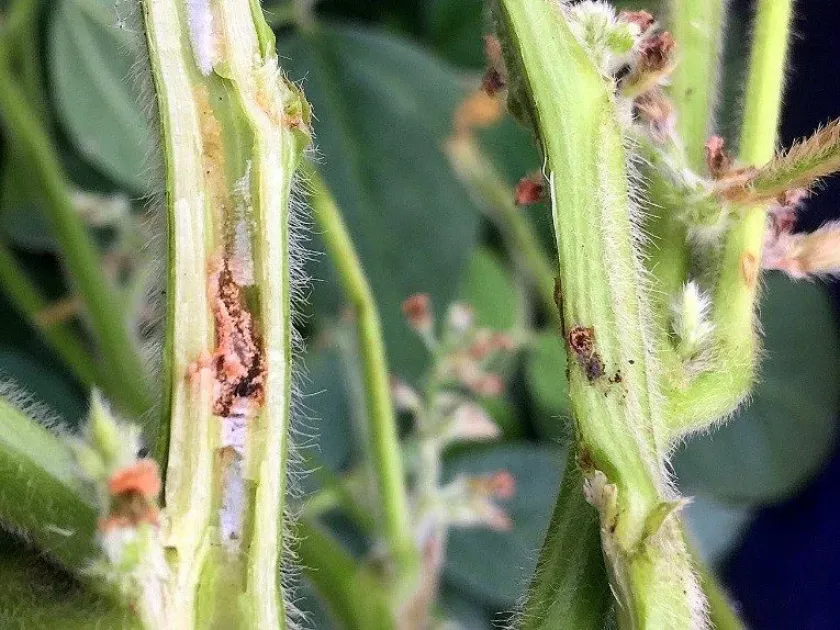
By mining into the leaves and tunneling through the stems down to the root collar, the larvae disrupt the plant's vascular system, hindering the transport of water and nutrients.
This disruption causes stunted growth, wilting, and chlorosis of the leaves. In severe cases, the entire plant may collapse at the base, leading to complete yield loss.
The entry points and tunnels made by the larvae often serve as entry sites for opportunistic fungal and bacterial pathogens, which contribute to secondary decay.
The economic threshold is typically reached when the infestation impacts the vegetative and early reproductive stages, significantly reducing the final grain weight per plant.
Signs of infestation
The most recognizable symptom is the presence of winding, light-colored tracks known as "mines" on the leaf surface. As larvae mature, these tracks become wider and darker.
Stems of infested plants often show visible swelling or longitudinal cracks near the base. Internal inspection of the stem reveals hollowed-out tissue filled with larval frass.
Plants affected by the pest appear chlorotic and less vigorous compared to healthy surrounding crops. They often exhibit premature senescence and dropped flower buds.
The structural integrity of the plant is compromised, making them susceptible to lodging during windy conditions, especially as the pods begin to fill and gain weight.
- Sinuous white mines on foliage.
- Stunting and irregular plant growth.
- Swelling of the root collar and base of stems.
- Reduced branching and pod set.
Control measures
Crop rotation is the most effective cultural practice to disrupt the life cycle of the soybean leaf miner, preventing the build-up of local pest populations.
Weed management, particularly focusing on wild legumes in surrounding areas, is crucial as these plants serve as alternative hosts during the off-season.
Chemical control should be applied during the adult flight period. Systemic insecticides are preferred as they ensure the active ingredient reaches the larvae feeding inside the stems.
Deep plowing after harvest helps destroy pupae and overwintering stages present in the stubble and plant debris, reducing the initial infestation pressure for the next season.
Planting resistant varieties is an essential component of integrated pest management, providing inherent defense against larval tunneling and development.
Taxonomy
- Latin name
- Melanagromyza sojae
- Order
- Diptera (flies)
- Family
- Agromyzidae
- EPPO code
- MEAGSO
Discussion
No discussions yet — be the first.