
Orchid mining fly
Melanagromyza orchidearum
Description
How to identify
The orchid mining fly (Melanagromyza orchidearum) belongs to the order Diptera and the family Agromyzidae. It is a specialized pest that targets orchid species, posing a persistent threat to both private collections and commercial greenhouses.
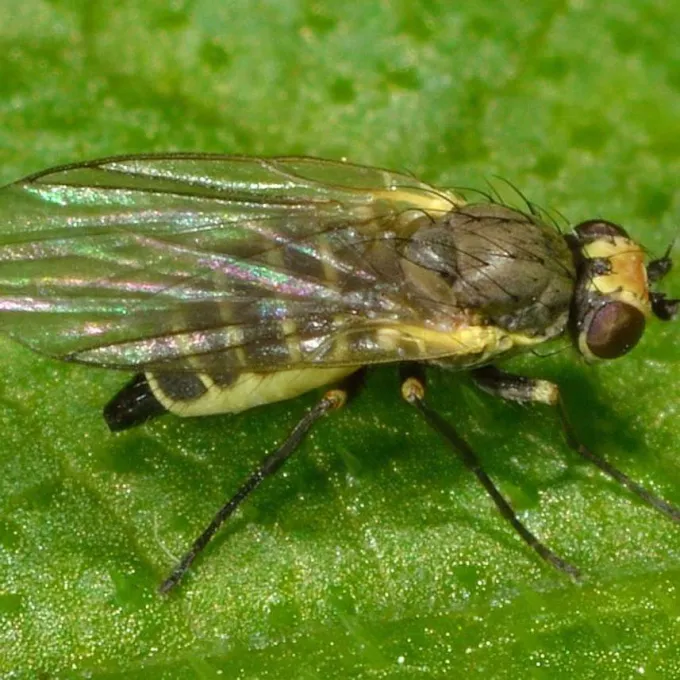
The life cycle consists of egg, larva, pupa, and adult stages. Adult flies are tiny, dark-colored insects. The female inserts her eggs directly into the leaf tissue, which is a protected environment that facilitates larval survival.
The larvae are internal feeders. Once they hatch, they consume the parenchyma, creating tunnel-like structures known as mines. These structures are visible on the surface of the leaves, indicating the presence of the infestation.
Development is highly dependent on ambient temperature. In warm greenhouse conditions, the fly can complete multiple generations per year, leading to rapid population explosions if left unchecked by integrated pest management strategies.
Identification is most successful when using yellow sticky cards. Adults are attracted to the color, and monitoring these traps allows growers to detect the initial arrival of the pest before significant damage occurs.
What it damages
The primary hosts of this pest are various orchid species. The larvae feed on the internal tissues, disrupting the plant's physiological processes. This results in reduced vitality and impaired aesthetic quality.
Leaf mines interfere with photosynthesis. Since orchids often grow slowly, the loss of photosynthetic area due to mining can significantly stunt growth and prevent the plant from producing healthy flowers.
Open mines act as pathways for secondary infections. Pathogenic fungi and bacteria often exploit the weakened tissues, leading to necrosis and decay that can spread across the entire leaf or stem.
In severe cases, the foliage yellows and drops prematurely. This is particularly devastating for specimens where leaf health is critical for overall survival and proper blooming cycles.
Symptoms of infestation include:
- Serpentine, whitish to translucent lines on the leaf surface.
- Tiny white dots caused by oviposition or adult feeding punctures.
- Leaf curling or wilting if the mining is extensive.
- Development of dark necrotic spots around the mines due to infection.
Control measures
Quarantine is the most important preventive measure. All new orchids should be inspected and kept in isolation for at least 3-4 weeks to ensure no signs of mining flies or other pests are present.
Manual removal of infested leaves is recommended for small-scale infestations. By pruning and destroying affected foliage, you physically remove the larvae, preventing them from pupating and starting a new generation.
Systemic insecticides are the preferred chemical control method. Because the larvae live inside the leaf, contact sprays are ineffective; systemic products absorbed by the plant make the tissues toxic to the larvae feeding within.
Biological control agents, such as parasitic wasps (e.g., Dacnusa or Diglyphus species), can be introduced in larger greenhouse operations. These natural enemies specifically hunt for mining fly larvae, providing long-term population suppression.
Maintaining optimal greenhouse hygiene is crucial. Regularly cleaning benches, controlling weeds, and ensuring proper airflow reduces the suitability of the environment for the flies and helps in long-term management.
Taxonomy
- Latin name
- Melanagromyza orchidearum
- Order
- Diptera (flies)
- Family
- Agromyzidae
- EPPO code
- AGMYOC
Discussion
No discussions yet — be the first.