
Stem mining fly
Melanagromyza aeneoventris
Description
How to identify
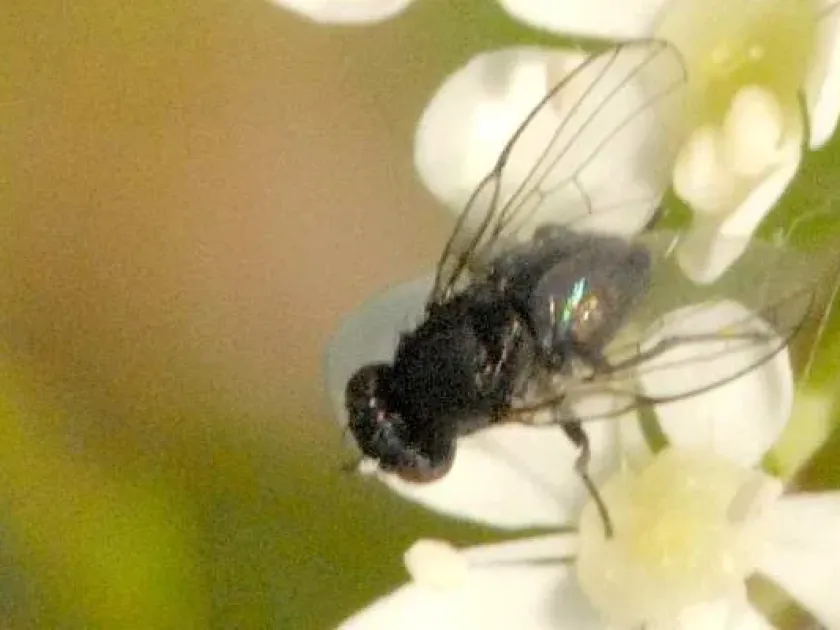
Melanagromyza aeneoventris belongs to the Agromyzidae family, commonly known as leaf or stem miners. This insect is a small fly characterized by a dark, metallic-looking body.
The adult flies possess a specialized ovipositor used to pierce plant tissue for egg deposition. Their lifecycle consists of four distinct stages: egg, larva, pupa, and adult.
The larvae are internal feeders, spending their entire development time within the stems or petioles of host plants, which makes them difficult to target with contact insecticides.
Identification is often confirmed by examining the male genitalia, as external morphology can be very similar to other closely related species within the genus.
Environmental conditions, particularly temperature and humidity, significantly influence the speed of the fly's development and the number of generations per year.
What it damages
This pest primarily infests plants in the Asteraceae family, including economically important crops like sunflowers and various thistle species acting as alternate hosts.
Larval feeding causes internal damage by tunneling through the pith and vascular tissues, which disrupts water and nutrient transport throughout the plant.
Structural integrity of the stem is often compromised, leading to increased susceptibility to lodging and stem breakage under wind or heavy rainfall conditions.
The resulting physiological stress causes stunted growth, reduction in leaf area, and ultimately a significant loss in seed yield or biomass production.
Secondary infections from opportunistic fungi and bacteria frequently enter the plant through the damage sites, further exacerbating the decline of the host plant.
Signs of infestation
The first external signs of infestation are small puncture marks on the epidermis of the stem, caused by female flies when they lay their eggs.
Internally, the presence of winding tunnels or mines packed with larval frass is a definitive indicator of the infestation progress within the stem tissue.
Infected plants may display symptoms such as premature yellowing, wilting during peak sunlight hours, or abnormal curvature and thickening of the stem.
Upon dissecting the stem, one can locate the larvae or the puparia, which are often found near the exit points created by the insect before emergence.
An overall lack of vigor and uneven plant height across the field can often be traced back to localized or widespread stem miner activity during the growing season.
Control measures
Cultural control practices, such as deep plowing after harvest, are essential to bury and kill overwintering pupae that reside in the soil or crop residue.
Effective weed management, focusing on removing Asteraceae weeds near crop fields, significantly reduces the population pressure of the stem mining fly.
Chemical control should be timed to coincide with the peak flight activity of adult flies, utilizing systemic insecticides to prevent larvae from establishing in the stems.
Crop rotation is a critical component of integrated pest management, ensuring that host plants are not grown in the same area in successive seasons.
Monitoring programs using yellow sticky traps allow agronomists to assess fly population density and determine the necessity and optimal timing for intervention.
Taxonomy
- Latin name
- Melanagromyza aeneoventris
- Order
- Diptera (flies)
- Family
- Agromyzidae
- EPPO code
- MEAGAE
Discussion
No discussions yet — be the first.