
Melanagromyza
Melanagromyza
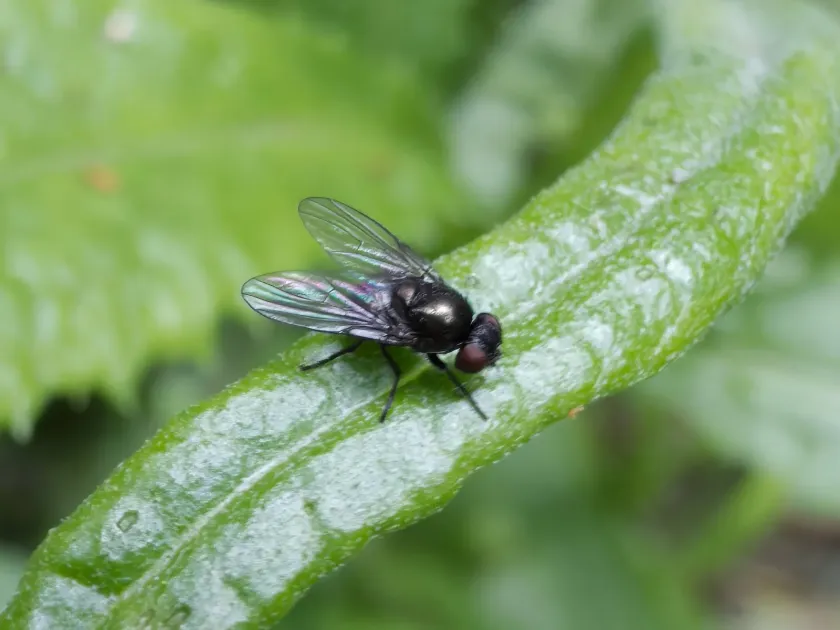
Description
How to identify
Melanagromyza is a genus belonging to the leaf miner fly family (Agromyzidae) within the order Diptera. These are small, often black-bodied flies that may exhibit a faint metallic luster.
Adult flies are secretive and primarily feed on plant sap by making minute punctures with their ovipositors, which also serves as the site for egg placement.
The larvae are small, legless maggots that spend their entire development period inside the tissues of the host plant, often within stems or leaf petioles.
Identification is frequently based on the damage patterns, such as tunnels and mines, rather than visual observation of the adult flies due to their small size.
The life cycle encompasses egg, larva, pupa, and adult stages, with the number of generations per season being highly dependent on local climatic conditions.
What it damages
Melanagromyza species are specialized pests that primarily target legumes, including soybeans, beans, cowpeas, and various wild leguminous plant species.
Larvae bore into the stems, leaf stalks, or roots, creating galleries that disrupt the plant's vascular system and nutrient transport, leading to physiological stress.
Heavy infestation during the early growth stages of the crop can lead to stunted growth, reduced vigor, and, in severe cases, the death of young seedlings.
The damaged plant tissue often acts as a portal for secondary infections, including fungal and bacterial pathogens, which exacerbate the overall damage to the crop.
Yield loss is significant, as the damage results in poor pod filling, reduced seed quality, and an overall decrease in the plant's ability to resist environmental stresses.
Signs of infestation
The initial signs of infestation are small white puncture marks on the leaves caused by adult females feeding and laying eggs in the plant tissue.
Linear or winding mines (tunnels) under the epidermis of the leaf are a hallmark sign of larval activity, often turning brown or necrotic over time.
Wilted stems, yellowing of leaves, and premature drying of the plant canopy are common symptoms occurring despite adequate moisture levels in the field.
Splitting the stems or petioles often reveals internal galleries filled with larval frass and, depending on the stage, the larvae or brown, barrel-shaped puparia.
Root damage manifests as internal tunnels that weaken the plant's anchorage in the soil, making them prone to lodging or easy removal from the ground.
Control measures
Crop rotation is the most critical management strategy, as it disrupts the life cycle of the pest by removing the host plants from the field for consecutive seasons.
Deep plowing after harvest helps bury and destroy crop residues that contain overwintering pupae, effectively reducing the population for the next growing season.
Weed management, specifically focusing on eliminating wild leguminous host plants around field edges, is essential to minimize breeding grounds for the fly.
Systemic insecticides may be used when monitoring indicates high adult activity, aimed at preventing larvae from successfully entering the plant stems.
Planting resistant or early-maturing cultivars can help the crop bypass the peak window of pest infestation, ensuring stronger stand establishment and higher yields.
Taxonomy
- Latin name
- Melanagromyza
- Order
- Diptera (flies)
- Family
- Agromyzidae
- EPPO code
- MEAGSP
Discussion
No discussions yet — be the first.