
Pea aphid
Megoura viciae
Description
How to identify
The pea aphid Megoura viciae is a significant agricultural pest belonging to the Aphididae family. It is a common insect that poses a threat to many leguminous plants worldwide.
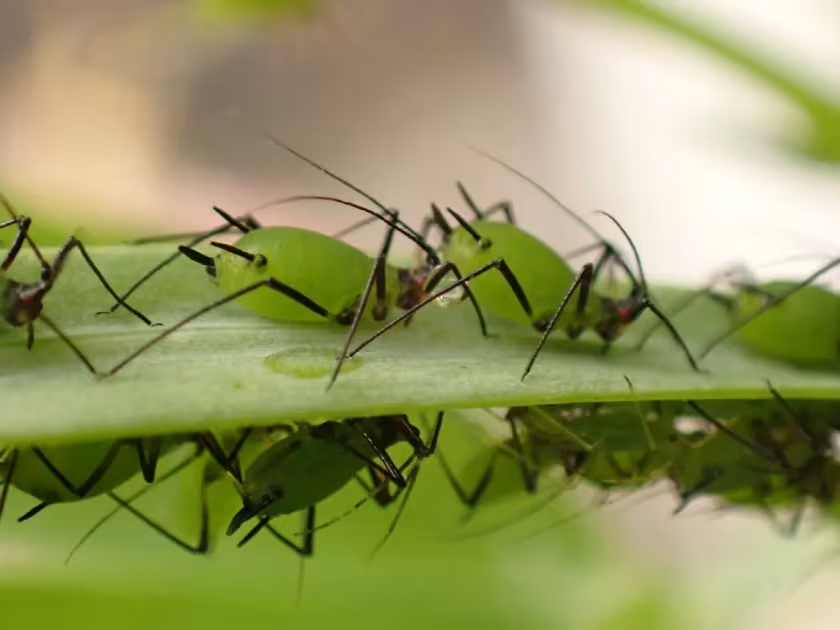
Adult aphids measure about 3 to 4 millimeters in length. Their bodies typically range from light green to dark green or brownish, often with shiny black appendages.
Diagnostic features include long antennae, black legs, and distinct black siphunculi (tubes) at the tip of the abdomen. These morphological traits help in species identification in the field.
The life cycle includes both wingless and winged morphs. Winged individuals are critical for the dispersal of the population to new host plants during the active growing season.
Overwintering occurs in the egg stage. The eggs are small, shiny, and black, usually found on the stems of perennial plants or crop residues, protecting the species through winter.
What it damages
This pest primarily attacks legumes, including peas, broad beans, vetches, and clover. Its feeding behavior can cause substantial economic losses in agricultural production.
The aphid feeds by inserting its mouthparts into the phloem of the plant. It extracts plant sap from tender shoots, flower buds, and developing pods, depriving the plant of nutrients.
Heavy infestation stunts plant growth and prevents normal development. In many cases, the plant becomes weakened, leading to premature wilting and a lack of vigor.
Beyond direct damage, Megoura viciae acts as a vector for various viral diseases. Viruses transmitted by aphids can devastate fields far more efficiently than the insects themselves.
The market value of the harvest is significantly reduced. Pods remain flat, seeds are shriveled or underdeveloped, and overall yield is substantially lower compared to healthy crops.
When it appears
In the spring, overwintering eggs hatch to produce the first generation of aphids. These early colonies are usually established on wild hosts or weeds near crop fields.
As temperatures rise, the aphids transition to legume crops. They reproduce rapidly through parthenogenesis, allowing for exponential population growth during the peak of the season.
The highest infestation levels are typically observed during the flowering and pod-filling stages of the host plants. During this period, the aphids concentrate on reproductive organs.
The lifespan of a single generation is very short, often lasting only a few days in warm conditions. This allows for multiple generations to occur throughout the summer months.
In autumn, as day length shortens and temperatures drop, sexual forms emerge. These individuals mate to produce the eggs that will ensure the species survives the winter.
Signs of infestation
Visible signs of infestation include the curling and yellowing of young leaves. Infected plants may appear stunted or deformed compared to surrounding healthy crops.
Honeydew, a sticky substance secreted by aphids, is a primary indicator. This excretion coats leaves and stems, creating a breeding ground for sooty mold, which appears as a black layer.
Colonies of aphids can be easily spotted clustering on the undersides of leaves or along the stems and floral structures. Their dense presence is often noticeable during field inspections.
Flower buds often fall off prematurely, resulting in poor pod set. If pods have already formed, they may appear distorted or fail to fill with seeds due to constant sap extraction.
- Stunted plant growth and twisted foliage.
- Sticky honeydew buildup on plant surfaces.
- Visible black sooty mold fungus on leaves.
- Flower and bud abortion in legumes.
Control measures
Integrated pest management (IPM) is essential. Crop rotation and maintaining spatial distance from perennial legumes can significantly reduce early season colonization.
Weed control in and around the fields is vital, as wild vegetation acts as an early-season reservoir for aphid populations before they invade the main crop.
When the economic threshold of pest density is surpassed, the application of systemic insecticides is necessary to suppress the population before significant damage occurs.
Encouraging natural predators such as lady beetles, lacewings, and hoverflies is an effective biological control strategy. These beneficial insects can keep aphid numbers in check.
Post-harvest tillage and deep plowing help bury plant residues, effectively destroying the overwintering eggs and breaking the life cycle of the pest for the next growing season.
Taxonomy
- Latin name
- Megoura viciae
- Order
- Hemiptera (bugs, aphids, leafhoppers)
- Family
- Aphididae
- EPPO code
- MEGHVI
Discussion
No discussions yet — be the first.