
Vetch aphid
Megoura crassicauda
Description
How to identify
The vetch aphid, scientifically known as Megoura crassicauda, belongs to the family Aphididae (order Hemiptera). It is a specialized pest that has distinct morphological characteristics allowing for reliable field identification.
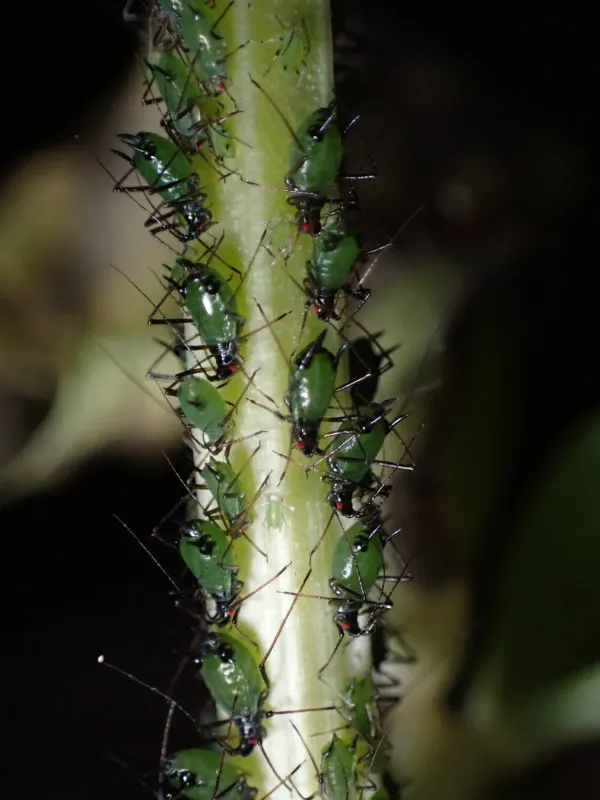
The adult body is oval-shaped, typically ranging in color from light green to dark brown or blackish. A key diagnostic feature is the presence of long, dark siphunculi (cornicles) located on the posterior end of the abdomen, which are highly visible under close inspection.
The species exhibits polymorphism, featuring both wingless and winged forms. Winged adults are primarily responsible for the dispersal of the colony to new host plants, significantly increasing the spread of infestations across fields.
Developmental stages include nymphs that resemble adults in general morphology but are smaller and lack mature reproductive organs. These nymphs begin feeding immediately upon birth, contributing to the rapid growth of the colony population.
Their life cycle is adapted to the growth patterns of their host plants, allowing them to exploit nutrient-rich sap during the most active phases of plant development.
What it damages
The vetch aphid primarily targets plants within the Fabaceae family, including vetch, peas, and various beans. Both nymphs and adults cause significant damage by piercing plant tissues and extracting sap.
They congregate in dense colonies on young shoots, flower buds, and tender leaves. This intensive feeding disrupts the physiological processes of the plant, leading to stunted growth and severe deformation of affected parts.
Infested plants often show signs of leaf curling, yellowing, and flower abortion. In severe cases, the entire plant may collapse due to the loss of essential nutrients and the metabolic stress caused by the feeding insects.
Beyond physical damage, the vetch aphid is a known vector for various plant viruses. By injecting saliva into the plant, it introduces pathogens that cause systemic diseases, further reducing both the quality and quantity of the harvest.
Economic losses are often compounded by the accumulation of honeydew on the leaves, which promotes the growth of sooty mold, further interfering with photosynthesis and lowering the crop's market value.
When it appears
The annual cycle of the vetch aphid is closely tied to climatic conditions. It typically overwinters in the egg stage on plant debris or perennial weeds, which serve as a reservoir for the pest.
As temperatures rise in the spring, the eggs hatch into stem mothers, which initiate the first generation. The population grows exponentially during the late spring and summer months, coinciding with the flowering phase of legume crops.
The duration of each generation is highly dependent on ambient temperature and humidity. Under optimal conditions, the species produces multiple generations per season, leading to sudden population spikes in fields.
In the autumn, as days grow shorter and temperatures drop, sexual reproduction occurs, resulting in the production of eggs that are resistant to cold temperatures, ensuring the survival of the population through the winter.
Monitoring should be rigorous from the emergence of the first true leaves, as early colonizers set the stage for large-scale outbreaks later in the growing season.
Signs of infestation
The most obvious sign of infestation is the presence of dense colonies of aphids on the growing tips and undersides of leaves. These look like dark, compact clusters of insects, often accompanied by the presence of ants.
Visual symptoms on the plant include the curling or twisting of apical leaves. Affected plants may appear wilted or chlorotic, showing distinct growth retardation compared to healthy specimens in the same field.
The presence of honeydew, a sticky substance secreted by the aphids, is another hallmark of an infestation. This substance frequently becomes covered in a black sooty mold, which is easily visible on the foliage.
Flowers and pods of infested plants may be underdeveloped, deformed, or fail to set fruit entirely. This loss of reproductive organs is a critical indicator of severe economic damage.
Careful scouting of field margins and weed-infested areas is crucial, as these often act as the primary infestation points before the insects move into the main crop.
Control measures
Managing the vetch aphid requires an integrated approach that focuses on both preventive cultural practices and chemical interventions when necessary. Crop rotation and field sanitation are the foundations of effective control.
Eliminating weed hosts in and around fields significantly reduces the initial population pressure in the spring. Autumn tillage can also help bury and destroy overwintering eggs located in soil surface debris.
Chemical control should be initiated once the pest density exceeds established economic thresholds. Systemic insecticides are generally preferred as they offer lasting protection against sap-sucking insects.
Rotating chemical classes is essential to manage potential resistance development. Application should always be performed following safety guidelines to protect beneficial insects, such as pollinators and natural predators.
- Regular field scouting to detect early outbreaks.
- Conserving natural enemies like lady beetles and lacewings.
- Balanced nitrogen fertilization to avoid excessive vegetative growth that attracts aphids.
Taxonomy
- Latin name
- Megoura crassicauda
- Order
- Hemiptera (bugs, aphids, leafhoppers)
- Family
- Aphididae
- EPPO code
- MEGHCR
Discussion
No discussions yet — be the first.