
Ficus seed wasp
Megastigmus transvaalensis
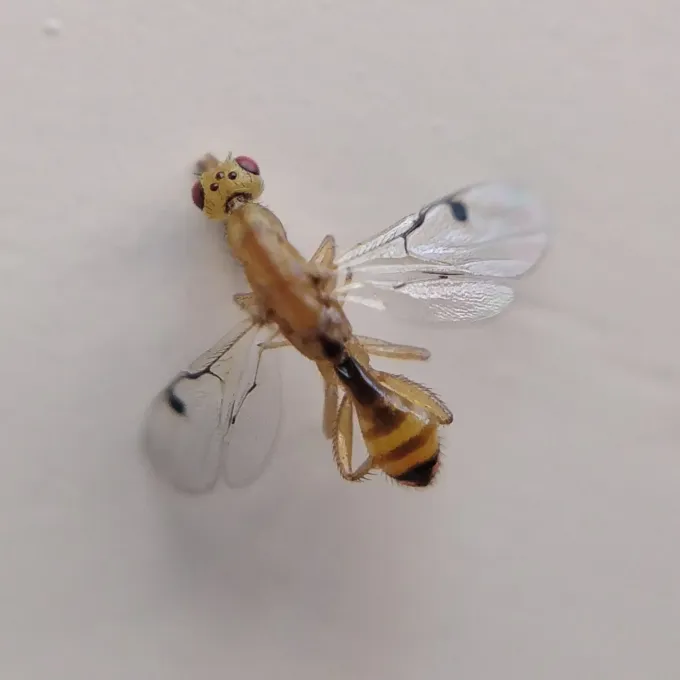
Description
How to identify
Megastigmus transvaalensis, commonly known as the Ficus seed wasp, belongs to the Torymidae family within the order Hymenoptera. Unlike many of its relatives, this species has evolved into a phytophagous insect that feeds on the seeds of its host plant.
The adult wasps are very small, typically measuring between 2 and 3 millimeters. They possess a delicate appearance, with females featuring a distinct, long ovipositor used to inject eggs deep into the developing Ficus fruits.
The larvae are white, legless, and C-shaped. Their entire development occurs within the restricted confines of a single seed, which provides them with all the necessary nutrients to reach maturity.
Pupation takes place inside the hollowed-out seed. Once the wasp matures into an adult, it chews a clean exit hole through the seed coat and the fruit wall to emerge into the environment.
The life cycle is tightly synchronized with the fruiting phenology of the Ficus host, making them highly specialized in their habitat requirements.
What it damages
The primary hosts of this wasp are various species within the Ficus genus. The pest specifically targets the reproductive structures, causing direct damage to the developing seeds inside the syconia (figs).
By consuming the contents of the seeds, the larvae render them non-viable. This significantly impacts seed production, which is a major concern for both commercial nurseries and botanical conservation programs.
Heavy infestations lead to the premature shedding of immature fruits. This loss of fruit crop can be devastating for plants that rely on seed dispersal for their natural life cycle.
In ornamental settings, the presence of these wasps can weaken the plant's health due to the physiological stress caused by the extensive seed damage within the fruit canopy.
Because the larvae reside inside the seeds, they are often unknowingly transported across long distances in shipments of infested fruit or seed stock, facilitating the spread of the pest.
Signs of infestation
The most visible sign of an infestation is the presence of small, perfectly circular exit holes on the exterior of the figs. These holes indicate that the adult wasp has successfully emerged.
Opening the fruits reveals hollowed-out seeds. In active infestations, you may find larvae inside the seed capsules, confirming the presence of the pest.
Premature fruit drop, where the figs appear discolored or shriveled before they reach maturity, is a strong indicator of internal larval activity disrupting fruit development.
The presence of fine, sawdust-like frass near the exit holes is another symptom that the larvae have been feeding and preparing to emerge from the host tissue.
Adult wasps flying around the Ficus canopy during the fruiting season are a clear signal that an infestation is currently in progress.
Control measures
Strict phytosanitary measures are essential to prevent the introduction of this pest into new areas. Inspecting all imported Ficus plant material, especially fruits and seeds, is critical.
Sanitation is a cornerstone of control: all fallen fruit must be collected promptly and destroyed, either by burning or deep burial, to prevent larvae from completing their development cycle.
Chemical control is difficult because the larvae are protected inside the fruit. Therefore, sprays should be timed to target the adult wasps during their brief window of activity before they lay eggs.
Monitoring using yellow sticky traps or pheromone lures can help growers identify the arrival of adults, allowing for more precise and effective timing of control efforts.
- Regular inspection of developing fruit crops.
- Sanitary disposal of all infested or fallen figs.
- Targeted application of insecticides during adult emergence periods.
Taxonomy
- Latin name
- Megastigmus transvaalensis
- Order
- Hymenoptera
- Family
- Torymidae
- EPPO code
- MEGSTR
Discussion
No discussions yet — be the first.