
Pistachio seed wasp
Megastigmus pistaciae
Description
How to identify
The pistachio seed wasp (Megastigmus pistaciae) is a small insect belonging to the family Torymidae within the order Hymenoptera. Adult females are distinguished by their long ovipositors, which they use to penetrate the pistachio fruit to lay eggs.
The adults are yellowish-brown in color with dark markings and clear, transparent wings. Their small size makes them quite elusive, and they are often difficult to spot in the dense foliage of pistachio trees.
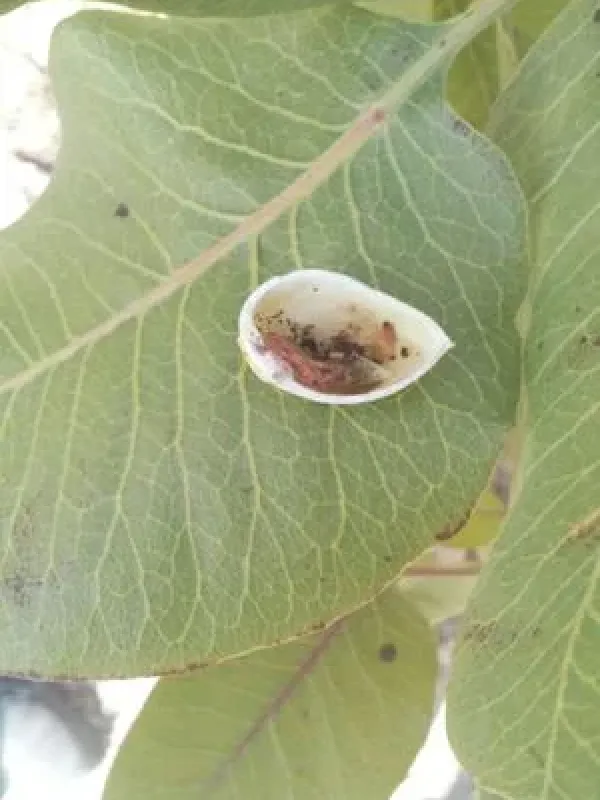
The larvae are whitish, C-shaped, and possess well-developed chewing mouthparts. They develop exclusively inside the seed of the pistachio, where they remain protected throughout their growth.
The lifecycle of the wasp is strictly synchronized with the phenological stages of the host tree, particularly the development of the pistachio drupe.
Pupation occurs entirely within the infested seed. The insect remains inside the shell, which provides a safe environment until the adult wasp emerges the following season.
What it damages
The primary host of this pest is the pistachio tree (Pistacia vera). The seed wasp is a specialized pest, and its activity is limited to the fruit of this species.
Once the larva hatches, it bores into the developing seed kernel, feeding on the endosperm. This results in the complete destruction of the kernel, rendering the nut hollow and inedible.
Infested nuts often remain on the tree and may appear normal from the outside for a long time, making detection challenging during the early stages of the season.
In cases of high infestation levels, the pest can devastate up to 90% of the harvest, causing significant economic losses to pistachio growers worldwide.
Beyond yield reduction, the presence of these wasps ruins the quality of the product, making it unfit for sale and leading to rejection by processors.
When it appears
The emergence of adult wasps typically occurs in the spring, coinciding with the period when pistachio fruits are small and their shells have not yet hardened.
The female wasp selects these soft, succulent nuts to lay her eggs, ensuring that the developing larva has easy access to the kernel inside.
The larval stage lasts throughout the summer months as the pistachio fruit matures, with the larva feeding and growing within the protective shell of the nut.
The insect enters the winter as a larva inside the infested nut, whether it is still hanging on the tree or has fallen to the ground.
The wasp has one generation per year (univoltine). Therefore, the cycle is completed once per season, with the overwintering larvae providing the basis for the next year's infestation.
Signs of infestation
The most reliable sign of an infestation is the presence of small, circular exit holes on the shell of the pistachio nut, created by the emerging adult wasps.
Premature yellowing and dropping of nuts, especially during the early development stages, are clear indicators of significant pest activity within the orchard.
Upon opening an infested nut, one may find the white larva, larval remains, or the completely hollowed-out interior of the kernel.
Lightweight nuts during the harvest period can often indicate that the internal kernel has been consumed by the seed wasp larvae.
- Circular exit holes on the shell;
- Premature fruit drop;
- Hollowed kernel interior;
- Presence of white larvae within the seed.
Control measures
The most critical cultural control measure is the thorough collection and destruction of all fallen nuts, which harbor the overwintering population of the pest.
Sanitary pruning is essential to remove all mummified fruits remaining on the branches after the harvest, thus eliminating the primary source of re-infestation.
Chemical control must be timed precisely to target the adult wasps during their flight period, before they have a chance to lay eggs in the developing nuts.
The use of monitoring tools such as pheromone traps or yellow sticky traps is highly recommended to determine the optimal timing for insecticide application.
Maintaining spatial isolation between newly planted orchards and older, infested trees is a key strategy for preventing the spread of the pistachio seed wasp.
Taxonomy
- Latin name
- Megastigmus pistaciae
- Order
- Hymenoptera
- Family
- Torymidae
- EPPO code
- MEGSBA
Discussion
No discussions yet — be the first.