
Belted Kingfisher
Megaceryle alcyon
Description
How to identify
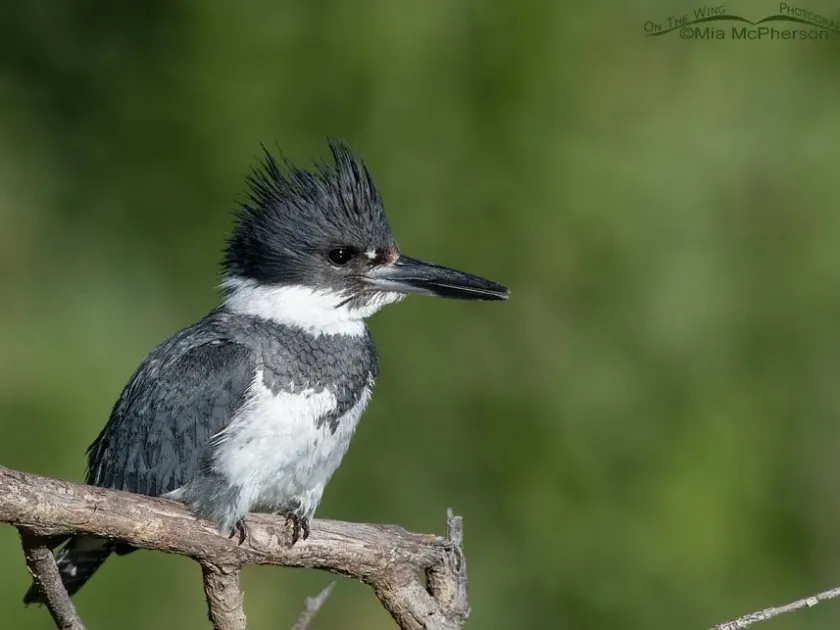
The Belted Kingfisher (lat. Megaceryle alcyon) is a medium-sized, stocky bird belonging to the Alcedinidae family. It is characterized by its large head, shaggy crest, and a heavy, dagger-like bill designed for hunting aquatic prey.
Adult birds exhibit a blue-gray plumage on their back and head, contrasted by a prominent white collar around the neck. Males display a single blue breast band, while females are distinguished by an additional rusty-colored band across their belly.
With a wingspan of up to 60 centimeters, these birds are agile fliers capable of hovering over water surfaces. This specific hunting behavior is what makes them a significant threat to juvenile fish in controlled pond environments.
Belted Kingfishers thrive near freshwater rivers, lakes, and artificial ponds. They are highly territorial and vocal, often announcing their presence with loud, rattling calls before diving to strike their target.
In a commercial aquaculture setting, their keen eyesight and ability to plunge headfirst into the water make them efficient predators, capable of depleting fish stocks rapidly if left unchecked.
What it damages
The primary economic damage caused by the Belted Kingfisher is the consumption of fish fry and fingerlings in aquaculture facilities. They specifically target valuable species like trout, carp, and ornamental fish.
Beyond actual consumption, kingfishers frequently cause injuries to young fish during attempted strikes. These puncture wounds are susceptible to fungal and bacterial infections, which can lead to widespread disease outbreaks within the pond population.
The persistent threat of predation forces fish into deeper, less accessible areas of the pond. This avoidance behavior limits their feeding opportunities, resulting in reduced growth rates and extended production cycles.
In high-density fish farms, the presence of these birds can lead to significant biomass loss. Regular visits by a kingfisher can disrupt the standard operational efficiency, making it difficult to reach harvest quotas.
Furthermore, kingfishers may act as biological vectors, carrying parasites or pathogens on their feathers and feet from wild, stagnant water bodies into clean, managed fish ponds.
When it appears
The timing of kingfisher presence is tied to their breeding and migratory patterns. In many regions, the activity peaks during the spring and summer months when adults are actively feeding their fledglings.
Autumn also marks a period of high pressure, as juvenile birds become independent and adults focus on building fat reserves before migration. This is a critical time for constant monitoring of fish ponds.
In milder climates where water does not freeze, these birds remain active throughout the winter. They are forced to rely on open ponds for food, which makes commercial fish farms prime targets during the cold season.
Daily activity is concentrated during daylight hours, particularly at dawn and dusk. These are the peak periods when the birds are most likely to hunt, making it necessary to have protection measures active.
Seasonality can also be influenced by regional weather events. During droughts, when natural streams dry up, kingfishers are more likely to seek out managed ponds as their primary food source.
Signs of infestation
The most immediate sign of a Belted Kingfisher is its harsh, rattling call often heard while the bird is patrolling the pond bank. It is a distinct sound that rarely goes unnoticed by an experienced fish farmer.
Evidence of a hunting "perch" can be found on nearby branches, fences, or posts. Fish remains, such as scales or fragments of small skeletons, are commonly deposited at these locations after a meal.
Visual observations of a bird hovering over the water are a definitive sign of an active threat. Once a kingfisher identifies a pond as a reliable food source, it will return repeatedly unless deterred.
If fish appear skittish or avoid the surface when they would normally feed, this may be an indicator that they have been pressured by an avian predator lurking nearby.
Physical evidence of predation, such as fish with fresh puncture wounds or missing eyes found near the shoreline, is a strong indicator that a kingfisher has been successful in its strikes.
Control measures
Physical exclusion is the most effective method for protection. Installing high-quality netting over the entire pond surface prevents the kingfisher from accessing the water and essentially eliminates the risk of predation.
Visual deterrents, such as decoys of raptors, holographic tape, or reflective spheres, can be used. However, these are most effective when rotated or moved frequently, as birds quickly learn to ignore static objects.
Acoustic deterrents that broadcast distress calls or predator sounds can work if used on a random cycle. Automated systems triggered by motion sensors are generally more effective than continuous sound loops.
- Install motion-activated water sprayers to surprise birds near the pond.
- Clear vegetation from the perimeter to eliminate potential hunting perches.
- Use reflective flashing lights or banners along the bank.
Always verify local wildlife regulations before implementing any control methods. In many regions, kingfishers are protected by law, so strategies must be limited to non-lethal, deterrent-based management.
Taxonomy
- Latin name
- Megaceryle alcyon
- Family
- Alcedinidae
- EPPO code
- MEGKAL
Discussion
No discussions yet — be the first.