
Common kingfisher
Alcedo
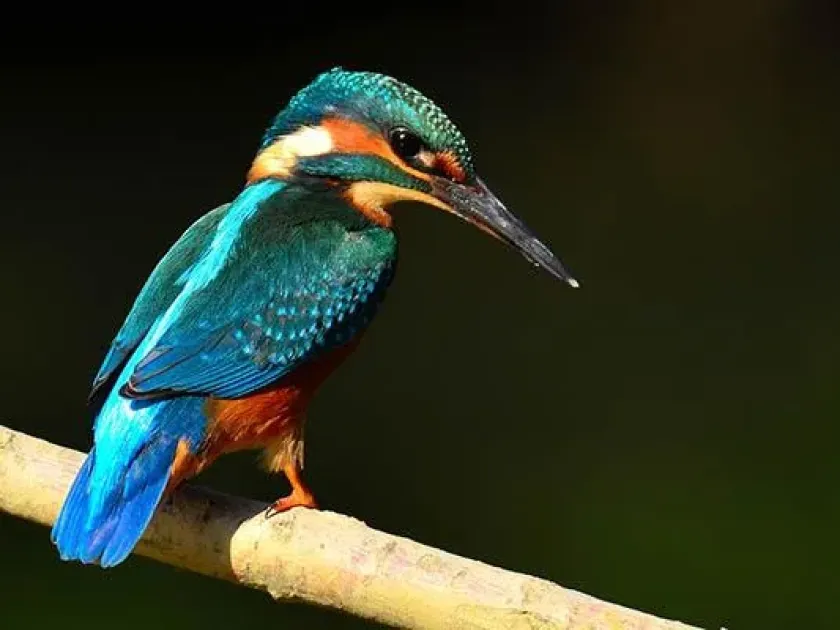
Description
How to identify
The Common Kingfisher (Alcedo atthis) is a small, distinctively colored bird belonging to the Coraciiformes order and the Alcedinidae family.
The bird is easily recognized by its vibrant blue and green plumage on the back combined with a warm orange-rufous color on the underparts.
It possesses a long, dagger-like bill, specifically evolved for plunging into water to capture prey with high precision.
In an agricultural context, this species is not classified as a plant pest because it does not feed on vegetation, seeds, or crops.
Its presence is typically associated with freshwater habitats, making it a bio-indicator of high-quality, unpolluted water bodies.
What it damages
The Common Kingfisher causes no direct damage to field crops or agricultural harvests, as it is strictly a carnivorous species.
Its impact is restricted solely to the fish farming sector, where kingfishers may occasionally prey on young fish fry in outdoor ponds.
In most commercial fish farming operations, the level of damage caused by this species is considered negligible compared to other environmental factors.
Ecologically, the bird serves as a natural regulator, often targeting weak or sick small fish, thus contributing to the overall health of the aquatic ecosystem.
Therefore, labeling this bird as a pest is scientifically inaccurate and misrepresents its role in the ecosystem.
When it appears
Kingfisher activity is most pronounced during the warmer months when the ice melts and aquatic prey becomes highly active.
The breeding season generally occurs from late spring to mid-summer, during which birds actively excavate nesting burrows in riverbanks.
Throughout the nesting period, the birds display high site fidelity, maintaining patrol routes along their chosen stretch of water.
As winter approaches, the activity levels drop, and individuals may migrate to warmer regions or congregate near remaining unfrozen water sources.
The overall seasonal presence of the species is highly dependent on the stability of the food supply and the availability of suitable nesting sites.
Control measures
Since the Common Kingfisher is not a crop pest, no chemical or biological pesticide measures are ever required or recommended.
In sensitive aquaculture systems, physical exclusion is the standard practice for preventing fish loss to avian predators.
Installing netting over nursery ponds is an effective physical deterrent that allows for secure fry development.
Environmental management, such as limiting perching spots like branches or fences near valuable ponds, can also reduce bird presence.
- Installing protective nets over aquaculture ponds.
- Removing overhanging branches near high-value fish zones.
- Using non-lethal visual scarecrows to discourage visitation.
Taxonomy
- Latin name
- Alcedo
- Family
- Alcedinidae
- EPPO code
- ALCESP
Discussion
No discussions yet — be the first.