
Massilieurodes
Massilieurodes
Description
How to identify
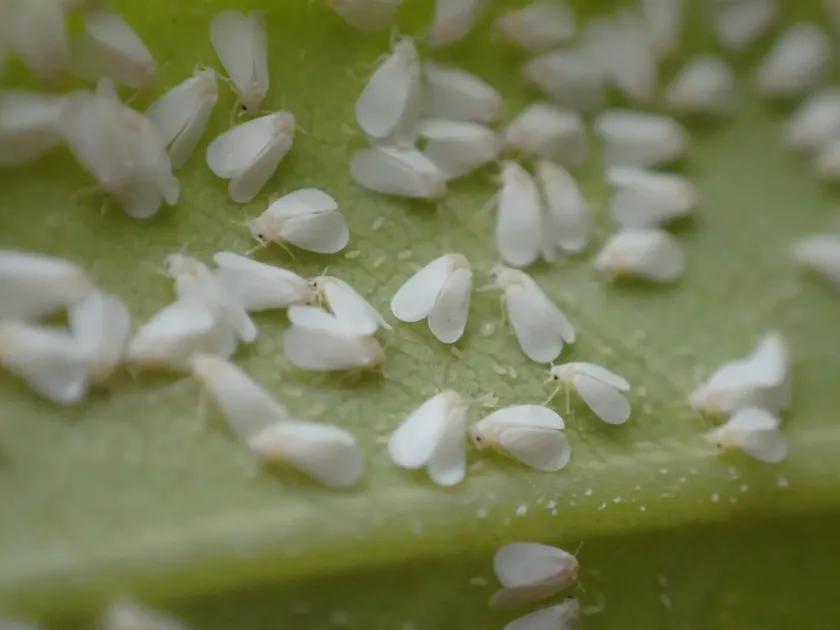
Massilieurodes is a genus of tiny insects from the family Aleyrodidae (whiteflies) within the order Hemiptera. Adult specimens appear as small moth-like insects with wings covered in a powdery, waxy secretion.
Identifying these pests is challenging due to their microscopic size and agility. The most reliable diagnostic feature is the structure of the puparium — the sessile larval stage firmly attached to the underside of leaf surfaces.
Precise identification at the species level usually requires microscopic examination of the larval skin, specifically focusing on the arrangement of wax glands and specific morphological papillae.
The life cycle encompasses an egg stage, three larval instars, a pupal stage, and the adult phase. Females deposit eggs on the abaxial side of leaves, often in distinct, circular, or patchy patterns.
Development is highly temperature-dependent; in greenhouse conditions or mild climates, these insects can maintain continuous generations throughout the year, leading to rapid population spikes.
What it damages
Massilieurodes species infest a wide range of decorative and fruit-bearing plants, including members of the Rosaceae and Solanaceae families. They are notably problematic for citrus trees and various evergreen species.
Both larvae and adults cause damage by extracting plant sap, piercing the leaf epidermis. This feeding process drains the plant's metabolic resources and severely compromises its overall vigor.
During feeding, the pests excrete honeydew — a sticky, sugary substance that coats the leaves. This honeydew serves as a nutrient-rich substrate for sooty mold fungi, which appear as a dense black coating.
The sooty mold cover significantly inhibits photosynthesis, leading to leaf drop, stunted growth, and structural deformation of new shoots. The plant's aesthetic value and health decline rapidly.
Furthermore, these insects act as potential vectors for various plant-pathogenic viruses, posing a significant risk to nursery stock, greenhouses, and commercial orchards.
Control measures
Managing Massilieurodes infestations requires an integrated approach, as the waxy larval covering provides resistance to many contact insecticides. Systemic insecticides are generally the most effective choice.
Effective agricultural management includes regular canopy thinning and ensuring optimal ventilation in greenhouses to reduce humidity levels, which discourages large-scale population proliferation.
Yellow sticky traps are highly recommended for monitoring adult populations and providing a non-chemical method to significantly reduce the reproductive potential of the colony within enclosed spaces.
Biological control strategies involving natural enemies, such as the parasitic wasp Encarsia formosa, have shown success in suppressing whitefly populations without the reliance on broad-spectrum chemicals.
In cases of severe infestation, applications of neonicotinoid or spirotetramat-based insecticides are advised, provided that safety intervals regarding harvest times and local regulations are strictly followed.
Taxonomy
- Latin name
- Massilieurodes
- Order
- Hemiptera (bugs, aphids, leafhoppers)
- Family
- Aleyrodidae
- EPPO code
- MASLSP
Discussion
No discussions yet — be the first.