
Willow leaf miner
Marmara salictella
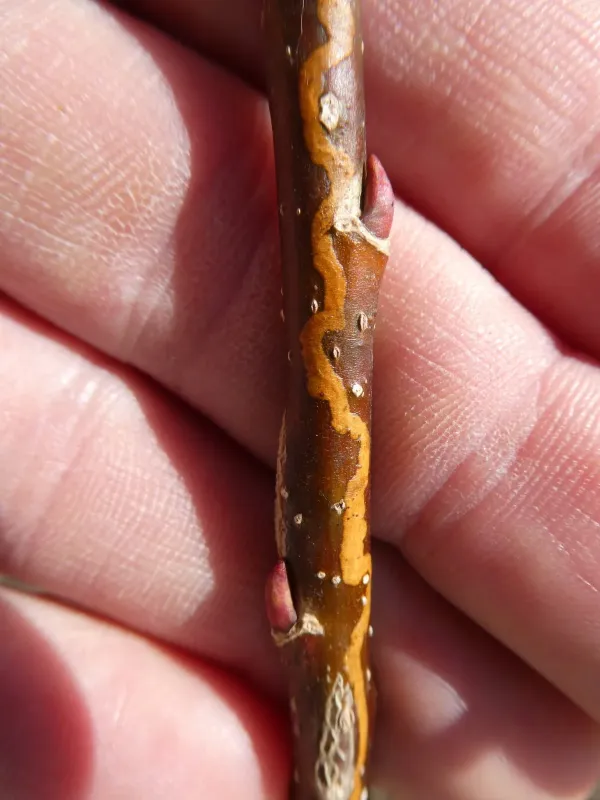
Description
How to identify
The willow leaf miner (scientific name: Marmara salictella) is a small moth belonging to the family Gracillariidae. As an adult, the moth is characterized by its narrow, fringed wings and cryptic coloration.
This insect undergoes complete metamorphosis, including egg, larva, pupa, and adult stages. The larval stage is the one responsible for damaging the host plant, living and feeding exclusively within the leaf tissue.
Adults are rarely seen due to their minute size and nocturnal behavior. Most of the time, their presence is confirmed by the distinct trails or "mines" they create on the foliage of willow trees.
The life cycle is typically synchronized with the growth of the willow foliage. Depending on the local climate, the moth can produce multiple generations per year, allowing the population to increase rapidly in spring and summer.
Overwintering usually occurs as a pupa, protected within a silk cocoon hidden in the crevices of the tree bark or sometimes among the leaf litter on the ground.
What it damages
The primary host plants are trees and shrubs in the genus Salix (willows). Both wild species and ornamental cultivars are susceptible to infestation by this moth, which can impact the health of the trees.
The damage is caused by the larvae, which tunnel into the leaf lamina. By feeding on the internal tissues, they disrupt the plant's ability to photosynthesize effectively, causing stress to the tree.
Under heavy infestation, the foliage may look scorched or discolored. While this is primarily an aesthetic issue, persistent damage can weaken the tree, making it more vulnerable to secondary diseases or harsh environmental conditions.
Severe mining can lead to premature leaf drop, which reduces the tree's vigor. This is particularly problematic for young saplings that are still establishing their root systems and energy reserves.
In addition to physiological stress, the entry and exit points created by the larvae can facilitate the entry of pathogens into the leaf tissue, leading to localized necrosis or bacterial rot.
Signs of infestation
The most reliable sign of the willow leaf miner is the presence of serpentine or winding trails on the leaf surface. These are the mines created by the larvae as they graze on the leaf's interior layers.
These mines often have a shimmering, silvery, or white appearance because the green internal cells have been removed, leaving only the transparent outer layers of the leaf intact.
Inside these tunnels, one can often see small, dark spots arranged in a line; these are the frass (excrement) pellets left behind by the larva. This pattern is a hallmark of the species.
As the infestation progresses, the affected leaves may curl or fold. In some cases, the tissue around the mine turns brown and necrotic, leading to the gradual browning of the entire leaf.
- Winding, silvery mines on the surface of the leaves.
- Visible dark frass pellets within the larval tunnels.
- Leaf curling and deformation along the feeding paths.
- Premature yellowing and leaf shedding in late summer.
Control measures
Cultural control is a practical first step. Removing and disposing of infested leaf litter in autumn can significantly reduce the number of overwintering pupae, thereby limiting the next year's population.
Maintaining tree health through proper irrigation and balanced fertilization is essential. A vigorous, healthy tree has a better capacity to tolerate the presence of leaf miners without suffering severe physiological decline.
For ornamental willow trees in landscaping, systemic insecticides can be highly effective. These chemicals are absorbed by the plant and reach the larvae inside the leaves, providing a targeted method of control.
Biological control involves supporting natural enemies such as parasitic wasps. These wasps lay their eggs in or on the larvae of the leaf miner, helping to suppress population numbers naturally.
If chemical application is necessary, timing is critical. Treatments should be applied during the period when eggs are hatching but before the larvae have fully embedded themselves deep within the leaf tissue.
Taxonomy
- Latin name
- Marmara salictella
- Order
- Lepidoptera (butterflies)
- Family
- Gracillariidae
- EPPO code
- MARMSA
Discussion
No discussions yet — be the first.