
Marava
Marava
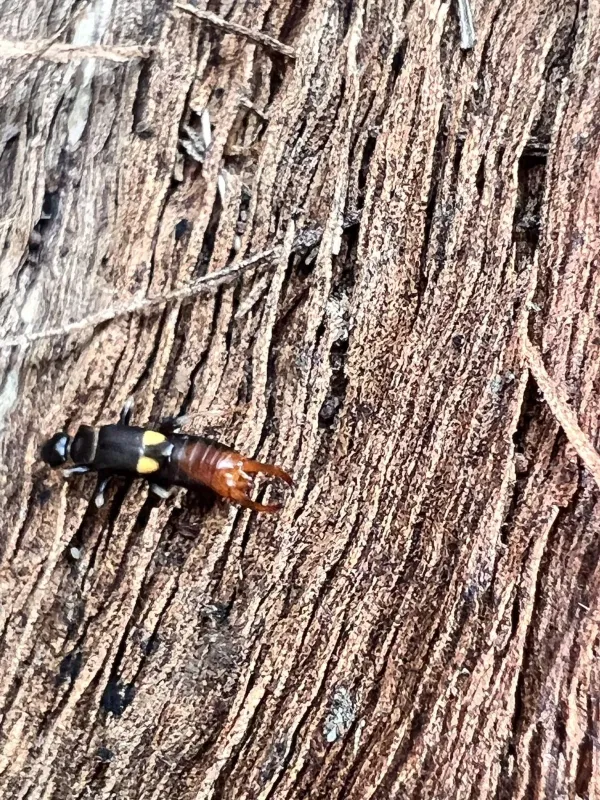
Description
How to identify
The genus Marava belongs to the order Dermaptera (earwigs), family Spongiphoridae. These are small insects that resemble common earwigs, characterized by distinct cerci at the tip of the abdomen.
The adult body is typically elongated, flattened, and ranges in color from dark brown to yellowish-tan. The head is equipped with chewing mouthparts adapted for consuming both plant tissues and organic debris.
Key identification features include the morphology of the cerci in males, which can be curved, and the general structure of the elytra. Larvae are visually similar to adults but lack wings and are smaller in size.
These insects prefer a secretive lifestyle, remaining primarily nocturnal. During the day, they hide under plant debris, in the soil, or within the leaf axils of host plants.
In their natural habitat, they act as facultative pests, as they are capable of feeding on both decaying organic materials and the living tissues of agricultural crops.
What it damages
Members of this genus damage a wide range of crops, including cereals, vegetables, and ornamental plants. The most critical damage occurs in greenhouse operations and regions with humid, subtropical climates.
The pest feeds on tender plant parts, chewing holes in leaves and stems. Often, damage affects young seedlings, leading to the loss of plants during the early stages of development.
Beyond direct feeding, these insects act as vectors for fungal and bacterial infections. Pathogens easily penetrate through the puncture sites, causing tissue decay and rotting.
The pest can also damage fruits and flower buds by hollowing them out, rendering the marketable produce unsuitable for sale or storage.
Economic losses escalate at high population densities, as the insects can destroy a significant portion of green biomass in a field within a short period.
When it appears
The activity of Marava is directly dependent on temperature and humidity levels. Optimal conditions for reproduction include warmth and high atmospheric humidity.
The life cycle includes the egg stage, several larval instars, and the adult stage. Females exhibit maternal care, guarding the egg clutch in sheltered locations.
In temperate regions, peak pest activity occurs during summer months. In protected agriculture (greenhouses), reproduction can continue year-round given the right temperature conditions.
Insects overwinter as adults or late-stage larvae in the soil, under rocks, or in plant debris where sufficient warmth is retained.
Mass emergence is often observed after heavy rainfall, as soil moisture facilitates insect activity and accelerates their movement from soil shelters to the aerial parts of plants.
Signs of infestation
The first sign of infestation is characterized by "shot-hole" damage on leaf blades, often with irregular margins. Leaves appear eaten, which weakens the plant's overall health.
- Presence of frass on leaf surfaces in the form of small dark spots.
- Sighting of the insects themselves at night using a flashlight.
- Characteristic feeding marks on young shoots and growing points.
- Development of secondary rot in damaged areas.
- Clusters of insects found in leaf axils or under fallen foliage.
When inspecting crops, focus on the undersides of leaves, where these pests prefer to congregate during daylight hours to avoid direct sunlight.
Stunted plant growth and wilting of individual shoots may also indirectly indicate the presence of a pest colony in the root zone or on the stems.
Regular monitoring using traps allows for the detection of insects before they reach critical numbers that cause significant visible damage.
Control measures
The primary method of control is strict adherence to agronomic practices, specifically the removal of plant debris that serves as the main daytime refuge for the pest.
In greenhouse environments, it is recommended to use yellow sticky traps to help monitor adult populations and signal the need for chemical intervention.
Biological control methods include the use of entomopathogenic fungi and nematodes, which effectively suppress larval development in the soil and reduce overall population density.
In cases of high pest numbers, contact-stomach insecticides authorized for use on specific crops during the active growing season should be applied.
It is important to perform spraying in the evening when insects leave their daytime hiding spots and become more vulnerable to the application of products.
Taxonomy
- Latin name
- Marava
- Family
- Labiidae
- EPPO code
- MRVASP
Discussion
No discussions yet — be the first.