
Lesser earwig
Labia minor
Description
How to identify
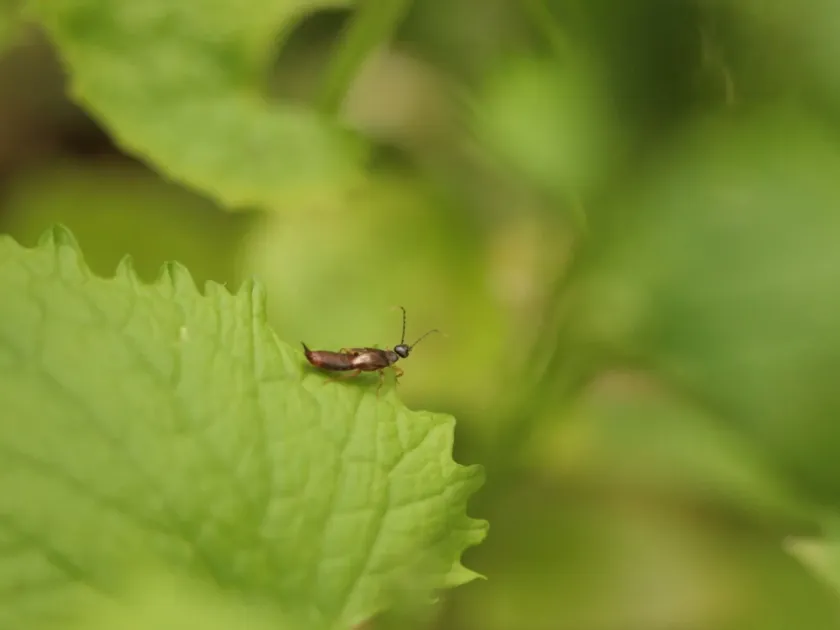
The lesser earwig (Labia minor) is a small insect belonging to the order Dermaptera and the family Labiidae. Unlike the common earwig, this species is significantly smaller, with adults typically measuring between 4 and 7 millimeters in length.
Their appearance is characterized by a yellowish-brown to dark brown body. A key feature distinguishing them from larger earwig species is their well-developed wings, allowing them to fly efficiently, especially when attracted to artificial lights during the night.
The posterior end of the abdomen features the characteristic forceps-like cerci. These appendages are sturdier and more curved in males compared to females, serving as a primary morphological feature for sex identification.
Biologically, these insects are closely associated with decomposing organic matter. They are frequently found in compost heaps, manure, and areas with decaying vegetation, which provide both food and suitable microclimates.
The life cycle involves egg, nymph, and adult stages. Notably, females exhibit maternal care, protecting their eggs and early-stage nymphs, which contributes to the species' success in diverse agricultural environments.
What it damages
While often classified as a saprophage, the lesser earwig can act as a pest in intensive agriculture by feeding on tender plant tissues. Seedlings and young vegetable shoots are particularly vulnerable to their feeding habits.
In greenhouse conditions, where populations can build up rapidly, these insects feed on seed leaves and growing points, causing stunted growth or the total destruction of young plants.
In field environments, damage often occurs on root crops and stalks. The insects create small gouges in the plant tissue, which serve as entry points for secondary pathogens and fungal infections that further weaken the host plant.
The presence of large populations is usually a symptom of poor sanitation practices, specifically the accumulation of rotting organic matter, which creates an environment where pests can thrive undisturbed.
Though an individual insect causes minimal damage, a large-scale infestation can lead to significant economic losses, especially during dry periods when insects seek moisture from the succulent tissues of crops.
When it appears
The active season for the lesser earwig begins in late spring when temperatures consistently rise. They remain active throughout the summer, with population numbers peaking during the warmer months.
Multiple generations can occur within a single season, depending on the climatic conditions. In warmer regions, breeding cycles continue almost uninterrupted until the onset of autumn frost.
The insects are most active at night, displaying strong phototactic behavior by flying toward light sources. This behavior is useful for monitoring population trends using light traps.
Adults typically overwinter in protected areas, such as within the soil, under tree bark, or inside farm structures, where they remain sheltered from extreme cold.
Early spring growth is the most sensitive period, as the overwintered population emerges just in time to impact freshly sown crops and newly emerged seedlings.
Signs of infestation
The primary sign of infestation is the presence of small, ragged holes in seedling leaves. The margins of the damage often appear uneven, characteristic of the insect's chewing mouthparts.
Inspecting the base of plants or leaf axils in the early morning may reveal the insects, as they are nocturnal and seek shelter from sunlight during the day.
Fecal deposits found near the base of damaged plants are a reliable indicator of active feeding. These small, dark spots can confirm the presence of a pest colony even if the insects themselves are hidden.
Trapping techniques, such as using damp corrugated cardboard or straw bundles, are excellent for monitoring. If the pest is present, they will readily colonize these traps during the day.
If young plants show signs of wilting without apparent surface damage, it may indicate internal feeding on the stem or roots, a behavior that requires closer examination of the plant tissue.
Control measures
Sanitation is the cornerstone of control. Regularly clearing away garden debris, weeds, and decomposing organic matter denies the pests their breeding grounds and shelters.
Mechanical trapping is highly effective for smaller plots. Placing damp cardboard or cloth on the ground and collecting and destroying the insects gathered inside every morning significantly reduces the population.
Chemical control should be considered a last resort. Use approved insecticides only when the economic threshold of damage is exceeded, ensuring applications follow safety guidelines to protect the crop.
Cultural practices, such as proper crop rotation and optimal sowing dates, help plants pass their most vulnerable seedling stage quickly, minimizing the risk of severe damage.
Promoting the presence of natural predators, such as predatory beetles or spiders, helps maintain an ecological balance that suppresses lesser earwig populations naturally.
Taxonomy
- Latin name
- Labia minor
- Family
- Labiidae
- EPPO code
- LBIAMI
Discussion
No discussions yet — be the first.