
Mantispa styriaca
Mantispa styriaca
Description
How to identify
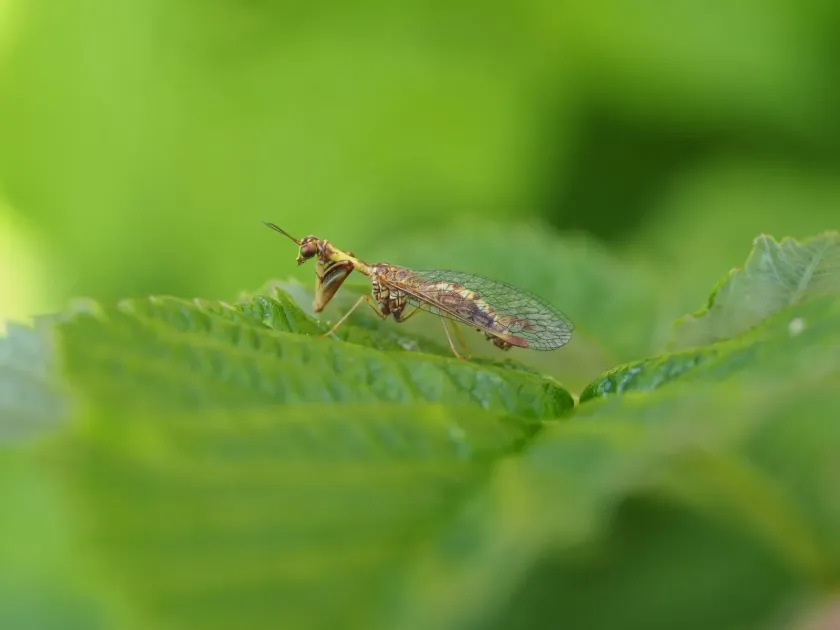
Mantispa styriaca is a fascinating insect species belonging to the order Neuroptera and the family Mantispidae. They are notable for their convergent evolution, which gives them a physical resemblance to mantises.
The adult insect features raptorial front legs, which are specialized for grasping prey, a trait that makes them highly efficient predators within their micro-habitat in orchards or gardens.
Their wings are typically clear with an intricate network of veins, characteristic of the Neuroptera order. This structural design enables agile flight for patrolling their hunting territories.
The larval stage undergoes hypermetamorphosis, transitioning through several distinct forms. Young larvae are highly active and equipped with functional legs to search for specific spider hosts.
Measuring between 12 to 15 mm in length, these insects are small but recognizable. Their camouflage coloration allows them to blend in effectively with surrounding foliage and flower petals.
What it damages
Mantispa styriaca acts as a specialized parasite, primarily targeting the egg sacs of spiders. Their larvae enter the silken cocoons and feed on the developing spider eggs.
The indirect economic damage to agricultural systems stems from the reduction of spider populations. Spiders are essential natural predators that keep populations of aphids, mites, and moths under control.
By consuming spider eggs, Mantispa styriaca reduces the efficacy of natural biological control agents in the garden, potentially leading to outbreaks of other, more destructive pests.
While the insect does not consume plant tissues directly, it interferes with the natural regulatory mechanisms of the orchard ecosystem, necessitating balanced observation.
Therefore, their presence should be interpreted as a sign of potential instability in the population of beneficial spider predators, requiring a watchful eye from field agronomists.
When it appears
Adults are typically most active during the peak of summer, generally spanning from June through August, which coincides with the egg-laying season of many local spider species.
The lifecycle is annual, with larvae entering a diapause stage inside the spider egg sacs throughout the winter months to survive harsh weather conditions.
In spring, the development continues, leading to the emergence of the next generation of adults that continue the cycle of finding suitable host spiders for their offspring.
Field monitoring should focus on the mid-summer period when adult activity is at its highest, particularly in areas with dense vegetation or fruit trees supporting spider colonies.
Understanding these seasonal patterns helps agronomists estimate the timing of parasite activity and assess its impact on the general biodiversity of the site.
Control measures
There are no standardized chemical control protocols for Mantispa styriaca, as they are not classified as primary agricultural pests and their ecological role is complex.
The most effective strategy is the maintenance of high biodiversity, which ensures that despite some predation on spider eggs, the overall ecosystem remains balanced.
Avoiding broad-spectrum insecticides is crucial. Selective pest management approaches help preserve the population of spiders and other beneficial arthropods that are important for crop protection.
Manual monitoring is the preferred method for assessing their presence. If excessive numbers are observed, horticultural practices that minimize unnecessary disturbance to the habitat can be adjusted.
Effective management relies on long-term ecological balance rather than eradication, ensuring that beneficial predator-prey dynamics remain robust and sustainable for agricultural success.
Taxonomy
- Latin name
- Mantispa styriaca
- Family
- Mantispidae
- EPPO code
- MNTPST
Discussion
No discussions yet — be the first.