
Mantispa
Mantispa
Description
How to identify
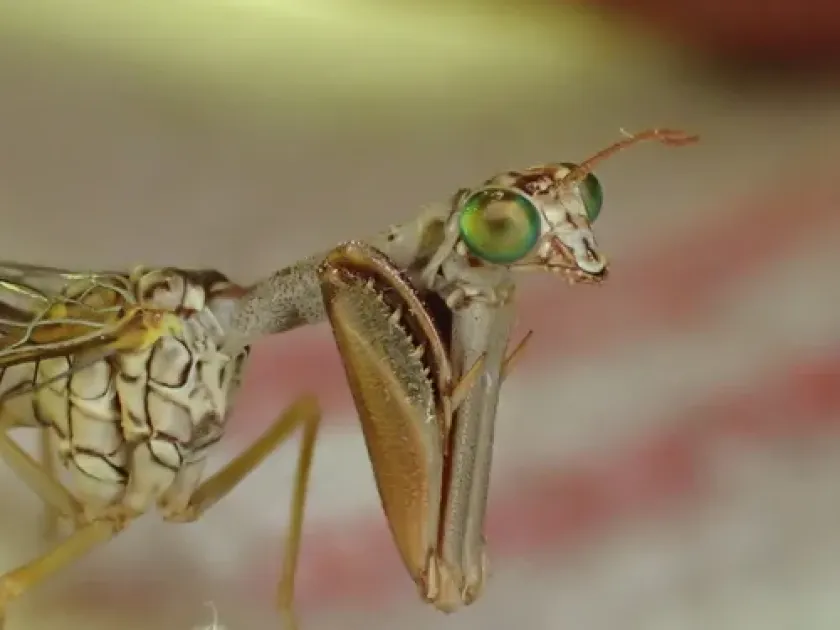
Mantispa is a genus of insects belonging to the order Neuroptera and the family Mantispidae. They are easily recognized by their raptorial forelegs, which make them resemble small mantises, although they are biologically unrelated to the true Mantodea.
Adult insects have elongated bodies, intricate lace-like wings, and specialized front limbs adapted for capturing prey. Their coloration serves as excellent camouflage, allowing them to hide among leaves and blossoms.
The life cycle involves a complex process called hypermetamorphosis. Upon hatching, the larvae are extremely active and must quickly locate their hosts, which are typically spiders or spider egg sacs.
Once a larva reaches a host, it penetrates the spider's egg sac and feeds on the eggs. This parasitic phase is essential for the larva to develop through subsequent instars until it pupates.
While adult Mantispas are predatory, their overall ecological impact is mixed, as they act both as regulators of certain populations and as parasites of beneficial spiders.
What it damages
Mantispa species do not directly consume plant tissues, and thus, they are not considered primary agricultural pests in the traditional sense of crop damage.
The main concern arises from their parasitic nature, as they prey on spiders. Since spiders are vital natural predators that help control aphids, mites, and other destructive insects, a large Mantispa population can indirectly lead to pest outbreaks.
In greenhouses and commercial orchards, an imbalance caused by too many Mantispas can disrupt biological control programs that rely on native or introduced spider populations.
However, in most open-field conditions, their presence is usually balanced by other environmental factors, and they do not cause economic damage to harvested produce or plant structures.
Therefore, characterizing them as a pest is highly contextual and usually depends on the specific integrated pest management (IPM) goals of the grower.
When it appears
Adult Mantispas are typically active during the warm summer months, primarily from June through August, when their prey is most abundant.
Their activity period is highly synchronized with the mating and egg-laying cycle of various spider species, as the larvae depend entirely on finding these hosts for their development.
They prefer sunny, warm locations where they can hunt smaller insects effectively. They are diurnal, spending most of their time camouflaged on vegetation.
Overwintering occurs primarily at the larval stage within the host's protected environment or in the leaf litter, where they remain dormant until spring temperatures rise.
The seasonal emergence of adults is triggered by cumulative degree-day temperatures, marking the beginning of their active cycle for the growing season.
Signs of infestation
Visual identification is challenging due to the excellent mimicry of the species. They often remain unnoticed unless specifically searched for during field scouting.
A sign of potential Mantispa activity is a localized decrease in spider population density and the disappearance of spider webs in areas where they were previously common.
Searching for damaged or empty spider egg sacs can confirm the presence of Mantispidae, as these are the primary sites of larval development.
Adults are sometimes attracted to light traps used for insect monitoring in large-scale agricultural operations, which provides data on their seasonal density.
Farmers may observe these insects perched on flowers, waiting for prey, which serves as a biological indicator of the existing predator-prey dynamics in the area.
Control measures
Direct chemical control against Mantispa is generally not recommended as they are not primary pests and their ecological role can be complex.
- Minimize the use of broad-spectrum insecticides that harm beneficial predator populations.
- Maintain hedgerows and wildflower borders to support diverse spider populations.
- Implement monitoring programs to track the health of natural biological control agents.
- Manual removal of adults if they are found causing significant disruption in sensitive greenhouse environments.
The most effective approach is to maintain an ecological balance where predatory populations are not excessively disturbed, preventing any single species from reaching a level that could be deemed problematic.
Taxonomy
- Latin name
- Mantispa
- Family
- Mantispidae
- EPPO code
- MNTPSP
Discussion
No discussions yet — be the first.