
Climaciella
Climaciella
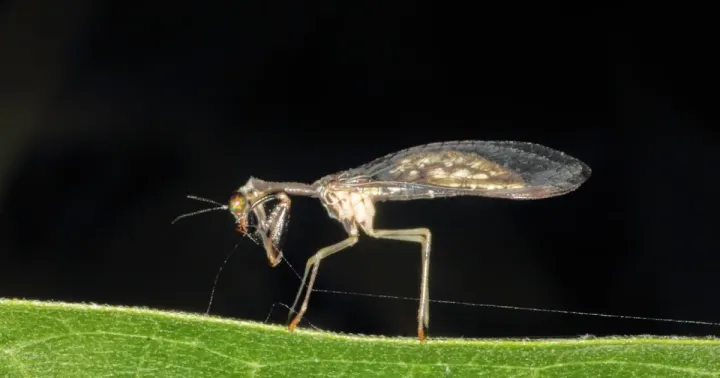
Description
How to identify
Climaciella is a genus of insects belonging to the order Neuroptera and the family Mantispidae. They are widely recognized for their remarkable mimicry, resembling both mantids and wasps.
The adults possess raptorial forelegs, modified specifically for grasping prey, which closely resemble those of a praying mantis. Their bodies are typically marked with black and yellow or brown patterns, mimicking the appearance of social wasps.
Their head is highly mobile, equipped with strong mandibles for predatory hunting. The wings are long, transparent, and feature the dense venation characteristic of neuropterans.
Larvae are typically campodeiform, meaning they are active and move quickly to locate their hosts. They undergo significant physiological changes throughout their developmental stages.
Adult specimens generally reach lengths between 15 and 25 mm. Their resemblance to stinging wasps serves as an effective defense against avian predators.
What it damages
Climaciella is not classified as a plant pest. In agricultural and horticultural contexts, it does not cause direct damage to crops, fruits, or foliage.
The larvae of Climaciella are specialized parasitoids. Their primary hosts are spider egg sacs, which they penetrate to feed on the developing spiderlings and eggs inside.
As they do not feed on plant tissues, they pose no threat to agricultural productivity. Their ecological role is focused on the regulation of spider populations within a given habitat.
There are no reports of Climaciella damaging vegetables, cereals, or woody ornamentals. Their mouthparts are strictly adapted for hunting and nectar feeding.
The presence of these insects in a garden or field is a sign of high biodiversity and a stable trophic web rather than a cause for concern regarding crop yield.
When it appears
Adult Climaciella are typically active during the summer months, with sightings most frequent from June to late August, depending on the climatic region.
The species overwinters primarily in the first-instar larval stage. They find refuge under tree bark, in leaf litter, or within soil crevices until environmental conditions become favorable.
The life cycle involves complete metamorphosis: egg, larva, pupa, and adult. The timing of their emergence is synchronized with the breeding cycles of their spider hosts.
After reaching maturity and mating, females lay their eggs on various substrates, often near spider webs to ensure the larvae can easily locate a host.
Temperature is the main driver of their metabolic rate and development speed, with warmer summers leading to more synchronized emergence cycles.
Signs of infestation
The primary way to spot Climaciella is by observing them on flowering plants, where adults often forage for nectar and wait for potential prey.
Their distinct physical shape, combining mantid-like forelegs with wasp-like coloration, makes them relatively easy to identify for experienced observers.
They are often observed sitting motionless on leaves or petals, displaying their raptorial legs in a defensive or hunting stance.
There are no visible symptoms of damage to crops that would indicate their presence, as they have no interactions with plant tissues.
Field monitoring for this insect is generally not performed, as they do not constitute an economic threat to growers.
Control measures
No pest control measures are required for Climaciella. They are not considered agricultural pests, and their presence is harmless to economic crops.
Chemical control programs targeting other pests may inadvertently reduce their population, which is generally discouraged in ecologically sustainable farming.
Maintaining floral borders and avoiding excessive insecticide usage can preserve these insects, as they contribute to the natural balance of the ecosystem.
In integrated pest management (IPM), no action is necessary regarding this genus, as it does not compete with humans for food or resource consumption.
Agricultural professionals are advised to focus resources on genuine threats to the crop and treat the presence of Climaciella as a part of beneficial biodiversity.
Taxonomy
- Latin name
- Climaciella
- Family
- Mantispidae
- EPPO code
- CMCLSP
Discussion
No discussions yet — be the first.