
Rose root aphid
Maculolachnus submacula
Description
How to identify
The rose root aphid (Maculolachnus submacula) is a specialized insect belonging to the family Aphididae. Unlike common leaf-feeding aphids, this species prefers to colonize the root collar and the lower portions of rose stems.
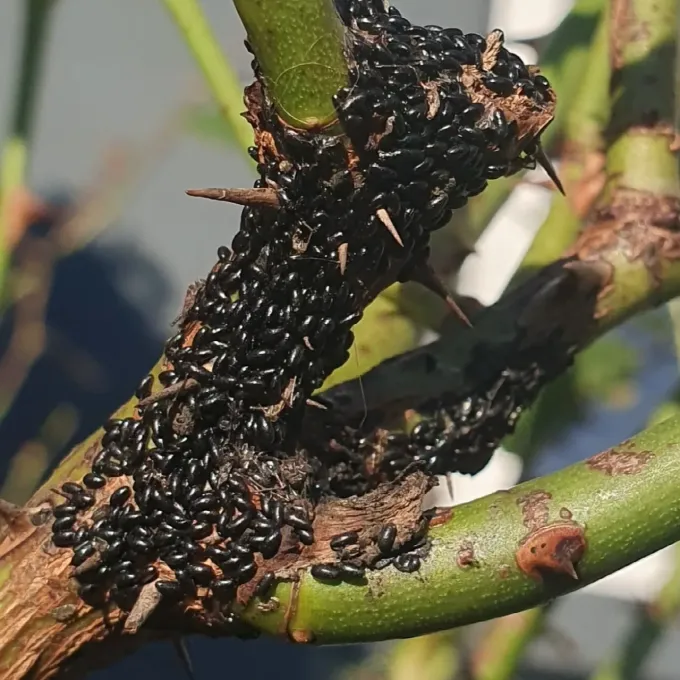
Adult specimens are characterized by a dark, brownish coloration, often featuring small darker spots on the abdomen. Their bodies are sparsely covered in fine hairs, giving them a matte appearance compared to the glossy surfaces of other aphid species.
These aphids live in dense, localized colonies near the soil level. They maintain a mutualistic relationship with ants, which protect the aphids from predators such as ladybirds in exchange for the sugary honeydew produced by the aphids.
The biological cycle includes both wingless and winged forms. Winged adults typically emerge during periods of colony overcrowding to facilitate dispersal to neighboring plants, ensuring the pest continues to thrive throughout the growing season.
Their adaptation to the microclimate at the base of the plant allows them to survive fluctuations in temperature and avoid direct exposure to sunlight, making them particularly resilient in home garden environments.
What it damages
The primary hosts of this pest are various species of roses and wild rose bushes. Damage is most significant on young or newly planted specimens, as well as on established bushes that are stressed due to environmental factors.
Feeding by these aphids extracts vital sap from the plant's vascular system. This process leads to the general weakening of the bush, stunted growth of shoots, and a reduction in the plant's overall vigor and flowering potential.
The excretion of honeydew serves as an ideal substrate for the growth of sooty mold. This black fungal layer covers the lower stems and surrounding soil, hindering photosynthesis and the overall gas exchange of the plant tissues.
Weakened plants show increased susceptibility to secondary infections, including fungal pathogens like black spot or powdery mildew. In severe cases, constant tissue damage can result in localized necrosis at the root collar.
High infestation levels lead to premature leaf yellowing and drop, particularly in the lower canopy. If left untreated, severe infestations can jeopardize the long-term survival of the rose bush, especially during harsh winters.
When it appears
Activity commences early in the spring as soon as the soil temperatures rise. Overwintering eggs hatch into the first generation of stem mothers, which immediately seek out the protected environment of the rose's root collar.
Population density typically peaks in late spring and early summer, coinciding with the period of most active rose growth. The favorable climate during these months allows for multiple overlapping generations.
Summer heat can temporarily slow down colony growth if the soil becomes too dry, but the species remains present in the lower protected layers of the rose bush. Frequent watering can help sustain these colonies throughout the season.
As autumn approaches, the aphid population shifts to produce sexual forms. After mating, the females lay overwintering eggs, which are deposited in bark crevices or just below the soil surface, ensuring survival until the following spring.
The species is highly persistent due to this multi-generational strategy, meaning that once established in a rose garden, it can remain a recurring problem if not managed appropriately.
Signs of infestation
The most reliable sign of an infestation is constant ant activity around the base of the rose bush. If ants are observed moving in organized patterns to the soil level of the stem, this strongly indicates an aphid colony.
By carefully clearing away the soil from the base of the stem to a depth of 2-3 cm, one can directly observe the dense, dark clusters of aphids. Their presence is often revealed by this focused inspection.
Sticky honeydew residues found on lower leaves or the accumulation of black sooty mold are clear diagnostic indicators. If the lower bark looks darkened or sticky, it is a high-probability site for aphid colonization.
Affected plants often display signs of physiological stress, such as pale green or yellowing foliage. New growth may appear deformed or significantly shorter compared to healthy bushes in the same area.
Localized cracking of the bark near the root collar can also occur as a result of repeated piercing and sap extraction, creating entry points for pathogens and opportunistic wood-decay fungi.
Control measures
Mechanical management is the first line of defense. Gently clearing soil away from the crown area or spraying the base with a firm jet of water can effectively disrupt colonies and dislodge aphids.
Systemic insecticides are the most effective chemical intervention. Treatments containing compounds like imidacloprid or acetamiprid are absorbed by the plant, making the sap toxic to the aphids for several weeks.
Managing the ant population is crucial for long-term success. Using sticky barriers on the lower stems prevents ants from accessing the aphids, leaving them exposed to natural predators like ladybirds and lacewings.
Biological control can be enhanced by fostering a garden environment friendly to predators. Introducing natural enemies or using entomopathogenic fungal sprays can also be viable options in integrated pest management (IPM) programs.
- Regularly monitor the root collar of rose bushes during the spring and summer.
- Keep the area around the base of the bushes clear of weeds and debris.
- Use balanced fertilization to promote strong plant defenses and structural integrity.
- Perform sanitary pruning of dead or damaged stems to remove overwintering sites.
Taxonomy
- Latin name
- Maculolachnus submacula
- Order
- Hemiptera (bugs, aphids, leafhoppers)
- Family
- Aphididae
- EPPO code
- MACUSU
Discussion
No discussions yet — be the first.