
Rose aphid
Maculolachnus
Description
How to identify
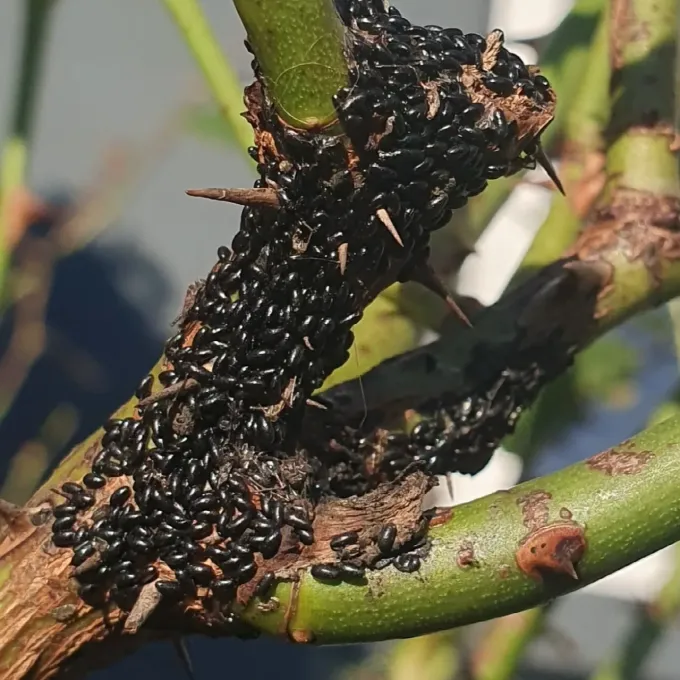
The rose aphid (Maculolachnus submacula) belongs to the family Aphididae, suborder Sternorrhyncha. It is a specialized pest characterized by a distinct appearance that differentiates it from other aphids found on Rosaceae.
Adult specimens usually have a brown or dark-brown color, often featuring distinct dark spots on the abdomen. The body is covered with sparse hairs, giving them a slightly velvety appearance under magnification.
The lifecycle of this species is closely associated with wild rose (briar) and cultivated rose varieties. The aphid mainly leads a colonial lifestyle, concentrating on young shoots and leaf petioles.
These pests primarily overwinter as eggs, which are laid by females at the end of the season on woody parts of the plants. As the weather warms, larvae emerge from these eggs.
The insect has a high reproductive rate during the summer months, allowing colonies to colonize large portions of the shrub within a short period.
What it damages
The primary hosts of the rose aphid are various species of wild roses, as well as decorative and garden rose varieties. Less frequently, the pest may be found on closely related rosaceous shrubs.
Damage is mainly inflicted on young, actively growing parts of the plant. The aphid feeds by sucking cell sap from the tissues of shoots, young leaves, and unopened buds.
Damage to apical shoots leads to their curling and stunted growth, which significantly ruins the aesthetic appeal of decorative plantings and reduces the overall vitality of the bush.
During massive outbreaks, there is a marked inhibition of flower development, often resulting in bud drop. This causes direct damage to flowering and the productivity of rose plantations.
Additional damage is caused by the contamination of leaves with honeydew—the waste products of aphids—which serves as a substrate for sooty mold, hindering the photosynthesis process.
When it appears
The insect's activity begins in early spring, immediately after bud break, when larvae of the first generation emerge from overwintered eggs.
Peak population numbers are usually recorded in late spring and early summer, when temperature conditions are most favorable for intensive reproduction.
In mid-summer, during periods of extreme heat, reproductive rates may decrease, though colonies continue to cause damage to the plants if moisture is available.
In autumn, sexual individuals appear, which, after mating, proceed to lay overwintering eggs on the bark of shoots, completing the seasonal cycle.
Favorable conditions (moderate humidity and warm weather) contribute to the emergence of numerous generations, so garden monitoring must be constant until the end of the vegetation season.
Signs of infestation
The first sign of infestation is the curling and deformation of young leaves, which begin to yellow in areas of massive insect accumulation.
The presence of a sticky substance on the upper surface of leaves located below the colony is a clear indicator of aphid presence on the plant.
The presence of ants on rose bushes almost always indicates aphid colonies, as these insects enter into a symbiosis, feeding on the sweet secretions of the pest.
Stunted development of buds or their underdevelopment is often accompanied by the clustering of dense groups of brown aphids on flower stalks.
- Deformation of young shoots
- Sticky spots on leaves
- Ant activity on bushes
- Appearance of sooty mold
- Wilting and premature bud drop
Control measures
Agrotechnical methods include regular sanitary pruning of infested shoots and the timely removal of weeds, which can serve as an additional reservoir for the pest.
For low population levels, mechanical removal of colonies using a pressurized water spray or hand picking is effective if the garden area is small.
Biological protection involves the use of natural enemies, such as lacewing larvae, ladybugs, and hoverflies, whose presence in the garden should be encouraged.
Chemical control using systemic insecticides is most effective during periods of massive outbreaks when other methods do not yield the desired results.
It is important to rotate preparations from different chemical groups to prevent the development of resistance in the aphid population, strictly following dosages and pre-harvest intervals.
Taxonomy
- Latin name
- Maculolachnus
- Order
- Hemiptera (bugs, aphids, leafhoppers)
- Family
- Aphididae
- EPPO code
- MACUSP
Discussion
No discussions yet — be the first.