
Aster leafhopper
Macrosteles quadrilineatus
Description
How to identify
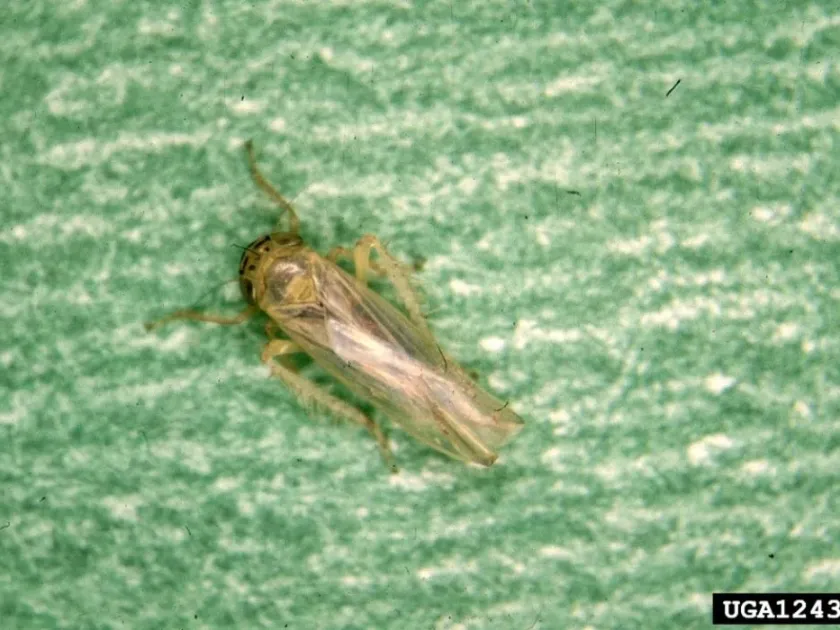
The aster leafhopper, scientifically known as Macrosteles quadrilineatus, is a member of the Cicadellidae family within the order Hemiptera. Adults are small, measuring approximately 3–4 mm in length, and typically display a greenish-yellow color with distinctive markings on the head.
The nymphs resemble the adults but are smaller, wingless, and highly agile. They are known for their ability to jump quickly when disturbed, which often makes them difficult to observe or capture in the field.
The life cycle consists of egg, five nymphal instars, and the adult stage. The species typically overwinters in the egg stage, often deposited within the tissues of host plants or debris, which helps them survive colder conditions.
Development from egg to adult is highly dependent on temperature, usually taking about 3 to 4 weeks under optimal conditions. Multiple generations can occur throughout the growing season.
Females are highly fecund, laying eggs inside leaf tissues, which contributes to rapid population growth if environmental conditions are favorable for their development.
What it damages
This pest affects a wide range of agricultural crops, including carrots, onions, potatoes, oats, and various forage crops. Its presence is detrimental not only due to direct feeding but also due to the transmission of pathogens.
Leafhoppers cause damage by piercing plant tissues and extracting cell sap. This feeding process weakens the plant, hinders normal growth, and significantly impacts the photosynthetic capacity.
The most severe damage is caused by the transmission of phytoplasmas and plant viruses, such as aster yellows, which can lead to total crop loss. These diseases are difficult to manage once established.
In infested plants, damage manifests as chlorosis, stunted growth, and deformation. Root crops often exhibit poor development, reduced sugar content, and a decline in overall commercial quality.
The honeydew excreted by the leafhoppers can lead to the development of sooty mold, which further deteriorates the appearance and quality of the affected crops.
When it appears
The presence of the aster leafhopper typically begins in the late spring as temperatures rise, signaling the end of the overwintering period.
Peak populations are generally observed during the mid-summer months, particularly in June and July, when migration between weeds and crops is most intense.
They prefer warm environments and are frequently found on the undersides of leaves or in the dense canopy of host plants, where they can feed undisturbed.
The timing of generations is continuous throughout the summer, often leading to overlapping stages of development within a single field.
As autumn approaches and temperatures decrease, the insects begin the cycle of egg-laying to ensure the survival of the next generation through the winter.
Signs of infestation
The initial signs of an infestation include the appearance of tiny stippling or white spots on the leaves, which are the result of the insects' piercing and sucking feeding habits.
Leaves may show yellowing or browning along the margins. As the infestation progresses, severe cases show leaf curling and premature wilting that resembles nutritional deficiencies.
Symptoms of virus infection include pathological bunching (rosetting), dwarfing, and significant discoloration of the plant tissue, which is a classic indicator of aster yellows.
Root crops may show malformed shapes and a loss of marketability. In some cases, the plants may die prematurely if they are severely infected with pathogens carried by the leafhoppers.
Visual confirmation can be achieved by gently disturbing the plant canopy, which triggers the leafhoppers to jump, revealing their presence among the foliage.
Control measures
Effective management begins with aggressive weed control, as weeds often serve as the primary reservoir for both the leafhopper populations and the viruses they transmit.
Maintaining proper distance between susceptible vegetable crops and grain fields can help reduce the migration of the pests into sensitive areas.
- Application of systemic insecticides during peak infestation periods when threshold levels are exceeded.
- Rotation of crops to disrupt the life cycle of the leafhopper and reduce local population pressure.
- Using yellow sticky traps to monitor population density and help time control interventions.
- Removing and destroying crop residues promptly after harvest to eliminate overwintering sites.
- Promoting healthy plant growth through balanced fertilization to increase tolerance.
Timely intervention, particularly during the early growth stages of the crop, is crucial because the impact of the diseases they transmit is irreversible.
Taxonomy
- Latin name
- Macrosteles quadrilineatus
- Order
- Hemiptera (bugs, aphids, leafhoppers)
- Family
- Cicadellidae
- EPPO code
- MACTFS
Discussion
No discussions yet — be the first.