
Chickweed aphid
Macrosiphum stellariae
Description
How to identify
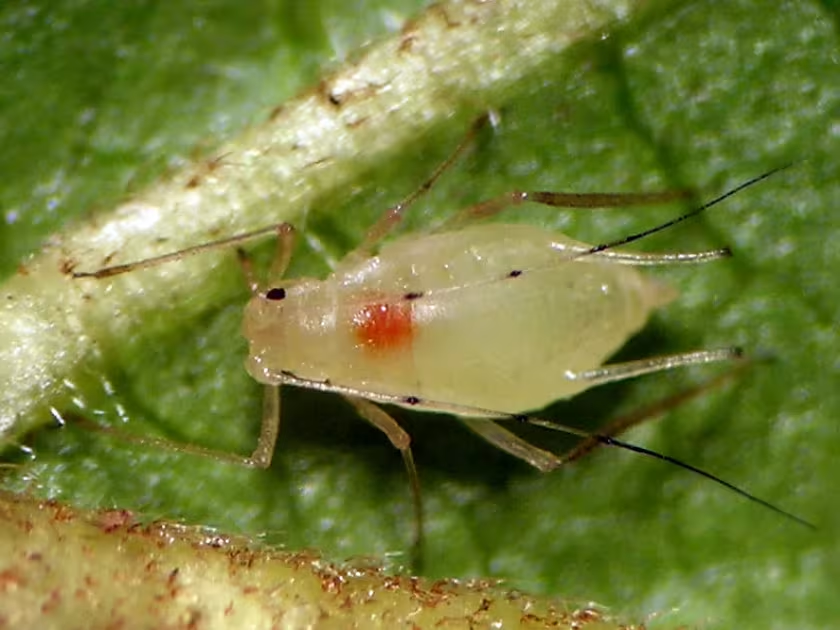
The chickweed aphid (Macrosiphum stellariae) is a small sap-sucking insect belonging to the family Aphididae. Adults typically measure between 2 to 3 mm in length.
Their bodies are elongated and vary in color from pale green to yellowish-green, providing effective camouflage against the foliage of their host plants.
Key morphological features include long, slender antennae and prominent siphunculi (cornicles) on the abdomen, which often have darker tips.
The population consists of both winged and wingless forms; winged individuals are essential for the migration and colonization of new host plants during the season.
Nymphs are similar in appearance to adults but are smaller and lack developed reproductive organs, making them highly dependent on the host plant for rapid growth.
What it damages
The primary host plant is common chickweed (Stellaria media), a ubiquitous weed found in gardens, agricultural fields, and disturbed soil environments.
By piercing the plant tissues with their stylets, aphids extract vital phloem sap, leading to stunted growth and reduced vigor of the infested plant.
The excretion of honeydew by the aphids fosters the growth of sooty mold, which coats the leaves, hinders photosynthesis, and diminishes the aesthetic value of the plants.
In cases of severe infestation, leaves become curled, distorted, and chlorotic as the plant loses necessary nutrients and water content due to the aphid feeding.
While often targeting weeds, they can transition to ornamental plants of the Caryophyllaceae family, causing significant damage if left unmanaged.
When it appears
The life cycle begins in early spring when nymphs hatch from overwintering eggs deposited on the host plant remnants or base of the plant.
During the summer months, the population peaks due to rapid reproductive cycles, where each generation reaches maturity in less than two weeks under favorable conditions.
The aphid favors mild temperatures and humid conditions, which keep the host plants succulent and rich in nutrients, facilitating the explosive growth of colonies.
As temperatures begin to drop in autumn, the population produces sexual forms that mate and lay eggs, which serve as the overwintering stage for the species.
Environmental factors, such as extreme heat or prolonged dry spells, may temporarily reduce population density by affecting the quality of the host plant sap.
Signs of infestation
Visible curling and yellowing of the youngest leaves at the growing tips are the most common initial signs of a chickweed aphid infestation.
The presence of ants patrolling the plants is a strong indicator of aphid activity, as ants protect the aphids in exchange for the sugary honeydew they secrete.
Sticky residue or black sooty mold on the leaves and stems confirms the presence of sap-sucking insects and indicates that the infestation has been active for some time.
Close inspection of the underside of leaves and around the terminal buds reveals clusters of tiny, pale-green insects adhering to the plant tissue.
Stunted development, failure to bloom properly, and general wilting are indicators that the plants are suffering from significant nutrient loss due to aphid feeding.
Control measures
The most effective management strategy is rigorous weed control, specifically the removal of common chickweed, which eliminates the primary food source for the aphids.
Chemical control can be achieved using systemic insecticides that are absorbed by the plant, providing long-lasting protection against both nymphs and adults.
In home garden settings, applying horticultural soaps or neem oil is a recommended organic method to suppress aphid populations without harming beneficial insects.
Encouraging natural predators such as lady beetles, lacewings, and hoverfly larvae is an excellent way to maintain ecological balance and keep aphid numbers low.
Implementing good sanitation practices, such as clearing plant debris in late autumn, is crucial to remove egg-laying sites and reduce the risk of future infestations.
Taxonomy
- Latin name
- Macrosiphum stellariae
- Order
- Hemiptera (bugs, aphids, leafhoppers)
- Family
- Aphididae
- EPPO code
- MACSST
Discussion
No discussions yet — be the first.