
Raspberry aphid
Macrosiphum rubi
Description
How to identify
The raspberry aphid (Macrosiphum rubi) is a common pest belonging to the Aphididae family, primarily affecting Rubus species including raspberries and blackberries.
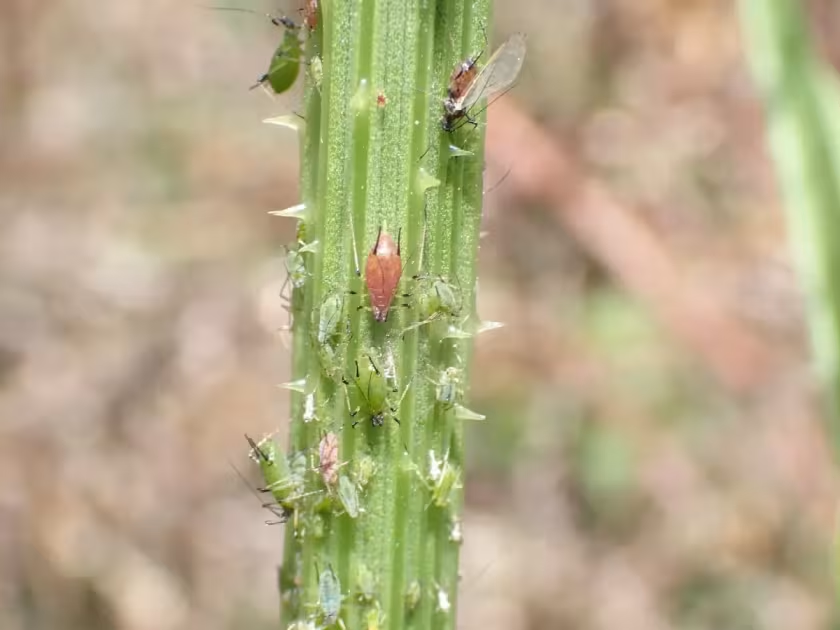
Adult aphids measure about 3–4 mm in length and are typically green, although variations can occur, featuring long antennae and prominent siphunculi on the abdomen.
These insects exhibit a complex life cycle; they overwinter as eggs on the canes of the host plant, hatching in early spring into wingless stem mothers.
Throughout the growing season, they reproduce via parthenogenesis, creating dense colonies on the undersides of leaves and on the succulent tips of new growth.
Winged forms develop in response to overcrowding or host plant decline, allowing the population to disperse rapidly to neighboring plants or fields.
What it damages
The primary damage is caused by the aphids sucking sap from the plant, which depletes essential nutrients and weakens the overall vigor of the raspberry bush.
Beyond direct feeding damage, the raspberry aphid is a significant vector for various plant viruses, such as raspberry mosaic virus, which can ruin the long-term productivity of the plantation.
The secretion of honeydew promotes the growth of sooty mold, a dark fungal layer that covers the leaves and interferes with efficient photosynthesis.
Heavy infestations result in distorted, curled leaves, stunted terminal shoots, and a significant decrease in berry size and overall fruit quality.
If left unmanaged, the cumulative stress from aphid feeding and viral transmission can lead to the decline and premature death of individual canes or entire plants.
Signs of infestation
Visible curling, yellowing, and deformation of terminal leaves are the most reliable indicators of an active aphid infestation in a raspberry patch.
The presence of sticky honeydew on foliage and the appearance of black, sooty mold patches on leaves serve as clear signs of long-term aphid activity.
Increased ant traffic on the stems is a common behavior, as ants protect the aphid colonies to harvest the sweet honeydew they excrete.
When inspecting the underside of leaves or the soft tips of shoots, you can see visible clusters of green aphids of various sizes huddled together.
Stunted growth of new shoots and the sudden drop of flower buds during the pre-blooming phase often suggest high population densities of the pest.
Control measures
Effective management begins with good horticultural practices, such as removing excess root suckers and thinning out canes to improve airflow within the rows.
Encouraging natural predators is a sustainable approach; ladybirds, hoverfly larvae, and lacewings are efficient at keeping aphid populations in check.
Biological insecticides, such as insecticidal soaps or neem oil, can be applied to targeted areas where colonies are forming to minimize impact on beneficial insects.
If chemical intervention is necessary, select products labeled for use on berry crops and apply them outside of the flowering period to protect pollinators.
- Regular monitoring of terminal shoots throughout the spring.
- Manual removal of heavily infested shoot tips.
- Proper weed control to remove alternative hosts for the aphid.
- Judicious use of fertilizers to prevent excessive succulent growth.
Taxonomy
- Latin name
- Macrosiphum rubi
- Order
- Hemiptera (bugs, aphids, leafhoppers)
- Family
- Aphididae
- EPPO code
- MACSRU
Discussion
No discussions yet — be the first.