
Orchid aphid
Macrosiphum luteum
Description
How to identify
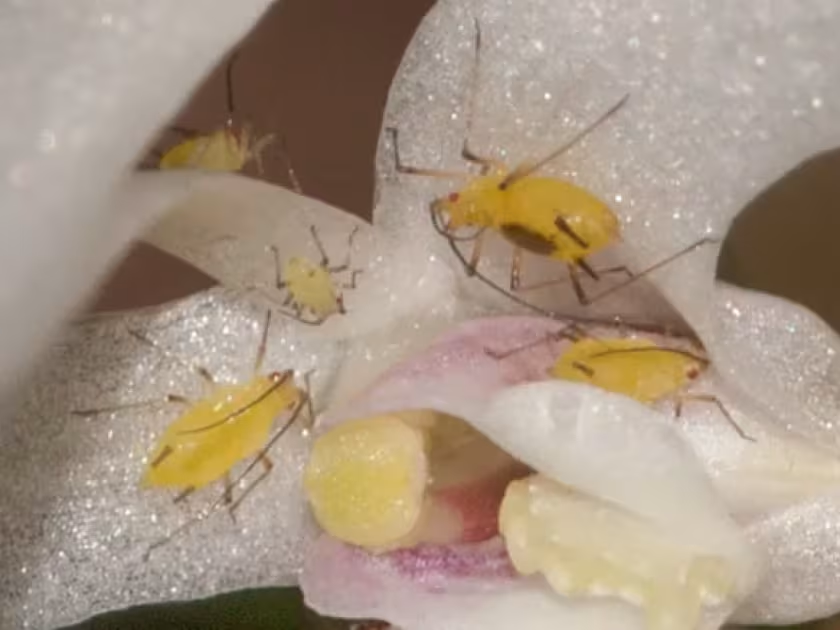
The orchid aphid (Macrosiphum luteum) is a small insect belonging to the order Hemiptera and the family Aphididae. Adult individuals typically display a yellow-orange or reddish coloration, which provides excellent camouflage against the tender tissues of their host plants.
The insect has an oval body shape, typically measuring 2–3 mm in length. A key morphological characteristic of this species is the presence of long antennae and prominent siphunculi (tubes) at the tip of the abdomen, which are usually darker than the rest of the body.
This species is a specialized pest that thrives in colonies. They tend to cluster in areas with soft epidermis, where their piercing-sucking mouthparts can easily penetrate to feed on plant phloem sap.
Reproduction occurs via parthenogenesis, allowing for extremely rapid population growth under favorable environmental conditions. A single individual can lead to a colony of hundreds within a very short period.
Optimal conditions for the development of Macrosiphum luteum include moderate humidity and consistent temperatures, which are often found in indoor environments or professional greenhouses.
What it damages
The orchid aphid primarily targets various members of the Orchidaceae family. These insects prefer colonizing flower spikes, flower buds, and emerging young leaves, where the concentration of nutrients is at its peak.
In household cultivation, Macrosiphum luteum commonly infests popular orchid genera such as Cattleya, Dendrobium, and Phalaenopsis. The damage results in weakened plant immunity and significant loss of aesthetic value.
If left unchecked, the population can destroy entire flower spikes before they have a chance to bloom. The plant loses vital energy, halts root development, and becomes highly susceptible to opportunistic fungal infections.
As they feed, aphids excrete honeydew—a sticky, sugary substance. This substance serves as a breeding ground for sooty mold, which blocks sunlight from reaching the leaves and diminishes the plant's photosynthetic capacity.
Furthermore, aphids are known vectors for various orchid viruses. Viruses transmitted via aphid saliva are generally incurable, posing a long-term threat to the health of the entire collection.
When it appears
In greenhouses or home conditions, the orchid aphid can reproduce year-round. However, the most intense population spikes occur during the spring and early summer, corresponding with the active growth phase of the orchids.
The flowering season is a critical period, as aphids tend to migrate to the developing flower spikes. During the winter, lower light levels and slower plant growth may reduce aphid activity, but the colonies rarely disappear completely on their own.
Signs of infestation
The first visual sign of infestation is the presence of deformed, curled, or stunted young leaves. Affected buds often fail to open properly, wilt prematurely, and become covered in a sticky, glistening substance.
On the stems and buds, one can observe clusters of insects appearing as tiny moving yellow or orange dots.
- Sticky residue on pots, surfaces, or leaves.
- Growth of black sooty mold.
- Stunted growth and yellowing of leaf tips.
- Increased presence of ants, which often farm the aphids for honeydew.
Regular inspections of the underside of leaves and leaf axils are essential for early detection. Using a magnifying glass can help identify nymphs, which are often much smaller and harder to see than the adults.
Control measures
For minor infestations, mechanical removal is the first step. Gently wiping the affected areas with a soft brush or a cotton swab dipped in a mild soapy solution can effectively eliminate small groups of insects.
For severe or persistent infestations, the use of systemic insecticides is necessary. Products containing active ingredients like imidacloprid or acetamiprid are highly effective, as they are absorbed by the plant and poison the aphids during feeding.
Consistency is key to success; a single treatment is rarely sufficient. A schedule of 2–3 applications, spaced 7–10 days apart, is recommended to ensure that new generations hatching from eggs are successfully eradicated.
Quarantine is a crucial preventive measure. All new orchids should be isolated from the main collection for at least a month to monitor for potential pest activity before introducing them to the group.
Proper plant care, including maintaining optimal air humidity and keeping leaves clean of dust, is the best foundation for prevention. A healthy, well-nourished orchid is significantly more resilient against Macrosiphum luteum attacks.
Taxonomy
- Latin name
- Macrosiphum luteum
- Order
- Hemiptera (bugs, aphids, leafhoppers)
- Family
- Aphididae
- EPPO code
- MACSLU
Discussion
No discussions yet — be the first.