
Lily aphid
Macrosiphum lilii
Description
How to identify
The Lily aphid (Macrosiphum lilii) is a member of the Aphididae family within the Hemiptera order. It is a specialized pest that exclusively targets members of the Liliaceae family.
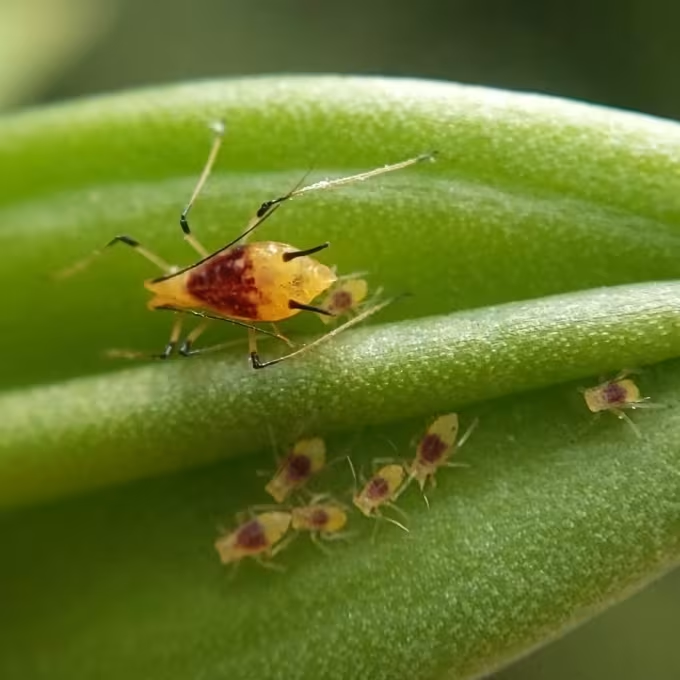
Adult aphids typically measure between 2 to 3 millimeters. Their bodies vary from light green to yellow-brown, featuring long, thin antennae and dark siphunculi at the rear.
The species exhibits a complex life cycle, featuring both wingless (apterous) and winged (alate) forms, which facilitates the rapid dispersal of the colony during the summer months.
Nymphs are smaller versions of the adults. They are highly mobile and start feeding on plant sap almost immediately after hatching from overwintering eggs.
Being a specialist feeder, the Lily aphid has evolved to exploit the specific nutrient profile of lilies and tulips, making it a persistent problem for flower growers.
What it damages
The primary hosts for this pest are lilies and tulips. Aphids tend to congregate on the most tender parts of the plant, including developing flower buds, stems, and the undersides of young leaves.
By constantly piercing plant cells to feed on phloem sap, aphids cause significant stunted growth, deformation of the leaves, and overall weakening of the host plant.
The aphid excretes honeydew, a sticky substance that promotes the growth of sooty mold. This fungal layer hinders photosynthesis and ruins the appearance of the foliage.
More critically, Macrosiphum lilii acts as a vector for various plant viruses, most notably the lily mosaic virus, which can cause long-term decline in lily health.
Heavy infestations can lead to bud drop, preventing the plant from blooming and reducing its overall vigor for the next growing season.
When it appears
The activity of the Lily aphid begins in early spring, synchronized with the emergence of new growth from the lily bulbs that have spent the winter in the soil.
The peak population growth occurs during the late spring and early summer when the plant is transitioning to the budding stage, providing a surplus of nutrients for the insects.
During the warm summer months, reproduction is rapid, with multiple generations overlapping, allowing the colony size to explode in a matter of weeks.
As autumn approaches, the aphid population produces sexual forms that lay dormant eggs on plant debris or bulb scales, ensuring survival through the winter.
Early intervention during the pre-budding stage is crucial to prevent the population from reaching levels that require heavy chemical intervention.
Signs of infestation
Visual identification starts with observing curled, crinkled, or distorted leaves at the growing tips of the lily stems, which is a classic symptom of aphid feeding.
The presence of sticky honeydew on the leaves is a clear diagnostic feature, often giving the foliage a glossy appearance or encouraging black sooty mold growth.
If the buds themselves appear misshapen or fail to open properly, it is a high indicator that aphids have been feeding on the developing flower parts.
An increased presence of ants on the lily stalks is a strong warning sign, as ants farm the aphids to collect the sugary honeydew they produce.
Direct inspection of the undersides of leaves and around the base of the flower buds will often reveal clustered colonies of these small, green-to-brown insects.
Control measures
Effective management requires a combination of physical monitoring and strategic applications, starting with cultural practices like keeping the garden free of debris.
Natural predators such as lady beetles, lacewings, and hoverfly larvae are highly effective at suppressing aphid numbers and should be encouraged in the garden ecosystem.
For more severe cases, systemic insecticides containing acetamiprid or similar active ingredients can be used to treat the plant before severe damage occurs.
Reducing ant activity is vital, as ants are known to protect aphid colonies from natural predators, effectively acting as bodyguards for the pests.
- Wash aphids off with a steady stream of water for light infestations.
- Apply insecticidal soap or neem oil for organic-friendly management.
- Avoid over-fertilizing with nitrogen, which creates soft growth attractive to aphids.
- Monitor plants closely during the rapid growth phase in late spring.
Taxonomy
- Latin name
- Macrosiphum lilii
- Order
- Hemiptera (bugs, aphids, leafhoppers)
- Family
- Aphididae
- EPPO code
- MACSLL
Discussion
No discussions yet — be the first.