
Rose aphid
Macrosiphum ibarae
Description
How to identify
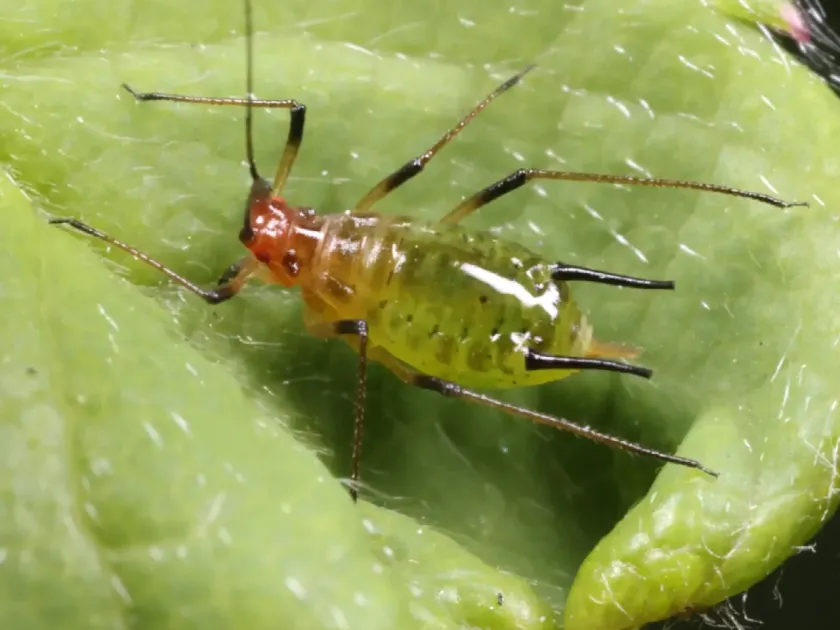
The rose aphid (Macrosiphum ibarae) is a small sap-sucking insect belonging to the family Aphididae. Adults typically measure between 2 and 3 mm in length, ranging in color from pale green to brownish.
They are characterized by long antennae and distinct cornicles (tubular structures) on the abdomen. Both winged and wingless forms exist within a colony, facilitating rapid dispersal across the host plant.
The biology of this species is characterized by rapid parthenogenetic reproduction, allowing populations to explode within a short period during the growing season.
These insects are highly specialized, feeding primarily on the soft, succulent tissues of roses. They use specialized mouthparts to tap into the phloem and extract nutrient-rich plant sap.
The life cycle includes an overwintering stage, where eggs are laid on the stems or buds of roses. This adaptation ensures the species survives winter dormancy and restarts the cycle in early spring.
What it damages
The primary hosts of this pest are various species and cultivars of roses. They preferentially attack new growth, young leaves, and developing flower buds.
Continuous sap extraction weakens the host plant, resulting in stunted growth. Severely infested leaves often curl, yellow, and may drop prematurely due to nutrient depletion.
Flower buds are particularly sensitive; aphid damage often causes malformed blooms that fail to open properly, significantly reducing the aesthetic value of the plant.
Aphids secrete honeydew, a sugary waste product that coats the leaves. This substance promotes the growth of sooty mold, a fungus that turns leaves black and blocks photosynthesis.
Additionally, the rose aphid is a known vector for several plant viruses. Through their feeding punctures, they can transmit diseases that cause long-term decline and potential death of the rose bush.
When it appears
The appearance of the rose aphid coincides with the bud break in early spring. Larvae hatch from overwintered eggs and immediately begin feeding on tender young tissues.
Peak infestation levels are typically observed during the late spring and early summer months, when temperatures are moderate and plant growth is most vigorous.
Multiple generations occur throughout the summer. Winged females may migrate between plants, leading to a steady increase in the overall infestation pressure across the garden.
As daylight hours shorten in autumn, the population undergoes sexual reproduction to produce eggs that will survive the winter, completing the seasonal cycle.
Regular monitoring is essential throughout the active growing season. Inspecting terminal shoots and undersides of leaves weekly can help identify early signs of infestation.
Signs of infestation
The earliest signs of aphid presence include the twisting or curling of terminal shoots. Young leaves may appear distorted and lose their healthy turgor.
Observing the undersides of leaves or the base of buds usually reveals clusters of aphids. They are often found in tight, dense colonies congregating around veins.
Ant activity on rose bushes is a major indicator of an infestation. Ants are attracted to the sweet honeydew and will actively protect the aphids from natural predators.
A shiny, sticky residue on leaves indicates that aphids are present. If left untreated, this residue will soon be covered by a black, powdery sooty mold.
- Curled, distorted leaves on shoot tips.
- Dense colonies on stems and buds.
- Sticky honeydew buildup on foliage.
- Increased ant traffic on the plant.
- Black sooty mold covering the leaves.
Control measures
Biological control involves encouraging natural predators such as lady beetles, lacewings, and hoverflies. Planting diverse flowers can help maintain these beneficial insect populations.
For minor infestations, mechanical control can be effective. Simply washing the aphids off with a strong jet of water or using insecticidal soaps can significantly reduce their numbers.
In cases of severe infestation, systemic insecticides are often required. These products are absorbed by the plant, providing longer-lasting protection compared to contact sprays.
Good cultural practices, such as avoiding excessive nitrogen fertilization, help keep rose plants healthy and less attractive to aphids, as soft, rapid growth is preferred by these pests.
Proper garden sanitation is crucial. Removing and destroying heavily infested prunings and cleaning up debris around the base of rose bushes reduces the overwintering success of the pest.
Taxonomy
- Latin name
- Macrosiphum ibarae
- Order
- Hemiptera (bugs, aphids, leafhoppers)
- Family
- Aphididae
- EPPO code
- MACSIB
Discussion
No discussions yet — be the first.