
Potato aphid
Macrosiphum gei
Description
How to identify
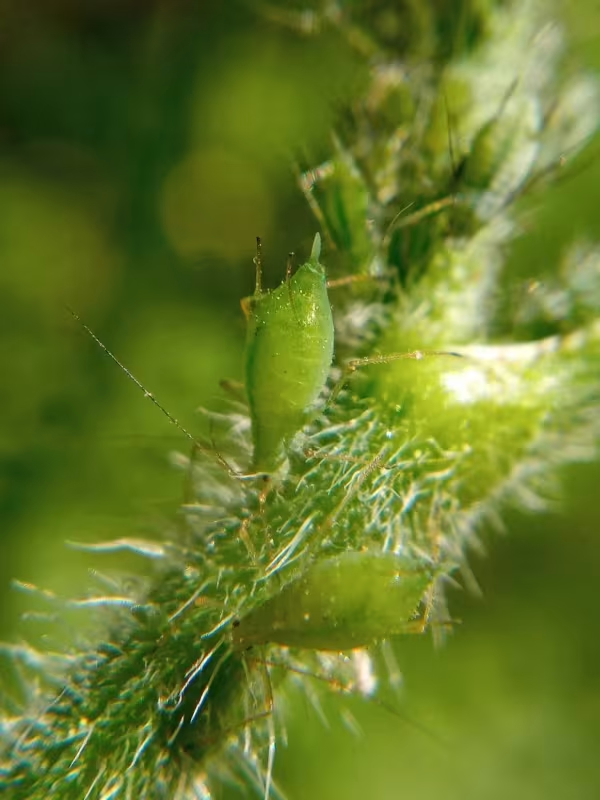
The potato aphid (Macrosiphum gei) is a member of the Aphididae family. Adult specimens typically measure between 2.5 and 4 mm in length and possess an elongated, spindle-shaped body.
The coloration of this pest varies significantly, ranging from light green to a pinkish or brownish hue, which sometimes makes them blend in with the host plant tissues.
Key identifying features include long, thin legs and elongated cornicles at the tip of the abdomen, which are usually darker at the apex than the rest of the body.
The antennae are notably long, often extending beyond the length of the body. The species exhibits both winged and wingless forms to facilitate movement and colonization.
Reproduction is primarily parthenogenetic throughout the growing season, allowing for rapid colonization of host plants during optimal environmental conditions.
What it damages
This species is a polyphagous pest, though it primarily targets members of the Solanaceae family, specifically potatoes, tomatoes, peppers, and eggplants.
The aphids tend to colonize the undersides of leaves, tender apical growth, and flower buds, where they feed by inserting their stylets into the phloem of the plant.
A critical aspect of their harm is the transmission of various plant viruses, such as potato leafroll virus and mosaic viruses, which can cause total crop failure.
Direct feeding causes physiological stress, leading to leaf curling, wilting, stunted growth, and a reduction in the overall yield and tuber quality.
Heavy infestations result in massive sap loss, which severely weakens the plant and makes it more susceptible to secondary infections and environmental stress.
When it appears
The life cycle begins in spring when overwintered eggs hatch into nymphs, typically when temperatures consistently remain above 10-12 degrees Celsius.
As the season progresses into summer, winged forms migrate to secondary hosts, including vegetable crops, where they establish new, rapidly expanding colonies.
Warm and humid weather conditions are highly conducive to the development of this aphid, allowing for multiple generations to be produced within a single season.
By autumn, as daylight hours decrease and temperatures drop, the aphids produce sexual forms that mate and lay overwintering eggs on primary host plants.
The synchronization between the aphid's migration patterns and the host plant's vegetative stage is a key driver of the pest's success in agricultural settings.
Signs of infestation
Early symptoms of an infestation include the curling and yellowing of terminal leaves, which is often the first visible change in the appearance of the plants.
The presence of honeydew—a sugary, sticky substance excreted by the aphids—is a hallmark sign that often covers the upper surfaces of the lower leaves.
The honeydew provides a substrate for the growth of sooty mold, a fungus that manifests as a black powdery layer, further inhibiting photosynthesis.
Closer inspection of the plant canopy will reveal clusters of aphids, their shed skins (exuviae), and increased activity of ants tending to the colonies for honeydew.
- Curled or deformed terminal leaves.
- Sticky honeydew residue on foliage.
- Development of black sooty mold on leaves.
- Increased ant traffic on the plants.
- Premature leaf drop and stunted shoot growth.
Control measures
Effective management begins with strict sanitation, including the removal of weeds and crop residues that serve as overwintering sites or alternate hosts for the pest.
Utilizing natural biological control agents, such as lady beetles, lacewings, and parasitic wasps, can significantly suppress aphid populations in balanced ecosystems.
Crop monitoring is essential for timely intervention; fields should be inspected regularly during the peak growing season to detect early signs of colonization.
When economic thresholds are exceeded, targeted application of systemic insecticides is necessary to eliminate established colonies and prevent virus transmission.
Implementing integrated pest management (IPM) practices, including chemical rotation, ensures effective long-term control while minimizing environmental impacts.
Taxonomy
- Latin name
- Macrosiphum gei
- Order
- Hemiptera (bugs, aphids, leafhoppers)
- Family
- Aphididae
- EPPO code
- MACSGE
Discussion
No discussions yet — be the first.