
Bramble aphid
Macrosiphum funestum
Description
How to identify
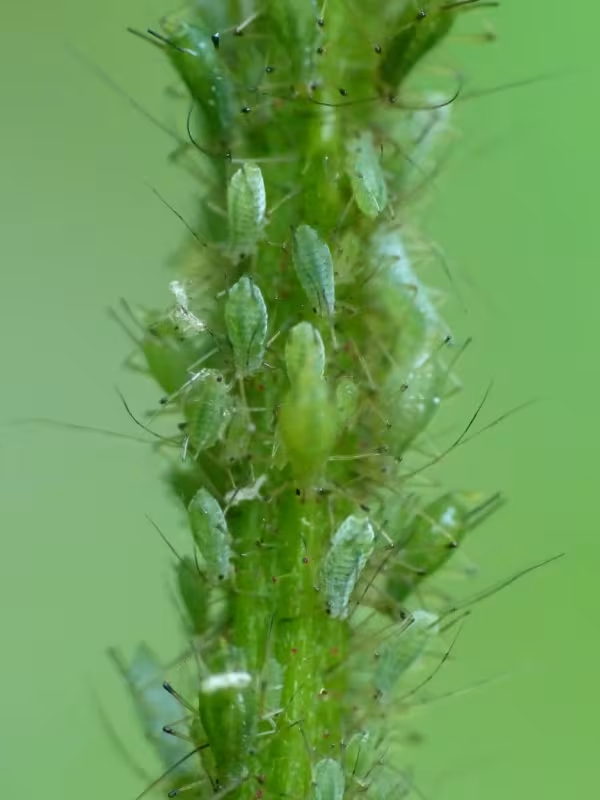
The bramble aphid, scientifically known as Macrosiphum funestum, is a small insect belonging to the family Aphididae. It primarily feeds on plants within the Rubus genus, especially blackberries.
Adult aphids are typically green, sometimes yellowish, and possess a long, slender body measuring between 2 and 3 mm in length. Their antennae are usually as long as or longer than their bodies.
The species reproduces through a cycle of asexual generations during the spring and summer, allowing the population to explode rapidly on suitable host plants.
Winged forms, or alates, develop as the colony density increases. These winged individuals are responsible for dispersal to new plants and ensuring the continuation of the colony.
The overwintering stage occurs in the form of small, dark eggs that are deposited near the buds or in the crevices of blackberry canes during late autumn.
What it damages
Bramble aphids cause damage primarily by piercing the epidermis of the plant and sucking the phloem sap, which is rich in sugars and nutrients required for plant growth.
Constant feeding leads to leaf curling, stunted growth of shoots, and a reduction in the overall vigor of the blackberry plant, directly impacting berry yield.
Beyond physical tissue damage, the aphid is a known vector for various plant viruses that cause mosaic symptoms, leaf curling, and overall plant decline.
The honeydew secreted by aphids during feeding serves as a substrate for sooty mold fungi, which create a black film over leaves and severely impair photosynthesis.
Weakened plants become increasingly susceptible to secondary pests and various environmental stresses, leading to long-term issues for the plantation.
When it appears
The activity of Macrosiphum funestum begins early in the spring, coinciding with the first emergence of new leaves and tender shoots on blackberry bushes.
Populations tend to reach their peak levels during the warm, moist conditions of late spring and early summer when plant growth is most vigorous.
During the peak of summer, if temperatures remain excessively high, the activity may decrease, but it often recovers as the season shifts towards autumn.
In autumn, as daylight hours decrease, the aphids produce sexual forms, which then mate to lay the overwintering eggs, completing the seasonal biological cycle.
Monitoring should be most intensive from bud burst until the late flowering stages to prevent major colony establishments.
Signs of infestation
Early warning signs include the presence of curled or distorted terminal leaves at the very tips of the blackberry canes.
The presence of sticky honeydew on the foliage and a marked increase in ant activity around the plant are strong indicators of an aphid infestation.
Closer inspection of the underside of the leaves usually reveals clusters of these small, green insects, which might be mistaken for dust at first glance.
Yellowing or chlorosis of the shoot tips often occurs after sustained feeding, causing the plant to appear wilted even if soil moisture is sufficient.
In cases of severe infestation, one may observe white cast skins left behind by the aphids after molting, which stick to the leaves or fall onto the ground.
Control measures
Successful management of bramble aphid involves a combination of preventative measures and targeted control strategies to ensure crop health.
- Maintain good plant spacing to ensure airflow and reduce humidity levels.
- Encourage biological control agents like lady beetles, lacewings, and hoverflies in the garden.
- Use systemic insecticides early in the season if infestation levels exceed the economic threshold.
- Prune and destroy heavily infested shoots as soon as they are detected to curb population growth.
- Apply horticultural oils or insecticidal soaps as an environmentally friendly alternative for small-scale gardens.
Taxonomy
- Latin name
- Macrosiphum funestum
- Order
- Hemiptera (bugs, aphids, leafhoppers)
- Family
- Aphididae
- EPPO code
- MACSFU
Discussion
No discussions yet — be the first.