
Daphne aphid
Macrosiphum daphnidis
Description
How to identify
The Daphne aphid (scientific name Macrosiphum daphnidis) is a specific type of aphid belonging to the family Aphididae, which targets plants of the genus Daphne.
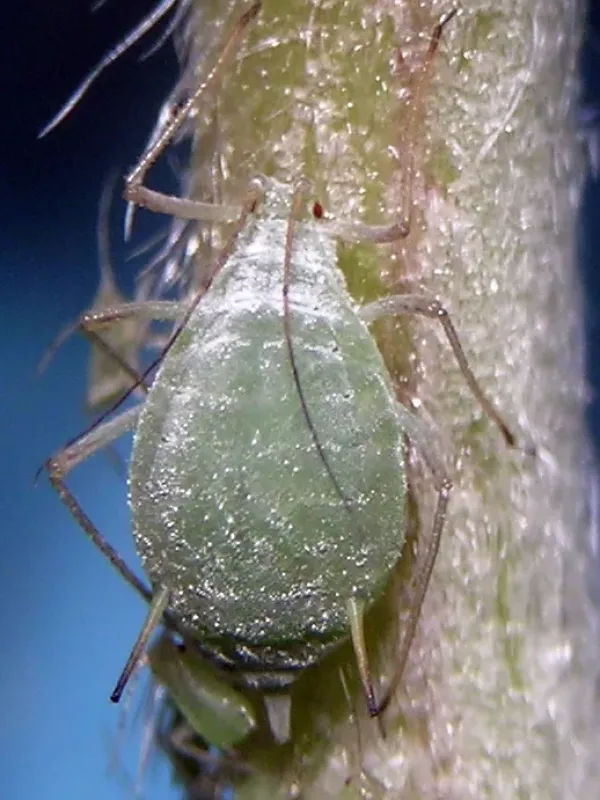
The adult aphids typically measure between 2 and 3 millimeters in length, making them visible to the naked eye when present in large colonies.
Their coloration is generally light green to yellowish, which serves as a highly effective camouflage against the young leaves and shoots of the host shrub.
Key physical traits include long, dark siphunculi located at the end of the abdomen, and antennae that are significantly longer than the length of their body.
Colonies contain both winged and wingless individuals, allowing the species to rapidly colonize new parts of the host plant as the population expands.
What it damages
The Daphne aphid primarily infests plants of the Daphne genus, which are valued for their intense fragrance and beautiful spring flowers.
The insects feed by piercing plant tissues with their mouthparts and sucking out the nutrient-rich sap, which causes significant stress to the host.
Heavy feeding pressure results in stunted growth, leaf curling, and yellowing of the foliage, drastically reducing the ornamental value of the shrub.
Damage to the developing flower buds can lead to flower abortion or malformed blossoms, compromising the aesthetic appeal of the plant during its bloom.
In addition to direct feeding damage, the honeydew excreted by the aphids can promote the growth of sooty mold, which blocks light and hinders photosynthesis.
When it appears
The life cycle of the Daphne aphid is closely tied to the host plant’s growth, with activity commencing in early spring as buds begin to swell.
Populations tend to peak during the late spring and early summer months when the weather is warm and stable, favoring rapid asexual reproduction.
Throughout the peak season, multiple generations can emerge, leading to an exponential increase in the number of aphids inhabiting a single plant.
As summer temperatures rise or the plant tissues become less succulent, the population growth may stabilize or gradually decline.
Overwintering eggs are laid on the bark or near the buds of the host plant, remaining dormant through the winter to start a new cycle the following spring.
Signs of infestation
Early symptoms of an infestation include the curling and twisting of young, tender leaves, which may also show signs of chlorosis or yellowing.
The presence of a sticky, glistening substance on the leaf surfaces known as honeydew is a clear indication that aphids are actively feeding.
Small green insects clustered on the undersides of leaves, along tender shoots, and near flower buds are the most definitive sign of an active infestation.
A secondary sign is the increased activity of ants around the plant, as they tend to the aphids to feed on the sugary honeydew they secrete.
If left unmanaged, the plant will show a general lack of vigor, including reduced flower production and a deformed or spindly appearance.
Control measures
Effective management requires a combination of early detection and appropriate chemical or biological intervention to keep the population in check.
A simple yet effective mechanical control method is to wash the aphids off the foliage using a strong spray of water from a garden hose.
Biological control agents, such as ladybugs, lacewings, and parasitic wasps, can be encouraged in the garden to prey naturally on aphid colonies.
For severe infestations, the use of systemic insecticides or insecticidal soaps can provide more immediate and thorough control, protecting the plant's health.
- Inspect Daphne shrubs weekly throughout the spring season.
- Prune and destroy heavily infested branches to reduce local populations.
- Avoid excessive nitrogen fertilization, which can promote tender growth preferred by aphids.
- Apply insecticides during the early morning or late evening to minimize harm to beneficial pollinators.
Taxonomy
- Latin name
- Macrosiphum daphnidis
- Order
- Hemiptera (bugs, aphids, leafhoppers)
- Family
- Aphididae
- EPPO code
- MACSDA
Discussion
No discussions yet — be the first.