
Meadowsweet aphid
Macrosiphum cholodkovskyi
Description
How to identify
The meadowsweet aphid (Macrosiphum cholodkovskyi) belongs to the family Aphididae, order Hemiptera. It is a specialized pest that maintains a tight biological relationship with meadowsweet plants.
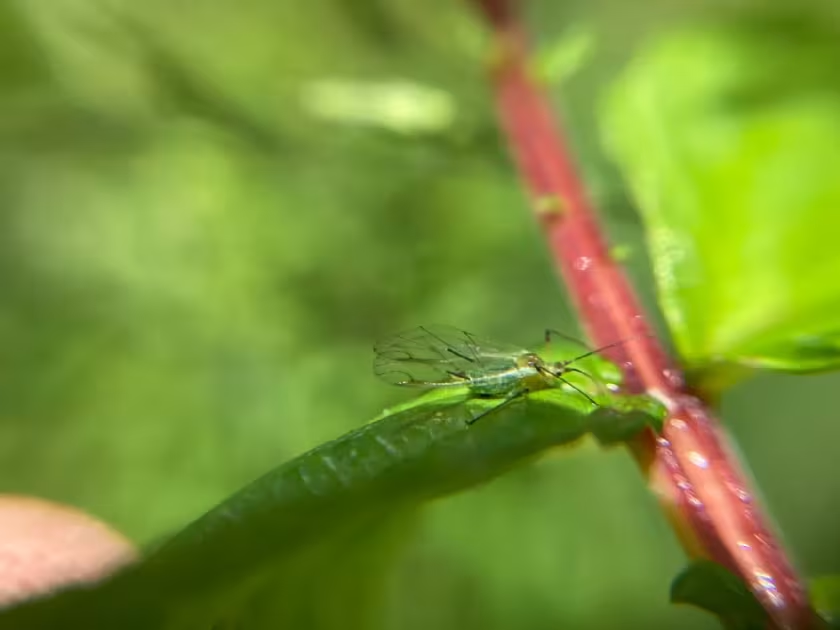
Adult individuals are typically oval-shaped, possessing a green or yellow-green coloration. They are distinguished by long antennae and tubular structures known as siphunculi located on the abdomen.
Both apterous (wingless) and alate (winged) forms are present during the growth season. These forms allow the population to grow rapidly and disperse to nearby healthy plants.
Entomologists identify these aphids by observing their specific feeding behavior and morphological traits such as the shape of the cauda and the wing venation pattern in winged specimens.
They are colonial insects, usually found in dense groups on the undersides of young leaves and along the tender stems of the Filipendula host plants.
What it damages
The primary damage is caused by the aphids inserting their stylets into the plant tissues to feed on phloem sap. This leads to severe nutrient loss for the host plant.
Feeding results in the curling and distortion of young leaves, stunting of shoot growth, and a significant reduction in the plant's overall aesthetic and physical vigor.
As they feed, the aphids excrete honeydew, a sugary substance that coats the leaves and stems, creating a breeding ground for secondary pathogens such as sooty mold.
The aphids are also known vectors of plant viruses. By piercing the plant tissues, they can transmit diseases that cause yellowing, mosaic patterns, and internal necrosis.
In cases of heavy infestation, the affected meadowsweet plants may fail to bloom properly, and severe stress can weaken the plant enough to make it susceptible to environmental factors.
When it appears
The life cycle begins in early spring when eggs deposited on the bark during the previous autumn hatch, producing the first generation of founders.
Populations typically peak during late spring and early summer, taking full advantage of the fresh, nutrient-rich growth produced by the meadowsweet during these months.
While their activity remains high throughout the summer, extreme heat may slightly limit reproduction rates, though they remain present until the onset of autumn.
In the autumn, sexual forms develop to mate and lay overwintering eggs. These eggs are well-adapted to survive freezing winter temperatures on the host plant.
The synchronized development of the pest and the host plant ensures that the aphid can utilize the most vulnerable growth stages of the meadowsweet effectively.
Signs of infestation
The most visible symptom of an infestation is the curling and twisting of terminal leaves. Affected leaves appear puckered and may show discoloration.
A sticky film of honeydew covering the stems and leaves is a strong indicator of aphid presence. This substance is often followed by a black, dusty layer of sooty mold.
The presence of ants is a reliable biological indicator. Ants are attracted to the honeydew and will actively defend aphid colonies from potential predators.
Closer examination reveals dense clusters of green aphids on the undersides of leaves or along the flower buds, which is the most definitive sign of the infestation.
- Curling and distortion of leaves.
- Sticky honeydew residue on plant surfaces.
- Growth of black sooty mold.
- Increased ant activity near the plant.
Control measures
Effective management begins with regular monitoring. Inspecting the undersides of young leaves in early spring helps detect and remove colonies before they spread.
Mechanical control, such as washing the plants with a pressurized stream of water, is highly effective for smaller infestations in domestic gardens.
Encouraging natural predators is a sustainable approach. Introducing or preserving ladybugs, lacewings, and hoverflies can significantly keep aphid numbers in check.
Chemical control should be considered as a last resort. Systemic insecticides are effective because they are absorbed by the plant, targeting the aphids through their sap-feeding.
Always apply pesticides with caution and never during the plant's blooming period to protect pollinators like bees and butterflies from exposure to toxic chemicals.
Taxonomy
- Latin name
- Macrosiphum cholodkovskyi
- Order
- Hemiptera (bugs, aphids, leafhoppers)
- Family
- Aphididae
- EPPO code
- MACSCH
Discussion
No discussions yet — be the first.