
Potato aphid
Macrosiphum caphorbiae
Description
How to identify
The potato aphid, scientifically known as Macrosiphum euphorbiae, is a member of the Aphididae family. Despite its common name, it feeds on a wide range of host plants beyond potatoes.
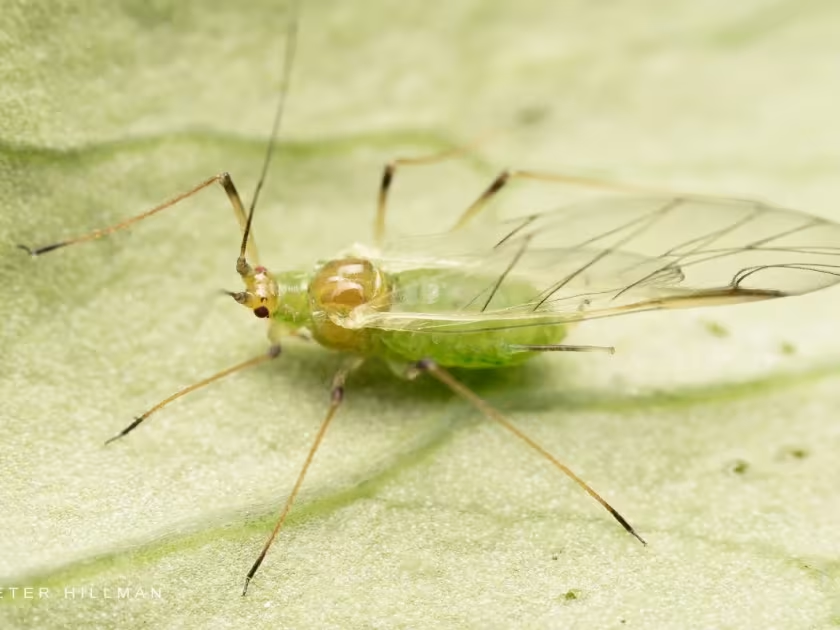
These aphids are relatively large, typically measuring between 3 to 4 mm in length. They are characterized by their elongated, spindle-shaped bodies and vary in color from light green to pink or yellow.
A key diagnostic feature of this species is the pair of long, slender cornicles (tailpipes) at the posterior end of the abdomen, which often have darkened tips.
They possess long, thread-like antennae that extend well beyond the length of their bodies, a trait that helps distinguish them from many other common aphid species found in gardens.
Both winged and wingless forms exist within a colony. The winged adults are primarily responsible for the dispersal and infestation of new host plants throughout the growing season.
What it damages
This species is a significant pest for several economically important crops, including potatoes, tomatoes, peppers, and eggplants, as well as various ornamental plants like roses.
They concentrate their feeding on the terminal growth, young developing leaves, and flower buds, where the concentration of sugars and amino acids is highest.
Direct damage occurs due to the extraction of large volumes of phloem sap, which causes the foliage to curl, yellow, and eventually die if the infestation is heavy.
In addition to direct physiological stress, the potato aphid is a highly efficient vector for numerous plant viruses, most notably the Potato Leafroll Virus (PLRV).
The transmission of these viruses often results in severe systemic infections, which can lead to significant yield loss and degradation of the quality of horticultural products.
When it appears
The lifecycle of the potato aphid is highly adaptable. In warmer climates, it may reproduce year-round, while in colder regions, it typically overwinters as eggs on perennial hosts.
In spring, the nymphs hatch from the overwintering eggs and begin to feed on the tender growth of emerging weeds or ornamental plants before migrating to vegetable crops.
Throughout the summer, the population grows exponentially through asexual reproduction, where females give birth to live nymphs without the need for mating.
Multiple generations are produced within a single season, with the rate of reproduction peaking during mild, humid weather conditions that are conducive to colony growth.
As daylight hours decrease and temperatures drop in autumn, sexual forms are produced to mate and lay the eggs that will ensure the survival of the species during winter.
Signs of infestation
Initial signs of infestation often include the curling and puckering of young leaves, which may appear stunted or pale compared to the rest of the plant.
The presence of honeydew, a sticky substance excreted by the aphids, is a reliable sign of their activity. This substance often supports the growth of black sooty mold.
Dense clusters of these insects can be observed on the underside of leaves and around the tips of stems, which is where they prefer to settle to feed.
Increased presence of ants is another common indicator, as they tend to the aphid colonies to protect them in exchange for the sugary honeydew secretion.
- Deformation and yellowing of the growing points.
- Sticky honeydew residue on foliage.
- Shed white aphid skins (exuviae) visible on leaf surfaces.
- Stunted plant growth and reduced flowering.
Control measures
Management of the potato aphid requires a multifaceted approach, focusing on monitoring and early intervention to prevent population explosions.
Cultural control methods, such as removing weeds that act as alternative hosts and ensuring proper plant spacing, are essential for reducing initial infestation levels.
Biological control can be highly effective, as numerous natural predators like ladybird beetles, lacewings, and parasitic wasps feed on or parasitize the aphid colonies.
When chemical intervention is necessary, the use of systemic insecticides is often preferred, as these reach the insects through the plant's vascular system, ensuring better coverage.
It is important to practice Integrated Pest Management (IPM) by rotating the chemical groups of pesticides used to minimize the risk of the aphids developing resistance.
Taxonomy
- Latin name
- Macrosiphum caphorbiae
- Order
- Hemiptera (bugs, aphids, leafhoppers)
- Family
- Aphididae
- EPPO code
- MACSCA
Discussion
No discussions yet — be the first.