
Macrosiphum
Macrosiphum
Description
How to identify
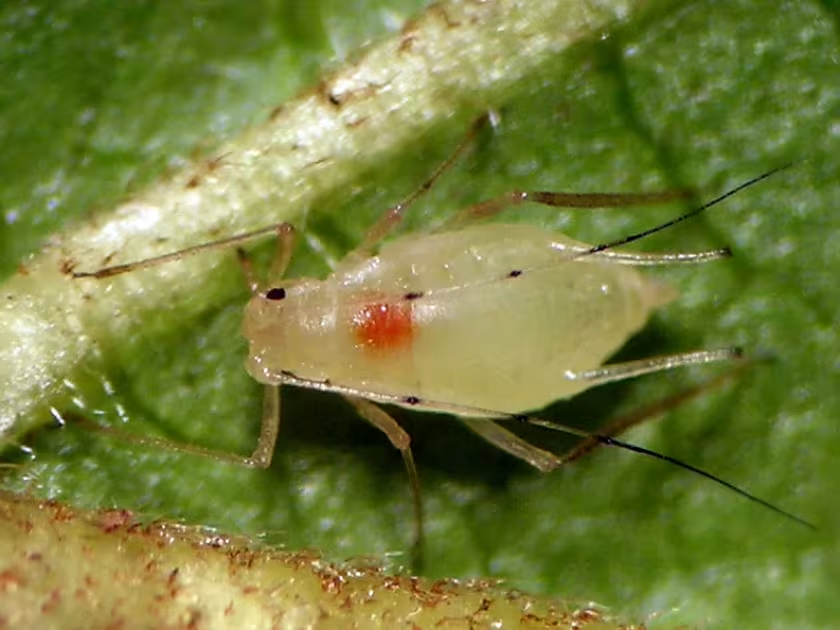
The genus Macrosiphum belongs to the family Aphididae. These are small, relatively slow-moving insects with an elongated body, typically measuring between 2 and 4 millimeters in length.
The coloration varies from light green to dark brown, depending on the specific species and the host plant. A key identification feature is the presence of long cornicles (siphons) on the rear of the abdomen, which are usually darker than the rest of the body.
The life cycle includes both wingless and winged forms. Winged individuals emerge when colonies become overcrowded, allowing them to migrate to neighboring plants and rapidly spread the infestation.
These insects typically overwinter in the egg stage, deposited near buds or within cracks in the bark of trees and shrubs, which provides high survival rates even in harsh climates.
During the summer, they reproduce rapidly through parthenogenesis, with a single female capable of producing dozens of nymphs per day, leading to explosive population growth within a colony.
What it damages
Macrosiphum species are polyphagous, causing significant damage to a wide range of agricultural and ornamental crops.
Common hosts include vegetable crops such as tomatoes and potatoes, as well as berry bushes, most notably raspberries, and ornamental plants like roses.
They prefer to feed on young shoots, apical buds, and the undersides of leaves, where the concentration of plant sap is highest.
In addition to direct physical damage, these aphids are major vectors for phytopathogenic viruses, which can lead to total crop failure.
The sticky honeydew secreted by the aphids often promotes the growth of sooty mold, which covers the plant surface and impairs photosynthesis and gas exchange.
When it appears
The first individuals appear in early spring shortly after bud break, as nymphs hatch from overwintered eggs.
Peak activity occurs during late May and June when warm, dry weather conditions accelerate the development of subsequent generations.
Mid-summer populations may decline temporarily due to the activity of natural predators such as lady beetles and lacewings.
The autumn period marks the arrival of the sexual generation, which lays fertilized eggs to ensure the species survives through the winter.
The speed of population turnover is highly temperature-dependent, with the development cycle taking approximately 7 to 10 days in optimal 20–25 degree Celsius conditions.
Signs of infestation
The primary sign of infestation is the curling and deformation of young leaves, which become covered in a sticky layer of honeydew.
Shoots stop growing, bend abnormally, and may eventually wither, while flower buds often fail to open properly and drop prematurely.
Colonies are easily spotted during a visual inspection of the underside of leaves, where clusters of aphids of various sizes are typically found.
The presence of ants on plants is a reliable indirect indicator of aphid activity, as ants cultivate the aphids to feed on their sugary secretions.
- Yellowing of leaf blades and development of chlorotic spots.
- Presence of a black sooty mold layer on leaves and stems.
- Wilting of plant tops during morning hours.
Control measures
Effective management begins with cultural practices, such as removing weeds that serve as alternate hosts and managing ant populations in the area.
Utilizing biological control methods, such as encouraging natural predators, can significantly suppress aphid populations without the need for synthetic chemicals.
If infestations become severe, systemic or contact insecticides approved for use on specific crops should be applied.
Thorough spraying is crucial to ensure the product reaches the underside of the leaves, where the majority of the colony resides.
Regular monitoring of plants and early intervention at the first sign of colonization significantly increase the effectiveness of control measures and minimize the need for repeated pesticide applications.
Taxonomy
- Latin name
- Macrosiphum
- Order
- Hemiptera (bugs, aphids, leafhoppers)
- Family
- Aphididae
- EPPO code
- MACSSP
Discussion
No discussions yet — be the first.